Thursday, February 29, 2024

Pope Francis’ schedule for Holy Week and Easter 2024 at the Vatican

Here is Pope Francis' schedule for Holy Week and Easter 2023

The Vatican has released Pope Francis’ schedule for Holy Week 2024, which will include five papal liturgies, Stations of the Cross at the Colosseum, and other traditions to mark the most sacred week of the year.

Easter is the highest feast in the Catholic Church, known as the “solemnity of solemnities,” celebrating Jesus’ resurrection and defeat of sin and death, and the Vatican celebrates Holy Week with pomp, reverence, tradition, and a busy schedule.

The 87-year-old pope is scheduled to preside over liturgies on each day of the Easter Triduum as well as Palm Sunday. 

The Holy See Press Office published the pope’s Holy Week schedule one day after Pope Francis visited the hospital for diagnostic tests. 

Reuters reported that the pope had a CT scan during the hospital checkup. 

Last year, Pope Francis was discharged from the hospital one day before presiding over Palm Sunday Mass.

Holy Week 2024 begins on March 24 with Palm Sunday and culminates with Easter on March 31. 

Here is the Vatican’s full schedule:

Palm Sunday

On Sunday morning, March 24, Pope Francis is scheduled to preside over Mass for Palm Sunday, also known as Passion Sunday or the Commemoration of the Lord’s Entrance into Jerusalem.

The Mass, which will be in St. Peter’s Square at 10 a.m. local time, will kick off with a grand procession of deacons, priests, bishops, cardinals, and laypeople carrying palms.

The procession includes olive tree branches, palm fronds, and the large, weaved palms called “parmureli,” all blessed by Pope Francis.

Holy Thursday

Pope Francis is set to start Holy Thursday with a chrism Mass in St. Peter’s Basilica at 9:30 a.m. in the presence of cardinals, bishops, and priests living in Rome.

During the Mass, Pope Francis, as the bishop of Rome, will bless the oil of the sick, the oil of catechumens, and the chrism oil to be used in the diocese during the coming year.

The Vatican has yet to release the details for where Pope Francis will celebrate Holy Thursday Mass 2024. 

Last year, the pope offered Mass at the juvenile detention center Casal del Marmo, the same detention center where he offered Holy Thursday Mass in 2013 shortly after his election.

Good Friday

Continuing the liturgies of the Triduum, Pope Francis is also scheduled to preside over a celebration for the Passion of the Lord on Good Friday at 5 p.m. in St. Peter’s Basilica.

During this liturgy, which is not a Mass, Cardinal Raniero Cantalamessa, the papal preacher, typically preaches instead of the pope.

In the evening, Pope Francis will lead the Stations of the Cross devotion at 9:15 p.m. in Rome’s Colosseum illuminated by candlelight.

Holy Saturday

On Holy Saturday, Pope Francis is set to preside over the Easter Vigil at 7:30 p.m. in St. Peter’s Basilica.

The Easter Vigil, which takes place on Holy Saturday night, “is the greatest and most noble of all solemnities,” according to the Roman Missal.

The liturgy begins in darkness with the blessing of the new fire and the preparation of the paschal candle. At the Vatican, cardinals, bishops, and priests process through the dark basilica carrying lit candles to signify the light of Christ coming to dispel the darkness.

Pope Francis also typically baptizes new Catholics at this Mass.

Easter Sunday

The morning of Easter Sunday, Pope Francis will preside over Mass in St. Peter’s Square at 10 a.m. on a flower-decked parvise.

After Mass, he will give the annual Easter “urbi et orbi” blessing at noon from the central balcony of St. Peter’s Basilica.

“Urbi et orbi” means “to the city [of Rome] and to the world” and is a special apostolic blessing given by the pope every year on Easter Sunday, Christmas, and other special occasions.

In 2023, local authorities estimated that there were close to 100,000 people present in St. Peter’s Square for the blessing.

Relic of martyr killed by Mafia to be used in prison ministry in Naples

The relics of Blessed Rosario Livatino, a Catholic judge brutally killed by the Mafia in 1990, will be brought to a prison in Naples on Saturday as his relics tour the southern Italian city plagued by organized crime.

The Archdiocese of Naples has organized a prayer campaign from March 1–4 across schools, prisons, and churches with the relics of Livatino, who was beatified in Sicily in 2021.

Father Vittorio Sommella, the rector of the Cathedral of Naples, has expressed hope that young people in the city in particular will be touched by Livatino’s witness.

“In a city where more and more young people are warring against young people at gunpoint, the example of Judge Rosario [Livatino] spurs us to do more,” Sommella told the Italian newspaper Il Mattino. 

The Mafia in Naples, called the Camorra, is known for loan sharking in poor neighborhoods and extorting local businesses in addition to drug trafficking, counterfeiting, and money laundering.

Archbishop Domenico Battaglia of Naples has frequently spoken out against the Mafia, condemning Naples’ “cancerous Mafia culture” and “the trail of blood” it has left across the city.

“With the arrival of Blessed Livatino’s relic, Naples welcomes yet another message of hope and the rule of law,” Sommella said.

He inspires us “to commit ourselves as a Church and as a civil society to rediscover the values of lawfulness and justice,” he added.

Livatino worked as a prosecutor in Sicily dealing with the criminal activity of the Mafia throughout the 1980s. He confronted what Italians later called the “Tangentopoli,” the corrupt system of Mafia bribes and kickbacks given for public works contracts.

At the age of 37, he served as a judge at the Court of Agrigento.

Livatino was driving unescorted toward the Agrigento courthouse when another car hit his vehicle, sending him off the road. He ran from the crashed vehicle into a field but was shot in the back and then killed with more gunshots.

Today a plaque on the highway marks the spot where Livatino was killed. It reads: “Martyr of justice.” Pope Francis elevated this title in 2020 when he recognized the judge as a martyr killed “in hatred of the faith.”

Livatino’s relics will arrive in the Naples Cathedral of the Assumption of Mary on Friday morning. Cardinal Angelo Comastri will then lead local lawyers and judges in the Stations of the Cross in the presence of his relics in the cathedral in the evening.

The relics will be brought to the Giuseppe Salvia Penitentiary on Saturday morning for a prayer service with the inmates as well as to a juvenile detention center. 

Families of victims of violent crime will also have a chance to pray with the relics in the cathedral during the weekend. 

Livatino is buried in the cemetery chapel of his hometown of Canicattì, Sicily.

Pope Francis Visits the Hospital: His health Issues through the Years

Pope Francis cancels audiences, gets hospital checkup after catching the  flu | PBS NewsHour

Pope Francis was hospitalized Wednesday morning after a public audience, with the Vatican confirming that he underwent unspecified “diagnostic tests.” 

The 87-year-old pope was taken to the Gemelli Isola Tiberina Hospital before returning to his Vatican residence shortly after noon. 

The Vatican says the pope has had “a mild flu-like condition” since at least Saturday, when he canceled his scheduled public appearances.

Pope Francis has faced numerous health challenges in recent years, and yet still has maintained a busy schedule of meetings, Masses, and travel since 2020. 

Diverticulitis and other abdominal issues

July 2021:

A problem with his colon lands the pope in the hospital on July 4, 2021.

Pope Francis undergoes surgery to relieve stricture of the colon caused by diverticulitis. The three-hour surgery includes a left hemicolectomy, the removal of one side of the colon.

The pope spends 11 days in Rome’s Gemelli Hospital recovering from the surgery.

Jan. 2023:

In an interview published by the Associated Press on Jan. 25, Pope Francis announces that his diverticulitis has returned. He emphasizes that he is in “good health” and that, for his age, he is “normal.”

June 2023:

Pope Francis undergoes a three-hour abdominal surgery to repair an incisional hernia on June 7.

A team of surgeons removes scar tissue and operates on a hernia in the pope’s abdominal wall at the site of a previous surgical incision in Rome’s Gemelli Hospital. 

The pope is discharged on June 16 after an eight-day stay in the hospital recovering from the operation.

Bronchitis and other lung issues

March 2023:

On March 29 the Vatican announces that Pope Francis is expected to remain in a hospital in Rome for “some days” due to a respiratory infection. It had announced earlier in the day that he was in the hospital for previously scheduled medical checkups.

Nov. 2023: 

Pope Francis goes to the hospital on Nov. 25 for precautionary testing amid a “mild flu.” A CT scan at the hospital rules out pneumonia, but shows that the pope has lung inflammation causing breathing difficulties. The pope is treated with antibiotics intravenously as he recovers, and he manages to keep his scheduled appointment with the president of Paraguay the following day. 

Despite being strongly committed to attending, Pope Francis ultimately on Nov. 30 cancels his trip to Dubai for a climate conference amid “very acute infectious bronchitis.” Despite feeling under the weather, the pope maintained a very full schedule that day with nine official meetings scheduled for the morning. Amid the pope’s recovery, Vatican Secretary of State Cardinal Pietro Parolin instead headed the Vatican’s delegation to the COP28 climate conference. 

Colds, flus, and miscellaneous

Aug. 2022:

On Aug. 4, the Vatican announces that Massimiliano Strappetti, a Vatican nurse, has been appointed as Pope Francis’ “personal health care assistant.”

Feb. 2023:

On Feb. 23 the Vatican announces that Pope Francis had a “strong cold.” The pope distributes copies of his speeches at two morning appointments rather than reading them aloud as usual.

Late Feb. 2024:

Pope Francis cancels his public appearances amid “mild flu,” which the Vatican later describes as a cold. 

Knee issues

Jan. 2022:

Pope Francis shares that he was having problems with his knee necessitating that he remain seated. Francis tells the crowd at his general audience that the reason he is unable to greet pilgrims as usual is because of a temporary “problem with my right leg,” an inflamed knee ligament.

Feb. 2022:

Pope Francis cancels two public events at the end of February due to knee pain and doctors’ orders to rest. In the month that follows, he receives help going up and down stairs but continues to walk and stand without assistance.

April 2022:

During a trip to Malta, Pope Francis uses a lift to disembark the papal plane and a special lift is also installed at Malta’s Basilica of St. Paul in Rabat, so that Francis can visit and pray in the crypt grotto without taking the stairs.

On the return flight on April 3, Francis tells journalists, “my health is a bit fickle, I have this knee problem that brings out problems with walking.” 

At the Vatican’s Good Friday service, the pope does not lay prostrate before the altar, as he has done in the past.

He also does not celebrate the Easter Vigil Mass on April 16 or participate in the paschal candle procession, but sits in the front of the congregation in a white chair.

On April 22 and April 26, Francis’ agenda is cleared for medical checkups and rest for his knee. 

The following day, the pope tells pilgrims at his general audience that his knee prevents him from standing for very long.

Pope Francis also begins to remain seated in the popemobile while greeting pilgrims in St. Peter’s Square.

On April 30, he says that his doctor has ordered him not to walk.

May 2022:

The pope says at the beginning of May that he would undergo a medical procedure on his knee, “an intervention with infiltrations,” by which he may have meant a therapeutic injection, sometimes used to relieve knee pain caused by ligament tears.

Two days later, he uses a wheelchair in public for the first time since his July 2021 colon surgery. Throughout May he continues to use the wheelchair and avoids most standing and walking.

Francis also undergoes over two hours of rehabilitation for his knee every day, according to an Argentine archbishop close to the pontiff.

June 2022:

In early June, the Vatican postpones Pope Francis’ planned visit to the Democratic Republic of Congo and South Sudan for health reasons. The trip was planned for July 2–7 but is put off “at the request of his doctors, and in order not to jeopardize the results of the therapy that he is undergoing for his knee,” according to the Vatican.

Less than a week later, the Vatican announces that Pope Francis will not preside over the June 16 Corpus Christi Mass because of his knee problems and “the specific liturgical needs of the celebration.”

Nov. 2022:

José María Villalón, the head doctor of the Atlético de Madrid soccer team, is recruited to assist Pope Francis with his knee problems. He says the pope is “a very nice and very stubborn patient in the sense that there are surgical procedures that he does not want” and that “we have to offer him more conservative treatments so that he will agree to them.”

Here’s a breakdown of Pope Francis’ notable health issues in the past several years. 

Sciatic nerve pain

Dec. 2020:

A bout of sciatic pain in the final days of 2020 keeps Pope Francis from presiding at the Vatican’s liturgies on New Year’s Eve and New Year’s Day.

Francis has suffered from sciatica for a number of years; he spoke about it during an in-flight press conference returning from a trip to Brazil in July 2013.

“Sciatica is very painful, very painful! I don’t wish it on anyone,” he said about the condition, which starts in the lower back and can cause pain running down the back of the thigh and leg to the foot.

Jan. 2021:

Pope Francis cancels three more public appearances at the end of January due to sciatic nerve pain.

This Belgian church has been transformed into a microbrewery

This Belgian church has been transformed into a microbrewery - Travel  Tomorrow

With church attendance falling across Belgium, many buildings now find themselves in search of a new purpose. 

In the 1950s, more than 80% of Belgium’s population was Catholic, but the proportion dropped to about 50% by 2022, so instead of letting historic buildings fall into ruin, Belgium is repurposing them for activities maybe a little less holier-than-thou.

In Mechelen, the early 20th century Sint Jozef church has been repurposed for a local microbrewery, Batteliek. 

Opened in 2022, the bar and resto-bar, fitted with large metal tanks, encompasses the entire brewery and distillery process, so guests can see and smell the entire production of beer right there on the spot.

Besides being a bar and brewery, Batteliek is also a “lemonade factory” and resto-bar. The menu features “experimental cuisine and drinks, developing innovative tastes, [that] are sure to excite your senses”. 

From finger food to different sized burgers, pizzas and even tacos, there is a wide selection for vegetarians and meet lovers alike to fill their stomachs while trying out the home-made beer.

For those who are curious about how beer is made, Batteliek also hosts brewing workshops every first Friday of the month for groups of 10 to 15 people and every first Saturday of the month for individuals. 

Alternatively, gin making workshops are also available.

To maintain part of the building’s original purpose from its days of functioning as a church, Batteliek is still open as a community gathering place. 

Everyone is welcome to come and sit down inside or in the garden during the summer, drinking beer or not, to just relax, meet other people or “gaze round in wonder”.

“Seen from a Catholic viewpoint, it’s sad that so many churches are desecrated now and that they are used for something else, but, on the other hand, they keep maintain the buildings instead of demolishing them”, Marc, a Belgian who has been living in Mechelen since he was born, told DW.

This is far from the only example. 

In Brussels, 2022 saw the opening of a climbing wall inside the Saint-Antoine church, while one of the capital’s most famous night clubs, Spirito, has claimed the grounds of an abandoned Anglican church in 2009 and has been hosting parties till the morning hours ever since under the motto “What happens in the church stays in the church”.

In Flanders, two ministers are taking things to another level, proposing a governmental policy to force municipalities to present plans for repurposing unused churches. 

“With respect for the past, but with an eye to the future. We have to give these buildings a second life. This decree makes that a lot easier and we are also providing the necessary financial support”, minister of Home Affairs Bart Somers and minister of Immovable Heritage Matthias Diependaele have said, mentioning the plan would also foresee the allocation of subsidies for the repurposing of churches.

Order of Argentine priests spreads the Gospel where the Church has not gone before

Revolutionizing Missions: Order of St. Elijah Marks 8 Years of Global  Evangelization

From an undisclosed location in Southeast Asia out of fear of an atheistic government, the intrepid Father Federico Highton devotes his life to announcing the Gospel to all people, especially those living in places where the faith has vanished or never been established. 

Highton and Father Javier Olivera Ravasi are two Argentine priests who in 2015 founded the Order of St. Elijah, whose motto is “Through my God I shall go over a wall,” which comes from Psalm 17. 

The order is dedicated to cultural engagement and sending missionaries “ad gentes” (“to the nations”), in a reference to the Second Vatican Council’s decree that reaffirmed the call for missions and salvation in Christ and highlighted the link between evangelization and charity for the poor.

The order’s website states that its members seek out the lost and the “’immense multitudes who thirst for Christ,’” as cited in Pope Francis’ Evangelii Gaudium, “even when they do not know they are lost.” They go wherever the Catholic faith has vanished or not penetrated and have gone to Afghanistan, Yemen, Ivory Coast, Benin, Tibet, Laos, China, and India’s northeastern Sikkim region. A recently produced video captured Highton in Malawi.

CNA asked Highton why he goes so far afield from his native Argentina, which has material and spiritual needs of its own. 

“The Italian writer Vittorio Missori once said the Catholic religion is one of ‘and/and,’ not ‘or/or,’ which is to say it is mystical and ascetical. It seeks the salvation of souls everywhere, not just the slums of Buenos Aires but also in the Himalayan Mountains and deep in China,” Highton said. “The vocation of a missionary is to go anywhere ‘ad gentes,’ just as it is the vocation of Carthusian monks to pray and fast and for journalists to seek the truth.”

The order takes its name from the biblical prophet and saint Elijah, who is also known as Elias. The order’s website expresses admiration for “the heroic spirit of the holy prophet who, with his zeal and tireless preaching, was a fiery missionary. Just as the Carmelite fathers were inspired by him in their contemplative dimension, we seek here to inherit his missionary ‘parrhesia.’” 

In April 2020, fellow Argentine Pope Francis delivered a homily on parrhesia, which is often translated as “boldness,” as found in Acts 4:13-21. The pontiff said of the apostles Peter and John, who faced the Sanhedrin in the Temple: “The gift of the Holy Spirit: frankness, courage, parrhesia, is a gift, a grace that the Holy Spirit gives to him on the day of Pentecost. Right after having received the Holy Spirit they went out to preach courageously, something new for them.”

Olivera Ravasi said that Pope Francis personally received members of the order and instructed them to evangelize in places where the faith had not been shared before while also providing necessary authorization for mission work.

In addition to parrhesia, the Order of St. Elijah is founded on heroic commitment, fidelity to the divine “mystery” — the equality with which gentiles are to be treated (as mentioned in Ephesians) — and devotion to the Virgin Mary. Their intention is to preach the Catholic faith boldly and proclaim it “upon the housetops” (Mt 10:27) without fearing those “who kill the body but cannot kill the soul” (Mt 10:28). 

“Like the martyrs, such as St. Blaise, we are called to parrhesia even though we are cut into pieces,” Highton said.

While he is across the world in Asia, his brother and co-founder of the order, Olivera Ravasi, remains in Argentina, where he leads the order’s “Catholic counter-revolution” with teaching and outreach to university students and young professionals. 

A lawyer, theologian, blogger, and author who has produced numerous video conferences and interviews on YouTube, Olivera Ravasi told CNA that the Order of St. Elijah recently celebrated its eighth anniversary and is seeking to purchase a house in the heart of Buenos Aires to offer studios, a conference room, and a book store where young people can receive instruction in the faith and exposure to Catholic culture. The order also has a formation house for seminarians in Ecuador under the auspices of an archbishop.

While there are missionaries of other orders in Argentina, Highton said the Order of St. Elijah has its own charism and apostolic dynamism: “We go to the missions with just a backpack and without the bureaucratic apparatus of others. It’s as if we are missionary commandos. In the Church, there are the regular troops, but we are the commandos.”

Ukrainian veterans reject award after church annuls gay soldier’s medal

An Orthodox church in Kyiv annulled a medal it awarded to Viktor Pylypenko, a Ukrainian combat medic who served in the battle to fight off Vladimir Putin’s full-scale invasion, after the church discovered he was gay.

That decision hasn’t gone down well with other Ukrainian soldiers and military volunteers, who have now started publicly disavowing that same honor they had previously been awarded by the church.

Bishops of the Americas aim at more synodal and missionary Church

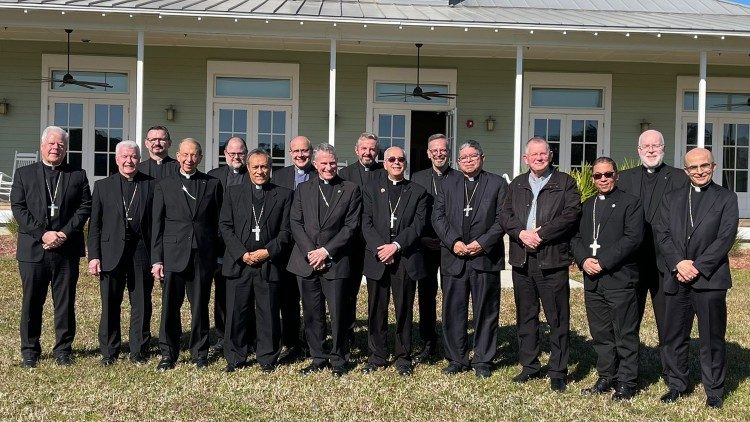
Members of the executive committees of the Episcopal Conferences of Canada, the United States and Latin America (CELAM).

Continuing a tradition that goes back to 1959, the bishops of the Episcopal Conferences of the North and South America met in Tampa (USA), for collegial reflection dedicated to prayer, fraternity, listening, and dialogue. 

Taking part in the February 26-28 gathering were Bishops from the leadership of the Latin American Episcopal Council (CELAM), the Canadian Conference of Catholic Bishops (CCCB), and the United States Conference of Catholic Bishops (USCCB).

At the conclusion of their meeting, the Bishops sent a letter to Pope Francis to share their experience. “Our conversations bore much fruit and we have begun to explore the possibilities of various joint initiatives, especially in the areas of the environment and migration.”

Speaking with Vatican News, CELAM Secretary General of CELAM, Bishop Lizardo Estrada, said the Church in the American continent lives an “affective and effective collegiality.” 

Emphasizing the common response of the Church to various challenges, he explained, “We want to walk together, synodality leads us to that; and to listen to one other and to face common problems and respond to these challenges that we all have, all America.”

‘One American continent’

In a joint statement issued after their meeting, the Bishops of the Americas stated, “We talked about our mutual concerns and approaches to pastoral ministry and moral issues including euthanasia, migration, ecological threats to our common home, and the Synod.”

The Bishops said their time together has helped them to see “the wisdom” of Pope Saint John Paul II’s affirmation that there is “one American continent,” noting, “We share much in common and have similar pastoral and social concerns.”

They added that their time together “has strengthened our bonds of fraternity in Christ and has allowed us to discern ways we can promote a more synodal and missionary Church and work together even more effectively in the vineyard of the Lord.”

Sweden Cuts Support for Russian Church After Intelligence Warnings

A Swedish agency for grants for faith institutions said Thursday it was cutting support to the Russian Orthodox Church, after Sweden's intelligence service warned the church was used for intelligence activities.

The Swedish Agency for Support for Faith Communities said in a statement that it was also cutting financial support for the Church, also known as the Moscow Patriarchate, for not living up to its "democracy criteria."

It said that Sweden's Security Service (Sapo) believed the Church was used by the Russian state "as a platform for gathering intelligence and other security-threatening activities."

"In the Swedish Security Service's remarks, it appears that representatives of the religious community have had contact with people who work for Russian security and intelligence services," the agency said in a statement.

It added that the Church had received significant funding from the Russian state, and that representatives had acted in a manner that seemed to encourage "support for Russia's invasion of Ukraine."

The agency also noted that the Russian Church denied the allegations made against it.

The Moscow Patriarchate was already among the smaller recipients of grants for faith-based institutions, and in 2022 the Church received just under 200,000 kronor ($19,300) from the Swedish state.

In its annual assessment published last week, Sapo pointed to Russia as one of the main threats to Sweden.

In January 2023, a former Swedish intelligence officer was handed a life sentence for spying for Russia.

And in September, a Russian-Swedish national went on trial accused of passing Western technology to Russia's military. A Stockholm court found he had exported the material but ruled his actions did not amount to intelligence gathering.

Sweden also dropped two centuries of military non-alignment and applied for NATO membership in the wake of Russia's invasion of Ukraine, and is expecting to become a full member within days after the last holdout Hungary ratified the country's membership on Monday.

Newfoundland Catholics win parish appeal, but future still uncertain

 In Newfoundland, Catholics appeal closure after winning church bid

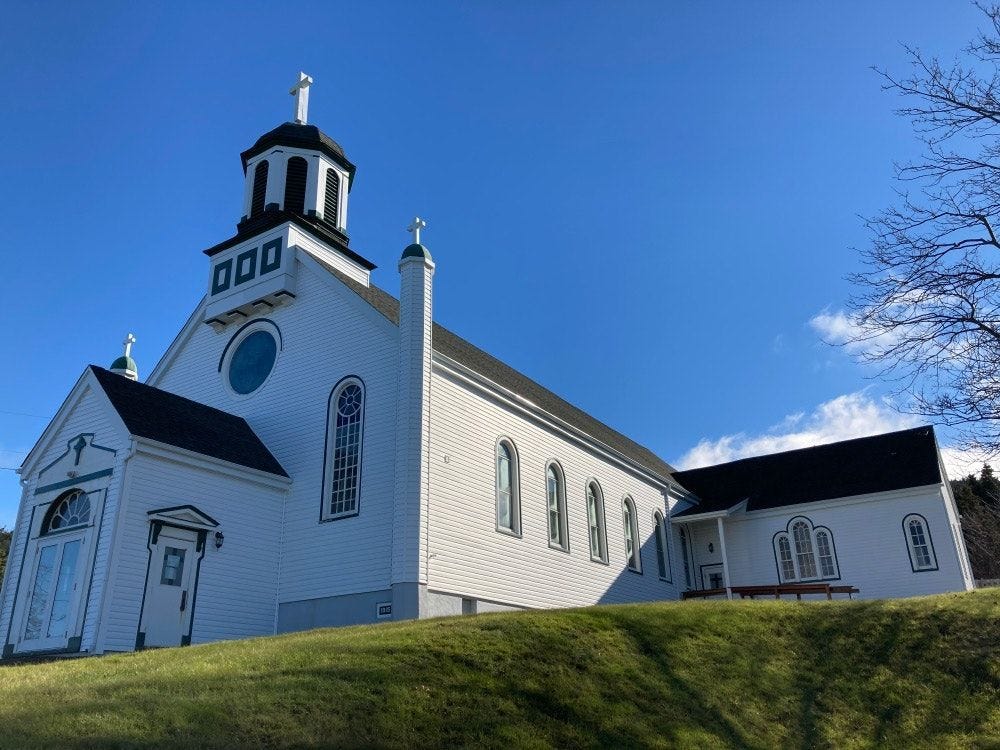
A group of Canadian Catholics say the Vatican has overturned the suppression of their parish, after they rallied to purchase their parish church in a 2022 auction.

But members of Holy Rosary Parish, in Portugal Cove-St. Philips, Newfoundland are still uncertain about what will happen next, as they say the archbishop has declined a meeting to discuss the future of liturgy in the parish.

Ed Martin, a Holy Rosary parishioner and procurator of the appeal against the parish suppression, told The Pillar that he had received a letter from the Vatican’s Dicastery for the Clergy last week, indicating that the dicastery had overturned Archbishop Peter Hundt’s decisions to both merge the parish and relegate the church to profane use.

Martin said he is happy about the decision, but cautiously so. 

“I asked for a meeting [with Archbishop Hundt] to discuss it, but he's not willing to meet at this point in time, so I don't know what his next move is,” Martin said.

The Archdiocese of St. John’s did not respond to requests from The Pillar for comment.

Holy Rosary was one of 18 parish churches in the Archdiocese of St. John’s, Newfoundland, Canada, placed up for sale in 2022. 

The sale was part of an effort to resolve an archdiocesan bankruptcy filing and a court order to compensate victims of sexual abuse at a closed Catholic orphanage in Newfoundland.

Some members of the parish wanted to keep the church open as a sacred space. But a group of business leaders in their small seaside community wanted to purchase and redevelop the property - including the church building - as a community space, with a focus on “heritage,” “arts and culture,” and “health, wellness, and mindfulness.”

The two groups reached an agreement to divide the parcel of land in two. The larger parcel, including the buildings housing the rectory and parish hall, could be used as a cultural center, while the parishioners bid on the smaller portion, which included the church building and about an acre of surrounding land.

With the land split in two, the parishioners were able to set up a GoFundMe campaign in an effort to save the church building. The campaign attracted thousands of donations, some from as far away as California.

The parishioners raised enough money to successfully purchase their church building. The amount of the purchase has not been disclosed.

After parishioners won the building auction, they approached the archdiocese to ask about guidelines for drafting articles of incorporation and other legal documents, Martin said.

But when they met with the archbishop in August 2022, they were told the parish was being shut down.

The reasons reportedly given: there were too few priests in the archdiocese, there was general concern about financial viability of parishes in the diocese, and a general decreasing and aging in parish populations.

The parishioners argued that with the parish land split in two, the parish was financially viable. There were fewer buildings to maintain and heat. And, they believed, the fact that they had just won an auction to buy the church building showed the parishioners’ commitment to their local church community.

But while the parishioners voiced these thoughts in a letter to the archbishop, Hundt announced that he was planning to close the parish. Hundt celebrated a “final Mass” there October 16, 2022.

After that Mass, parishioners worked with a canon lawyer to appeal the decision to the Vatican.

The parishioners argued that proper canonical procedure was not followed in the de facto suppression of their parish. They said they had not received a formal decree of suppression, leaving them in a tough position. 

They also said Archbishop Hundt misled them, indicating that their parish could remain open if they successfully bought its church building during the archdiocesan bankruptcy auction.

Parishioners told The Pillar at the time that they were frustrated they were allowed to move forward with fundraising and bidding on the church building when it later seemed that the archbishop had not intended to let them keep their parish. 

Martin said that a neighboring church, Holy Trinity in Torbay, was also put up for sale, and the archdiocese helped the parish purchase the church. They later found out that the archdiocese was planning to merge their community into Holy Trinity.

After sending their appeal to the Vatican in October 2022, Martin said he received notice of the decision last week. 

He said the dicastery had objected to the archbishop’s merger of the parish, and relegation of the church building to non-sacred use, and ruled that the archdiocese did not have a right to sell Holy Rosary Parish property, because the parish is a distinct juridic person.

Martin said news of the Vatican’s decision has started to percolate through the parish community, where support for the church had been nearly unanimous. The parish had about 50 regular Mass attendees when the church was last open.

Some people have been almost in tears at the news, he said.

A few parishioners had been so upset about the parish closure that they had stopped going to Mass when the church was shut down nearly 18 months ago.

One woman told Martin that her brother will return to Mass if the church re-opens.

“If that brings people back [and] we can get this church re-opened, that would be great,” Martin reflected. 

Still, the community’s excitement is tempered by the uncertainty of what will happen next.

Since Hundt has not responded to parishioners’ request for a meeting, it is not clear what the next steps will be - for example, whether the archbishop might try to appeal the dicastery’s decision to the Apostolic Signatura, a Vatican court of appeal.

Martin hopes the archdiocese will respond to his overtures soon. He said that with the other parish closures in the archdiocese, there are now enough priests to have one assigned solely to Holy Rosary.

Meanwhile, the morale at Holy Rosary - already impacted by the church’s closure and the lengthy appeal process - remains tenuous as the community continues to wait.

Martin said the appeal process has been intimidating and disheartening.

“I'm a regular Joe in the pew. I’m not a lawyer... I just thought this whole thing was unjust,” he said.

He added that he now has “a file that's probably about six inches thick of letters back and forth to the archdiocese, to the Vatican, you name it.”

Priest accused of abusing Inuit children in Canada will not be dismissed by church

French Roman Catholic Oblate priest (Johannes Rivoire) in Canada allegedly*  sexually abused at least four Inuit children; *fled to France when charged,  where he was *protected by the Oblates; later charged with

A French clergyman dubbed the “devil priest” who stands accused of sexually abusing Inuit children in Canada’s north will not be dismissed from his congregation after senior church officials in Rome declined to act, citing the nonagenarian’s declining health.

Johannes Rivoire, a priest with the Missionary Oblates of Mary Immaculate, worked in several Canadian Arctic communities in the 1960s and 70s before returning to France in 1993.

Police laid charges against Rivoire following accusations of sexual assault in the communities of Arviat, Rankin Inlet and Naujaat. 

But the charges were later stayed, largely due to France’s longstanding policy of not extraditing its citizens to face charges abroad. 

Rivoire, now in his mid-90s, remains the subject of a Canada-wide arrest warrant.

In 2021, the Inuk elder Peter Irniq told APTN News that his friend Marius Tungilik was one of Rivoire’s alleged victims. 

Tungilik died by suicide in 2012 aged 55. “[Marius] drank and drank and drank. He was very much haunted by this devil priest,” said Irniq.

The Oblates of Mary Immaculate, OMI Lacombe Canada and the Oblates of the Province of France had previously asked church leadership in Rome to dismiss Rivoire. 

The Oblates of Mary Immaculate say they have also asked Rivoire to return to Canada to face the charges against him, a request he has refused.

This week, Father Ken Thorson, the leader of the Oblates of Mary Immaculate (OMI) Lacombe Canada told the Canadian Press that, considering Rivoire’s age, Rome would not dismiss him from the Oblates.

Thorson said he was “deeply disappointed” by the decision. 

A dismissal would not have compelled Rivoire to return to Canada but Thorson said a different decision from Rome might have shown the church was willing to show some form of commitment to reconciliation and accountability.

On Tuesday, the justice minister, Arif Virani, told reporters that his government was working with Interpol on the case and had requested a “red notice” – a request to apprehend Rivoire if he ever left France.

Virani said Rivoire, who has been moved to an Oblates’ administration house in Lyon after protests outside his retirement home, is accused of “reprehensible conduct, and we need to ensure that justice is pursued” against both the priest and anyone accused of severe crimes.

Rivoire has denied the allegations, and none has been tested in court.

While justice for the alleged victims remains elusive, the Oblates – in Canada and in France – have requested an independent review, led by retired judge of the superior court of Quebec justice André Denis, into the allegations of sexual abuse against Rivoire. 

The report, which will give suggestions how Oblate policies and governance could be improved to better protect minors and ensure accountability, is expected before 1 April.