Saturday, November 30, 2013

Vatican abuse prosecutor says Rome 'well aware' of accountability problem


The Vatican's top prosecutor for sex abuse cases says Rome is "well aware" of how frustrated many people are with perceived confusion about how to hold bishops accountable when they're accused of failing to make a "zero tolerance" policy stick and hopes a solution will emerge from debates over curial reform under Pope Francis.

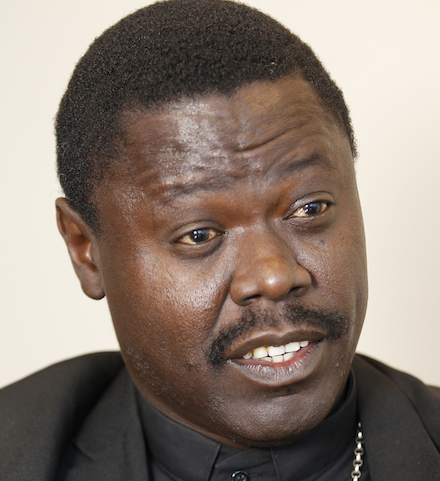
Fr. Robert Oliver, a New York native who helped lead recovery efforts from the abuse crisis in the Boston archdiocese before being appointed as the Promoter of Justice in the Vatican's Congregation for the Doctrine of the Faith in late 2012, spoke to NCR on Friday.

He made the comment on accountability in the context of a question about Bishop Robert Finn of Kansas City-St. Joseph, Mo., who was convicted in September 2012 of a misdemeanor crime of failure to report a priest suspected of abuse and has remained in office.

This week, Oliver will be in the United Kingdom for a series of talks as well as meetings with abuse victims and child services professionals. 

It marks a fairly rare public outing for the 53-year-old canon lawyer, who so far has not developed the same high profile as his predecessor, Charles Scicluna, a Maltese cleric who became the face and voice of the cleanup effort on sex abuse under Pope Benedict XVI before returning to Malta as an auxiliary bishop a year ago.

Oliver's conversation with NCR marks his first extended interview since taking his present position.

Oliver grew up on Long Island, and in some ways, a legal career was written into his DNA. His father was a justice of the New York State Supreme Court, and his grandfather was chief justice of the U.S. Customs Court.

As a canon lawyer, Oliver served as director of Boston's Office for Investigations from 2002 to 2005 and was part of a training team for implementation of the U.S. Conference of Catholic Bishops' charter for the protection of children and young people from 2003 to 2008.

Oliver is a member of the Brotherhood of Hope, a religious community founded in 1980 that grew out of the Catholic Charismatic Renewal.

Other highlights from his NCR interview:
  • Oliver asserted that recent reports suggest "a dramatic drop in incidents of abuse" committed by Catholic personnel, confirming, in his view, that "the church has made great strides in all parts of the world."
  • He conceded that in some instances, processing abuse cases both at the local level and in Rome "takes too long" and said his office is working on the problem.
  • Oliver said in an average month today, the number of abuse cases reported to Rome is in the dozens, most dating from the distant past.
  • He commends the United Nations Committee on the Rights of the Child for taking an interest in child sexual abuse, including the Vatican's record on the problem, despite suspicions in some Catholic circles that it's an excuse for attacking the church. He confirmed that the Vatican is preparing a response for the committee ahead of a scheduled Jan. 16 hearing in Geneva.
  • Without commenting directly on recent charges of abuse against a papal nuncio in the Dominican Republic, Oliver said such situations offer a reminder that the problem "never goes away" but also that "the changes the church has made are working."
  • Oliver said it's legitimate for church leaders to be concerned about the impact of litigation related to the abuse scandals, but they need to make clear that "our main concern is not about protecting the church's money."
The text of Oliver's interview appears below.

NCR: Where do things stand on the church's fight against child sexual abuse?

Oliver: In general, I think the church has made great strides in all parts of the world. Experts often say that the Catholic church has become the safest place we know for children. 

All the data we have suggests that the number of priests harming minors today is very, very low, and that's based on reports not just from the United States but from other nations as well, where we see a dramatic drop in incidents of abuse.

Certainly, we have much more to do, which is why our congregation asked episcopal conferences around the world to review their abuse guidelines. 

Much of our focus now is on that project, as well as encouraging bishops to develop prevention programs, the formation of seminarians, support of priests, assisting victims in the process of healing, cooperating with civil authorities, and so on.

You've been Promoter of Justice in the Congregation for the Doctrine of the Faith for almost a year. What have you been doing?

Much of the work of the congregation involves supporting bishops and local churches when reports of abuse arise, especially handling cases from around the world when they come in. 

Working on the responses to those cases is one of the most important, and also most time-consuming, things I do.

Can you step us through the process?

The initial responsibility lies with the local diocese. When a bishop or his representatives receive a claim regarding an incident of abuse, it's their responsibility to gather the initial evidence to determine how best to handle it, which includes making an initial determination as to whether it's credible enough to move forward.

If the charge is found to be credible, then the law requires that the case be sent to us. We generally also ask the bishop to send along his votum, which is the technical word for his recommendation on how the case should be handled. 

We study the case to decide what further steps should be taken, considering the good of the victim, due process for the accused, the good of the church, and so on. 

That includes determining if a penal process [regarding the accused party's future as a priest] is warranted, and if so, where it should be held, meaning whether we should do it here or in the local church.

From soup to nuts, how long does it take to process these cases?

How long it takes a bishop to complete a preliminary investigation and for us to respond varies greatly, and in many cases, frankly, it takes too long. That's one of the things we're working on. 

Regarding the most recent cases we have received, once a case gets to us, we're responding much more quickly than it has taken to respond to historic cases dating back to the '50s, '60s and '70s.

The time a case takes also depends on how contentious it is. Some trials are still taking years, even though the law says a trial is to be finished within one year, and the appeals can take several more. 

On the other end of the spectrum, some priests admit culpability and request the Holy Father to dispense them from the obligations of the clerical state (commonly called laicization). 

We often complete those cases within two or three months. 

Most cases fall somewhere in between.

In an average month, how many cases are reported to the Congregation for the Doctrine of the Faith today?

We don't have precise statistics, which is something we're trying to develop. I suppose in an average month, we're talking in the dozens from around the world, including cases which date back many years.

We don't have many present-day allegations of abuse, though it's important to remember that there's often a delay in people coming forward to make reports. Let's be clear: One case is one too many. 

Yet as we look around at this problem today, we can see many positive effects from the efforts the church has made.

Can you identify any impact of Pope Francis vis-à-vis sex abuse?

Shortly after becoming pope, he said quite clearly to our prefect that this is an important area and he wanted us to continue along the lines that Popes John Paul II and Benedict XVI initiated. 

We take that as our mission statement.

Beyond that, I'd say that Francis right now is laying out a vision of effective management in the church. 

You have to bring people together, listen to their ideas, and explore different possibilities in order to ensure that you make the best decisions. That's how he's doing things, and it's a model for our work, too.

Our prefect speaks with Pope Francis every two weeks, which gives him a chance to update the pope on our work and to discuss questions and ideas. That interaction has been very fruitful in terms of setting the direction we're going to take. 

[Francis] has indicated some principles, and beyond that, he's said he wants the process to unfold, encouraging people to bring up ideas and talk about them.

On Jan. 16, the U.N. Committee on the Rights of the Child is scheduled to hold a hearing on the Holy See's response to the abuse scandals. What do you make of the U.N. looking at the church's record on abuse?

I know the Secretariat of State is preparing a response to that inquiry, collecting input from interested parties, including our congregation.

In general, I think it's positive that the U.N. is taking an interest in child abuse. 

The protection of children is a worldwide issue, one that touches every facet of society, and if the U.N. can broaden our understanding, encouraging best practices and fostering mutual support among the various elements in society, that would be a service both to the protection of children and the common good.

You don't see it as a way of beating up on the church?

I suppose that's always a risk, but the issue is important enough that it's worth cooperating wherever we can.

Recently, the papal nuncio in the Dominican Republic, Polish Archbishop Jozef Wesolowski, was removed following accusations of abuse. Does his situation illustrate that the scandal is still alive, or is it actually proof that the system works?

I can't comment on open cases, as you know. 

If you wish, here's a general observation: Every incident of abuse is a crime, and when they happen, they're a reminder that this danger never goes away and we have to remain vigilant.

Also with every allegation of abuse, the church cooperates with civil authorities in order that they do their work on the criminal side. 

We then implement our own canonical process in a just way to decide if the accused can continue to function as a priest, doing it all with transparency and accountability. 

Present-day cases are, therefore, also reminders that the changes the church has made are working.

The Vatican has said repeatedly that the church is committed to full collaboration with civil authorities, yet in Chile, the archbishop of Santiago recently refused to appear before a congressional committee looking into abuse at church-run children's homes. Is there are contradiction there?

I don't know the situation well, so I can't comment on it in detail. 

I am aware, however, that the archbishop continues to keep our office well informed. 

When you refer to statements about "full collaboration," it's important to distinguish the investigation of crimes of sexual abuse from legislative hearings. 

Since things are different around the world, I think the latter has to be a local decision.

The recent "Betrayal of Trust" report in Australia heavily criticized the church's handling of abuse cases in that province, concluding that "No representative of the Catholic church directly reported the criminal conduct of its members to the police." What do you make of it?

As I understand it, the report was talking about historical cases rather than what's happening in the present. 

I can't comment on their judgment, but I believe the intent of the commission was a good one, which was to understand how this problem was handled historically so we can do a better job of it now. 

There's no denying that in many parts of the world, these crimes weren't handled properly in the past, so the report is another reminder of how important it is that we remain committed to transparency and collaboration with public authorities to avoid these kinds of failures.

Leaders of the church in Australia have expressed ambivalence about a recommendation in the report about incorporating the Catholic church in order to facilitate civil lawsuits. You were in Boston when much of the abuse litigation in America moved through the courts. Looking back, what do you make of those lawsuits?

I think for the victims of sexual abuse, the ability to be heard and to receive vindication was a contribution to healing. 

They were able to make use of the legal system in order to seek justice, and in that sense, there were benefits. 

In a larger legal sense, I think how these cases developed showed that there are ups and downs in the process, with some positives and some negatives.

It's completely legitimate for the church to insist that whatever legal process is followed must be fair. 

When we talk about this litigation, however, it's important to make it clear that our main concern is not about protecting the church's money, but rather what the best way is for the church to live up to its mission and its responsibilities.

Some will never accept that the church's "zero tolerance" policy means anything until they see a bishop punished for failing to apply it. For instance, critics point to Bishop Robert Finn of Kansas City, who was convicted of failing to report abuse more than a year ago and still remains in office. What do you say to that criticism?

First of all, it's important to say that whatever happened in the past, there are clear rules today for what bishops are supposed to do. 

We have norms that say when a bishop becomes aware of an abuse report, he has to look into it, and if it's credible, he's required to report it to us. 

He's also supposed to report it to the civil authorities and to allow the criminal justice system to take its course.

Of course, what you're really asking is what happens if somebody feels that a bishop hasn't followed those rules, and I have to say it's an underdeveloped area. For instance, there's a question of what canon lawyers call "competence." 

The code states that the metropolitan bishop is to investigate any abuses in church discipline in the suffragan dioceses and report to the Holy Father. 

It is not always clear, however, to somebody who wants to bring a complaint in a church court against a bishop for what you might call "negligent supervision," what court do they bring it to? Who has the right to hear the case, and what process do you use? 

We often don't really have clear answers for these people, and work in these areas needs to be done.

One point to make is that no matter what happens, there's always going to be some local discretion. 

For instance, suppose a bishop gets a report of abuse and he takes it to his own review board, as well as relaying it to the civil authorities, and both come back to say there's no evidence of a crime, so the bishop doesn't move forward. 

He's followed the process as it's laid out, and in the end, it comes down to a local decision.

What if someone feels that decision was horribly mishandled?

Every member of the faithful always has the right by law to bring a complaint directly to the Holy Father. 

But that said, many people are telling us we need a better process, a better way of handling these situations.

Right now, there's a broad conversation going on about reform of the Roman Curia, which includes taking a new look at the relationship between the Holy See and other levels of authority in the church, such as the episcopal conferences, the metropolitans, and so on. 

My hope is that a good response to this question [of episcopal accountability on abuse cases] will become a piece of that puzzle, because we're well aware how important it is to many people.
Divisions over pope's effect in focus at religion academics' meeting

http://media.salon.com/2013/07/brazil-pope-photo-gallery.jpeg100-1280x960.jpgIf Pope Francis wants to speak genuinely about his concern for the world's poor, he must also address stark issues of inequality faced by women globally, Benedictine Sr. Joan Chittister told a crowd of religion scholars, teachers and clergy last Saturday.

Citing figures that indicate women represent approximately two-thirds of the world's illiterate population and two-thirds of those suffering from hunger, Chittister said, "Someone, somewhere has decided that women need less, women deserve less and women are worthy of less than men."

"Pope Francis has won the heart of the world by being humble, simple and pastoral -- a warm and caring face of this church, a man like Jesus who is a man of the poor," she said. "But no one can say that they are for the poor as Jesus was and do nothing, nothing, nothing for the equality of women."

Chittister, a well-known author, NCR columnist and former leader of the Leadership Conference of Women Religious, spoke Saturday at a session at the annual meetings of The American Academy of Religion and The Society of Biblical Literature.

Held Nov. 22-26 at sites across downtown Baltimore, the meetings saw approximately 15,000 teachers, scholars, clergy and others gather for some 1,000 events over the five-day period.
 
Chittister spoke at one of several events during the meetings focused on what effect Pope Francis has had globally on Catholicism, religion and society worldwide since his election to replace Pope Benedict XVI in March.

At question at several of those sessions was whether the new pontiff can be seen as standing in line with his predecessor, who did not share Francis' more friendly public persona and was seen by some as more doctrinally conservative.

Evincing a sharp contrast among other analysts Saturday was George Weigel, the well-known biographer of Pope John Paul II who spoke with Chittister as part of a five-person panel dedicated to "Pope Francis and the State of Global Catholicism."

Saying that the first months of Francis' papacy have been "a kind of Rorschach test," Weigel said Catholics have seen in the new pope "their dreams or their fears with a clarity and conviction that frankly has little to do" with the pope's actions.

Giving 10 points about Francis' style and preferences -- calling him, among other things, someone who is a "radically converted Christian disciple," a person respectful of popular expressions of piety, and a "man of the arts" -- Weigel said the pope stands in "essential continuity" with his predecessors, John Paul II and Benedict XVI.

Francis, Weigel said, will be the pope who completes a "dramatic historic transition" in the church from a focus on the 15th-century Council of Trent to the Second Vatican Council of the 1960s.

Outlining an arc of history leading to Pope Francis, Weigel said that transition was a "process of dynamic development" begun by Pope Leo XII in the 19th century and "accelerated by Vatican II and its authoritative interpretation by John Paul II and Benedict XVI, whose pontificates set the stage for Pope Francis and with whom his pontificate will be in essential continuity."

Richard Gaillardetz, a leading academic who heads the nation's largest membership society for Catholic theologians, took issue with Weigel's description of Francis' continuity with his predecessors at another panel discussion focused on the pope later Saturday.

Gaillardetz, who is the Joseph Professor of Catholic Systematic Theology at Boston College and serves as president of the Catholic Theological Society of America, spoke at a panel hosted by the College Theology Society -- another membership society for theologians -- and said he had rewritten his remarks after hearing Weigel's description of the new pope.

Gaillardetz said Francis' approach to the papacy represents a significant change in trajectory.

Since the end of the 19th century, Gaillardetz said, popes have frequently focused on being the "chief doctrinal czar" of the Catholic church, responsible for issuing authoritative statements on what Catholics should and should not do.

Beginning in the 1960s with Pope John XXIII, that role of the papacy has shifted to where the pope found himself needing to be someone who can persuade people about the teaching of the church rather than just handing down doctrine, Gaillardetz said.

"This is why it seems to me we can't simply speak of Pope Francis' continuing seamlessly what his predecessors have begun," Gaillardetz said. "Because I think Francis now marks in many ways the end of that trajectory where we think of papal teaching primarily as normative pronouncements of the teaching of the church."

Referencing a wide-ranging interview the pope had with an Italian Jesuit priest earlier this year, printed in 16 publications the order run around the world, Gaillardetz said such interviews are a "new form of papal teaching."

"We can certainly see real continuity with his predecessors," he said. "But I think we have to see also a genuine new development in the papacy -- I think the latest stage in what I hope will be a continued trajectory towards a papacy that can serve the unity of faith and communion in the church by recognizing in the modern world juridical degrees are going to need to be the exception rather than the rule."

Chittister too mentioned the pope's Jesuit interview, drawing specific notice to the pope's call in it for the church to "work harder to develop a profound theology of the woman."

"Who will do this reflecting?" Chittister asked. "The same clerical patriarchal types who have been doing it for the past 2,000 years?"

"The church has never defined women as fully independent beings, let alone adults," Chittister said. "Will there be simply another round of men do this and women do that: a dual anthropology that sees women as caregivers alone and men as world builders exclusively?"

The sessions about Francis were just a few of dozens at the religion meetings that touched on Catholic issues.

Earlier Saturday, the religion academy's group dedicated to those studying the Second Vatican Council dedicated two and a half hours to seven separate papers on the impact on the council's reforms of the Catholic liturgy.

One of the presenters there was Jonathan Tan, a senior lecturer at the Australian Catholic University, who focused on struggles communities in places like the Philippines and India have had in addressing concerns that the Catholic Mass does not do enough to incorporate local customs.

Some Catholics in those places, he said, feel an "an alienation with the church's liturgy which does not align with their hopes and needs."

Other sessions focused on the nature of authority in the global church since the council, experiences of African-American Catholics, and the future of Roman Catholic studies at public educational institutions.

Roman Catholic Diocese of Providence accused of protecting sex abusers

http://www.providencejournal.com/incoming/20131120-helen-mcgonigle.jpg.ece/BINARY/w620x413/Helen-McGonigle.jpgVictims of sexual abuse gathered for a news conference on Wednesday to condemn the Catholic Diocese of Providence for allegedly failing to properly investigate more than 800 allegations of sexual abuse over the past 20 years.

Among those presenting in a downtown hotel conference room stories of abuse by local parish priests were Ann Hagan-Webb, a representative from Survivors Network of those Abused by Priests, SNAP; and Jeffrey Thomas, of Massachusetts, and Helen McGonigle, a lawyer from Connecticut.

Thomas and McGonigle said they were raped as children by the Rev. Brendan Smyth, an Irish priest who was at Our Lady of Mercy Church in East Greenwich from 1965 to 1968. 

Smyth returned to Ireland and pleaded guilty to 141 counts of sexual abuse there. He died in prison in Ireland in 1997.

Thomas and McGonigle had made similar allegations about Smyth at a news conference in December 2009.

The victims said Wednesday they want the office of Attorney General Peter F. Kilmartin and U.S. Attorney Peter F. Neronha to launch an in-depth investigation into what they said were 831 complaints of pedophilia and sexual abuse filed with the diocese. 

They also said many of the abusive priests continue to serve in parishes in Rhode Island and elsewhere.

“This has to change if we are going to protect the children of Rhode Island,” Hagan-Webb said.

Amy Kempe, Kilmartin’s spokeswoman, said in an email that the matter will be taken seriously.

“The Office will accept and review any information the organization has regarding the allegations,” she wrote.

The Diocese of Providence issued a statement claiming they always forward allegations of sexual abuse to the state police or local law enforcement.

“It has been a consistent policy and practice of the Diocese of Providence to report many different issues including those of clergy abuse of minors to law enforcement,” the statement read. “The diocese is not aware of any priests currently in ministry, who have credible allegations of sexual abuse of minors against them.”

McGonigle, who said she was raped beginning at age 6 and continuing through age 9, referred to Smyth as “an international serial pedophile.” She said that, in June 2006, she met for about an hour with diocesan officials about Smyth and has since filed a lawsuit against the church. She also told them that her late sister, Kathleen, had been a victim of Smyth. She died of an a drug overdose in 2005, McGonigle said.

Hagan-Webb said that Monsignor Anthony DeAngelis repeatedly molested her in West Warwick from age 5 through 12. She said that she began recalling the crimes after she had children of her own in the early ’90s.

She said that she met with Robert M. McCarthy, director of the diocesan Office of Education & Compliance. McCarthy is a former Massachusetts State Police lieutenant.

Hagan-Webb said that McCarthy “demanded all my therapy records,” and she reluctantly turned them over. She said that eventually the diocese reimbursed her $12,500, the price of her extensive therapy sessions.

She said that DeAngelis died in 1988.

While alleging that the diocese had not investigated hundreds of abuse claims, the victims, along with Anne Barrett Doyle, co-director of bishopaccountability.org, of Waltham, Mass., provided reporters Wednesday with an inch-thick set of files they said that McCarthy had turned over to the state police. 

They all contained redacted information about priests allegedly molesting boys and men, girls and women from August 2003 through last February.

On Feb. 26, McCarthy sent a two-page memo to the state police that included a 19-page transcript from a man who said a former pastor sexually assaulted him when he was 15 years old. He said the pastor assaulted him “as many as 25 times” over 11/2 years at several locations including his private residence in Glocester.

McCarthy wrote that the clergyman admitted to the abuse and has resigned as the pastor of two parishes. He claimed that the victim did not wish to pursue “criminal or civil complaints” against him.

Barrett Doyle estimated that at least 500 of the more than 800 allegations of abuse involved victims under the age of 18. She also said that the abusers were priests and some lay employees of the church. Some of the abuse, she pointed out, was inflicted on adults.

One of the letters that McCarthy forwarded to the state police in August 2003 involved a 6-foot-7-inch tall pastor who a woman said sexually assaulted her. 

“On one occasion, I can recall he kept a door open while urinating and said to me, come and see what I got,” the report said.

McCarthy compiled a 21-page typewritten summary of the woman’s allegations.

Simplified questionnaire on family life draws big response

http://www.abdiocese.org.uk/OneStopCMS/Sites/DABNet/Theme/images/logo.gifA simplified version of the synod questionnaire on family life has drawn 1,600 responses even though it is only available on request.

The questionnaire, produced by the Diocese of Arundel and Brighton, allows respondents to tick “yes” and “no” boxes and rank statements from one to 10 depending on how much they agree or disagree with them. 

Deacon Mark Woods, communications officer for the diocese, said the questionnaire had not been put on the diocese’s website because of a lack of resources to deal with demand. 

Instead copies can be obtained by emailing a request to communications@dabnet.org.

He explained that the idea was to make the questionnaire “more understandable as a survey”.

He said: “The aim was to give people something they might find easier to get their teeth into.”

He explained that responses from people outside Arundel and Brighton would be passed on to the relevant diocese to use if it wished.

Last week the bishops’ conference said that 5,000 people had filled in the synod questionnaire in the three weeks since it was posted online. 

Elizabeth Davies, marriage and family life project officer, said 15,000 had accessed the survey but only a third of those had submitted responses.

The bishops have asked Catholics to respond to the questions by Saturday, November 30. 

The findings will be passed on to officials in Rome in January and will be used to inform discussions at the extraordinary synod of bishops on the family in October.

Thousands in Central African Republic turn to bishop for protection

Bishop Nestor-Desire Nongo Aziagbia of Bossangoa (CNS)More than 35,000 people are living on the 40-acre diocesan compound in Bossangoa, Central African Republic, seeking protection from rebels who are targeting Christians, the local bishop has said.

“The priests have been sharing their rooms in their private apartments,” said Bishop Nestor-Desire Nongo Aziagbia of Bossangoa, who visited Washington in mid-November. “The only place that has not been used is my private apartment.”

Bishop Nongo, said he closed the minor seminary, which is now used as a shelter, and the pastoral centre has been destroyed. 

He said the Catholic aid agency Caritas has an office in the compound, but people also live in the office.

The people began coming in early September to escape attacks by rebels of the Seleka alliance, most of whom are foreign mercenaries and do not speak the local language. 

The rebels are predominantly Muslim; Central African Republic is about 85 per cent Christian and 12 per cent Muslim.

Bishop Nongo said the US bishops’ Catholic Relief Services sent emergency help in mid-September, and the World Food Programme sent help in late September, “but it is not really enough”.

Most of the people in the diocesan compound are women and children, the bishop said. To protect their families, men do not stay, fearing they will be targeted by rebel soldiers.

The bishop said the women have been risking rape and attacks to go out to their farms to harvest food, but soon all the crops will be gone, and the next planting season is May and June.

The bishop was speaking on Tuesday after testifying about the situation before the House Subcommittee on Africa, Global Health, Global Human Rights and International Organisations. 

He said when he called his vicar general early that morning, he learned that during the previous night rebels had surrounded the diocesan compound and threatened those inside with a rocket attack.

Bishop Nongo added that he receives messages from villages about violence and abuse every day. The people are “turning to me” to solve their problems, but I’m not the government,” he said. He added that he passes along the information, but nothing happens.

In his testimony submitted to the House subcommittee, Bishop Nongo said Seleka was pitting the country’s Christian and Muslim citizens against each other.

“Seleka’s violent attacks have targeted Christian homes, schools and places of worship while sparing local Muslim communities and mosques, often only a short distance away,” he said. 

“Christian communities have now begun to set up self-defense militia to fight back. Sadly, there are reports that they are attacking Muslim communities in retribution.”

Since the March coup in which Seleka rebels overthrew the government, about 440,000 citizens have been displaced, the bishop said, “and no one knows how many people have died.”

“The road south to the capital, Bangui, over 200 miles away, is deserted,” he said in his testimony. “Villagers have fled to escape the attacks, mass killings, rape and plundering perpetrated by the roaming groups of Seleka militia,” who have divided up the country and established regional control.

He said interim president Michel Djotodia, who led the March coup, formally dissolved the Seleka alliance in an effort to end the violence, but “he has no formal army to enforce peace and security.”

The bishop urged congressional leaders to work with France, the African Union and the UN to provide immediate assistance to help secure the country and “compel Seleka forces to disarm, demobilise and reintegrate into society or return to their home countries.”

He also asked them to fund humanitarian assistance and a “transition process to a legitimate, democratically elected government.” 

He noted the country would need continued assistance for years and asked them to rally the international community.

Peter O’Toole to star in new film about St Katherine of Alexandria

Peter O'Toole in a scene from Katherine of AlexandriaVeteran British actor Peter O’Toole is to star in a new film that tells the story of St Katherine of Alexandria.

The 81-year-old actor will play Gallus, an orator in the emperor’s court, alongside Romanian actress Nicole Keniheart as the third century martyr. 

Also starring are Joss Ackland, Steven Berkoff and Edward Fox.

St Katherine of Alexandria was according to later biographies born to local royalty who converted to Christianity at the age of 14. 

Blessed with a natural talent for scholarship and rhetoric, she is said to have bettered a series of pagan philosophers in debate who were put up by the Roman emperor of the time, and who subsequently converted to Christianity.

Although she cannot be identified with any historical character, and she was removed from the Roman Calendar in 1969 until being restored as an optional memorial in 2002.

O’Toole has been nominated for Oscar awards eight times in his career, including for his roles in Lawrence of Arabia, Beckett and The Lion in Winter, where he played Henry II.

Katherine of Alexandria will be filmed in Cyprus and Britain, and is set for release early next year.

Prayer For The Deceased

Our Father….
Hail Mary….
Glory Be….
Eternal light shine upon them, and may their souls and the souls of all the faithful departed rest in peace. Amen.

Most Sacred Heart of Jesus, pray for us (x3)
Immaculate Heart of Mary, pray for us (x3)

Prayer to Saint Michael the Archangel: 
Saint Michael the Archangel, defend us in battle. Be our protection against the wickedness and snares of the devil. May God rebuke him, we humbly pray; and do Thou, O Prince of the Heavenly Host -by the Divine Power of God -cast into Hell, Satan and all the Evil Spirits,who roam throughout the world seeking the ruin of souls.

Amen

Friday, November 29, 2013

Pa. Catholics granted injunction against contraception mandate

http://www.catholicnewsagency.com/images/size340/HHS_Sec_Kathleen_Sebelius_listens_as_President_Obama_announces_the_contraceptive_mandate_at_the_White_House_Jan_12_2012_Official_White_House_Photo_by_Pete_Souza_CNA_1_2_13.jpgAn injunction against the federal contraception mandate granted to a group of non-profit Catholic organizations in Western Pennsylvania has been hailed as a key win for religious liberty.

Brandon McGinley, field director for the Pennsylvania Family Institute, told CNA on Nov. 22 that the decision is a “victory for religious freedom.”

He pointed to the judge’s “strong argument that the Free Exercise of Religion cannot be reduced to a ‘Freedom of Worship,’” saying that this should guide other courts in considering the mandate.

The case was brought by Catholic Charities of the Diocese of Pittsburgh, as well as its affiliates the St. Martin Center and Prince of Peace Center of the Diocese of Erie, along with Erie Catholic Preparatory School.

It challenged the U.S. Department of Health and Human Services’ contraceptive mandate on grounds of religious freedom.

Issued under the Affordable Care Act, the mandate requires employers to offer health insurance plans covering early abortion-inducing drugs, sterilizations and contraceptives to their employees, even if doing so violates their deeply-held religious convictions.

The regulation has drawn widespread criticism, as well as lawsuits from more than 200 plaintiffs. Faced with opposition from religious groups and individuals, the Obama administration issued a revision, exempting houses of worship and their affiliated organizations, but placing other religious non-profits under a separate “accommodation,” so that their insurers would directly provide the coverage.

Critics of the mandate have argued that the accommodation is insufficient, still requiring objecting groups to facilitate the coverage and possibly leading them to indirectly fund it.

In deciding the Pennsylvania case, the U.S. district judge ruled that the mandate would redefine “the Right to the Free Exercise of Religion as set forth in the First Amendment to a Right to Worship only,” a move which will “sever the Catholic Church into two parts,” - “worship and faith, and ‘good works.’”

He also commented that the government “has failed to offer any testimony or other evidence” showing that employees who do not receive contraception from religious employers “have, in fact, suffered in the past, or will in the future, any ‘negative health or other outcomes,’ without the enforcement of the contraceptive mandate.”

“In fact, the evidence was to the contrary,” the judge said.

Bishop David Zubik of Pittsburgh commended the decision in a statement for the diocese, saying that the Catholic commitment to providing healthcare and services for the poor is “central” to “the practice of faith,” and that the decision took “an important step in recognizing this obvious, fundamental truth.”

Matt Bowman, senior counsel for Alliance Defending Freedom, which is representing some of the organizations challenging the contraception mandate, called the decision “a huge victory.”

“The injunction is the first one that has been thoroughly litigated for a Catholic non-profit organization, and only the second one so litigated for a non-profit entity of any kind,” he said in a post on CatholicVote.org.

The decision, he explained, “defeats the so-called ‘accommodation’ that President Obama has attempted to thrust on non-profit religious groups,” and “vindicates the U.S. Bishops’ uncompromising stance on the abortion-pill and birth control mandate, which they recently reaffirmed at their annual meeting.”

“America cherishes religious freedom for all people,” Bowman commented.

“Its jurisprudence is now doing so against an increasingly massive and insistent federal government that desires to impose its own anti-life and anti-fertility image on every citizen and organization in the nation.”

Archbishop rejects use of Pope's words to justify Illinois 'gay marriage'

https://encrypted-tbn1.gstatic.com/images?q=tbn:ANd9GcRVXF1iidrAr4jXlg1Kqvk3a3LQ2CNwSzD2vItMIds7jaNtW6kwAs same-sex “marriage” becomes law in Illinois, the U.S. bishops’ head of marriage defense issues has lamented the “disgraceful” misuse of Pope Francis’ words to justify the institution’s redefinition.

“Pope Francis has forcefully reminded us that we are to show love and respect to all people and to seek their greatest good, and he therefore continues to clearly promote and defend marriage and family, recognizing that this is in everyone’s best interest as members of a common society,” Archbishop Salvatore Cordileone of San Francisco, chairman of the U.S. bishops’ Subcommittee for the Promotion and Defense of Marriage, said Nov. 20.

The archbishop noted that Pope Francis opposed the redefinition of marriage in Argentina as Archbishop of Buenos Aires, where the future Pope said, “The identity of the family, and its survival, are in jeopardy here: father, mother, and children … At stake is the total rejection of God’s law engraved in our hearts.”

The Pope has also encouraged Catholics to “propose to all people, with respect and courage, the beauty of marriage and the family illuminated by the Gospel.”

Illinois Gov. Pat Quinn signed a bill to recognize same-sex unions as marriages on Nov. 20.
Illinois House Speaker Michael Madigan had justified support for the bill by citing the Pope’s July comments on the flight from World Youth Day in Rio de Janeiro to Rome.

“If a person is gay and seeks the Lord and has good will, well who am I to judge them?” the Pope had said, in response to a question about the “gay lobby” in the Vatican. The Pope had also said that lobbies “are not good.”

Rep. Linda Chapa LaVia, a Democrat from Aurora, said she voted for the bill “as a Catholic follower of Jesus and the Pope,” the Chicago Tribune reports.

Archbishop Cordileone said that in light of the Pope’s criticisms of same-sex unions, it is “disgraceful that some legislators would manipulate the words of Pope Francis to suggest that he would support marriage redefinition.”

The archbishop said this redefinition is “a serious injustice.” The law exists to protect “authentic rights, especially the right of children to have a married mother and father.”

The law could create more religious freedom threats to business owners in the wedding industry, such as florists, photographers and wedding planners, who cannot in good conscience participate in same-sex ceremonies. Lawsuits have targeted similar businesses in other states.

“The bill is called the Religious Freedom and Marriage Fairness Act. But this act is neither free nor fair for people of religious convictions,” Peter Breen, vice president and senior counsel of the Thomas More Society, said Nov. 20.

A group of legal scholars said that the Illinois bill’s vague and undefined terminology will require litigation to determine what religious liberties are protected.

Sixteen states have legally recognized “gay marriage,” particularly in the northeast U.S. 

Marriage law was initially redefined by the courts before several legislatures passed bills recognizing the unions. Same-sex “marriage” ballot measures did not succeed until 2012.

Brian Brown, president of the National Organization for Marriage, suggested that activists for redefining marriage have “run out of easy targets.” 

The activists targeted the “most liberal” states and “barley eked out some incredibly narrow victories,” he said Nov. 20 in a statement to his organization’s supporters.

Amendments defining marriage as a union of one man and one woman exist in 30 states, he noted, saying that there is a “false narrative” which asserts that the redefinition of marriage is inevitable.

Archbishop Cordileone praised the “courageous efforts” of those who helped defend marriage in Illinois.

“The defense of truth and goodness is never in vain,” he said.

Freiburg auxiliary bishop retires, shortly before 75th birthday

http://upload.wikimedia.org/wikipedia/commons/f/fa/Rainer_Klug.jpgPope Francis accepted the resignation Nov. 21 of Bishop Rainer Klug, an auxiliary of the Archdiocese of Freiburg im Breisgau, “upon having reached the age limit,” according to the Vatican Information Service.

The Code of Canon Law requests that a bishop “who has completed the seventy-fifth year of age” presents his resignation to the Pope. Bishop Klug will celebrate his 75th birthday Dec. 13.

Bishop Klug was born in 1938, and was ordained a priest for the Freiburg archdiocese in 1969. He was appointed auxiliary of the archdiocese in 2000 by Bl. John Paul II.

The archdiocese has been vacant since Sept. 17, when Archbishop Robert Zollitsch resigned, having turned 75. During the vacancy, the see has drawn criticism for a draft document released by its office of pastoral care Oct. 7.

The text of the document suggested that divorced and remarried Catholics can receive Holy Communion if they can show their first marriage cannot be reentered, if they repent of their fault in a divorce and if they enter “a new moral responsibility” with their new spouse.

The document also suggested priests might offer “prayer services” for divorced faithful entering into a new civil marriage.

The prefect of the Congregation for the Doctrine of the Faith, Archbishop Gerhard Müller, responded by writing a letter on the matter to Archbishop Zollitsch, instructing that the document be “withdrawn and revised” such that “no pastoral directions are sanctioned” which oppose the teaching of the Church.

Archbishop Müller also published a lengthy essay in L'Osservatore Romano rebuking the archdiocese's document.

Given Bishop Klug's resignation, the Freiburg archdiocese is now served by two auxiliaries, Bishop Michael Gerber, 43, and Bishop Bernd Uhl, 66. In addition to Bishop Klug, there are two other auxiliary emeriti: Bishop Wolfgang Kirchgaessner, and Bishop Paul Wehrle.

In other pontifical acts, Pope Francis appointed Bishop Thomas Msusa as Archbishop of Blantyre, in Malawi; Fr. Paskalis Syukur as Bishop of Bogor, in Indonesia; and Bishop Celmo Lazzari as Vicar Apostolic of San Miguel de Sucumbíos, in Ecuador.

Pope's words in interview may not have been his own, Scalfari says

Pope Francis in St. Peter's Square on Pentecost Sunday, May 19, 2013. Credit: Stephen Driscoll/CNA.Editor Eugenio Scalfari has conceded it is “really possible” that some of the Pope's words he reported in the interview published in La Repubblica Oct. 1 “were not shared by the Pope himself.”

Last month's interview led to several criticisms of Pope Francis, notably Scalfari quoting the Pope saying of conscience that “everyone has his own idea of good and evil and must choose to follow the good and fight evil as he conceives them. That would be enough to make the world a better place.”

According to Scalfari's reporting of Pope Francis' words, he also described the Roman Curia as a “leprosy.”

After the interview was published, Vatican press director Fr. Federico Lombardi maintained that the text was overall faithful to the Pope's thought, even though it could not be considered part of his Magisterium.

The interview was then published in the Vatican newspaper L'Osservatore Romano Oct. 2, and was inserted among the Pope's speeches on the Vatican's website, translated in six languages.

In the weeks after its publication, however, the interview drew widespread criticism as well as doubts over the accuracy of the Pope's words.

The text was recently removed from the Vatican's website because “the information in the interview is reliable on a general level, but not on the level of each individual point analyzed,” Fr. Lombardi told journalists Nov. 15.

In a meeting with the journalists of the Foreign Press Association of Rome, Scalfari maintained that all his interviews have been conducted without a recording device, nor taking notes while the person is speaking.

“I try to understand the person I am interviewing, and after that I write his answers with my own words,” Scalfari explained.

He conceded that it is therefore possible that “some of the Pope’s words I reported, were not shared by Pope Francis.”

Scalfari recounted that after La Repubblica published two of his op-eds full of questions for Pope Francis, Archbishop Giovanni Becciu, substitute of the Vatican Secretariat of State, wrote him saying that Pope Francis had read his articles, and would, when time permitted, answer with a written text.

Scalfari responded to Archbishop Becciu, thanking for the attention and adding that he would prefer a face-to-face meeting with the Pope.

After a few weeks, Scalfari received a nine-page letter from Pope Francis, accompanied by an introduction written by Archbishop Becciu.

Scalfari phoned Pope Francis' residence at the Vatican, and told Monsignor Alfred Xuereb, the Pope's particular secretary, that he would publish the letter he had received, and did so Sept. 11.

The letter was published on La Repubblica Sep. 11 and Pope Francis then called Scalfari Sept. 20, and arranged a meeting for them, to be held Sept. 24, in the afternoon.

Scalfari said that at the end of the 80 minute conversation, he asked Pope Francis permission to report the conversation. 

The Pope agreed, and Scalfari offered to send him the text before its publication.

According to Scalfari, the Pope told him not to “waste time” in sending him the text, saying, “I trust you.”

Scalfari said he nevertheless sent his text of the conversation to the Vatican on Sept. 29, together with an accompanying letter.

In the letter, he reportedly wrote: “I must explain that I wrote up our conversation in order to let everybody understand our dialogue. Keep in mind that I did not report some things you told me, and that I report some things you did not tell me, which I wanted to insert to let the reader understand who you are.”

According to Scalfari, Monsignor Xuereb called him two days later, saying that Pope Francis had permitted its publication, and the text was subsequently published.

According to a Vatican source who spoke with CNA Nov. 19, the interview “had to be removed from the Vatican website since it did not report faithfully the Pope’s words.”

The source especially wanted to point out that “Pope Francis never referred to the Curia as a leprosy; he was making a more general assessment of the medieval courts. Pope Francis was very sorry that people in the curia felt uncomfortable with his words.”

Pope Francis sends golden rose to Our Lady of Guadalupe

A golden rose sent from Pope Francis to the Shrine of Our Lady of Guadalupe in Mexico City on Nov. 18, 2013. Credit: Michelle Buaman/CNA.Cardinal Marc Ouellet, president of the Pontifical Commission for Latin America, presented a golden rose from Pope Francis to Our Lady of Guadalupe, calling the rose a sign of love, gratitude and enthusiasm.

“Our hearts more than our heads know the debt of love we owe you,” the cardinal said to the Blessed Mother. “This is why we beg you to receive from us a special gesture of grateful love.”

He prayed that the rose remind the Virgin Mary of “the gold, frankincense, and myrrh offered by the magi who once hastened to the manger to adore the King of Kings and Lord of Lords.”

Cardinal Ouellet presented the golden rose Nov. 18 at Our Lady of Guadalupe Basilica in Mexico City as part of the “Our Lady of Guadalupe, Star of the New Evangelization” conference, led by the Pontifical Commission for Latin America and co-sponsored by the Knights of Columbus, the Guadalupe basilica and the Institute of Higher Guadalupan Studies.

The cardinal led the congregation in a reflection and heartfelt prayer to Our Lady of Guadalupe before the presentation of the golden rose to the Virgin Mary, whose 500-year-old image is imprinted on the tilma of St. Juan Diego.

“May our unity and ardor in evangelization be eloquent signs of our living faith, in this Year of Faith when the whole Church rejoices to celebrate Jesus’ victory over sin and death, the victory of love over hatred and ingratitude,” he said.

“May our faith be creative and conquering!” the cardinal exhorted, stressing the need for a renewal in faith.

“Let us ask God together, you our Mother and we with you as a single family, to increase, purify and strengthen our faith, to make it more courageous and radiant, so that the world may believe in the name of Jesus, the Son of the living God, our sole and unique Savior,” he said.

He praised Mary’s famous response to the greeting of her cousin Elizabeth, the Magnificat, saying her prayer “does not cease to glorify God from age to age for his goodness and his mercy.”

“Compassionate and fruitful Mother, we owe to your loving presence in each community the fidelity of this continent to its Christian vocation. Your maternal love knows no boundaries, but you have watched over the Americas in a particular way.”

Cardinal Ouellet asked the Virgin Mary to help Catholics convert their hearts and spread the Gospel.

“We beg you to visit us again to illumine the path of evangelization in our age, which is so forgetful of God, for you are the living memory of his graces, the pole-star in the heaven of his wonders,” he said.

“Every one of your visits to our heart is an invitation to conversion, an incitement to live a more ardent charity toward all, but especially toward those who are suffering the most, those whom your son has privileged and whom he asks us to love without calculation or conditions.”

Cardinal Ouellet also voiced thanks that Pope Francis, the first Pope from the Americas, is “so zealously reviving evangelization among the poor.”

“Let us pray that he be loved and heard!” he said, asking that those who listened to the Pope’s July message at World Youth Day in Brazil remember the pontiff’s words and “commit themselves resolutely with Francis in the revolution of love.”

He further prayed that Our Lady of Guadalupe help the bishops of the Americas to listen to her message “with the same emotion” as “all the evangelizing saints who walked the same paths before us.”

“Blessed be God for your presence among us in this great holy house built by your care, Mother of the Church in the Americas,” the cardinal’s prayer concluded. “My soul magnifies the Lord!”