Monday, June 05, 2023

Portugal euthanasia law still faces opposition

Portugal's president vetoes law legalising euthanasia | Euronews

Portugal now seems set to join other Western European countries such as Belgium, the Netherlands and Luxembourg, which have had legal euthanasia for several years, and neighbouring Spain, which legalised the practice in 2021. 

But the law isn’t in force yet, and opposition from the medical and political establishment — including the president — could yet cause it some problems.

Parliament passed the law on May 12, with the bishops of the country calling it “a serious threat to the value and dignity of human life,” and Pope Francis lamenting that “[As] we celebrate the memory of the apparitions of the Virgin Mary to the little shepherds of Fatima, I am very sad, because in the country where Our Lady appeared, a law to kill has been enacted.”

Rebelo de Sousa, a practicing Catholic and avowed opponent of the law, added his presidential signature on May 16, appearing to bring to a close a drawn-out conflict between him and parliament’s governing Socialist Party, which began in 2016, when dozens of public figures, including leading politicians, signed an open letter calling for legalization of assisted suicide and euthanasia.

The Socialist Party proposed a bill in 2017 which was discussed over the following year and a half, and voted on in 2019, failing by five votes. 

Left-wing members of parliament – with the notable exception of the Portuguese Communist Party, which has consistently voiced its opposition to euthanasia – then brought the subject up again in 2020. 

That time it gained enough votes to be approved, but the president – four years into his first five-year term – came up with a means of spiking the legislation, sending the bill to the Constitutional Court, asking the judges to rule on the law’s use of the phrase “permanent and serious injury”, which they found to be too vague. 

Parliament then rushed through another, amended version of the law, which the president vetoed. Normally, if Parliament approved the bill again, the president would constitutionally be forced to sign it into law. But since the legislature was just days away from being dissolved for a general election, he was able to effectively pocket-veto the bill. 

The whole process then began again from scratch after elections which returned a left-wing and pro-euthanasia majority. 

A fourth attempt to legalize euthanasia was again sent to the Constitutional Court. This time, Rebelo de Sousa, himself an expert in constitutional law, asked the court to look at the definition of suffering which would allow a patient to request euthanasia or assisted suicide.

The judges considered the phrase “physical, psychological and social” suffering and again ruled it was unconstitutionally vague. 

Finally, a new version of the law was approved and sent to the president, who this time decided not to forward it to the court, but instead returned it to parliament, asking to clarify certain passages. Crucially, however, he said that should the members of parliament return the law to him unchanged, he would sign it. He did so last week.

Many anti-euthanasia activists have been critical of the president’s apparent capitulation, accusing him of backing down after years of struggle. 

José Maria Seabra Duque, a lawyer who is vice-president of the Portuguese Pro-life Federation said “unlike many others, I not only have deep respect for the president, but I am grateful for all he has done in this process. But we are disappointed, of course. We don’t understand how a law like this, which regulates state-administered death, could enter into force without ever having gone to the Constitutional Court.”

But was Rebelo de Sousa finally out of moves, could he have done more to halt the incoming law again, or might he still be working on a plan? 

Constitutional law expert Paulo Otero insists that the president could simply have refused to sign the bill, even though the Constitution would seem to leave him no choice. 

“It would be unprecedented, but the president cannot be the only citizen in Portugal who does not have a right to conscientious objection,” Otero told The Pillar. “All elected officials have a right to conscientious objection, and he could have exercised this right if he had wanted to”. 

But even though it seems like the euthanasia lobby has won the day, Rebelo de Sousa may still have a couple of cards up his sleeve. 

A source very close to the president told The Pillar that he could still make life very difficult for the Government, with whom he is in open conflict over different political matters. 

Once a bill has been signed into law it has to be regulated by the Government. If the Government opts to do so through an executive decree, Rebelo de Sousa could influence the process by raising objections and making suggestions, trying to limit the law’s scope. It could also slow the process down considerably. 

As a matter of procedure, laws have to be regulated within 30 days of their enactment, but there are no consequences for not doing so, and in practice some bills languish for years before coming into force. 

The Government can work around this by regulating by ordinance, which does not require presidential involvement, but that would leave it open to other legal challenges and complications, as well as creating a PR headache for Prime Minister António Costa who would likely be criticized for acting in an untransparent way, at a time when his government is already under fire in the press.

Meanwhile, both the president of the Autonomous Region of the Madeira Islands and a group of center-right MPs have announced that they will be asking the Constitutional Court to re-examine the whole law.

One influential lawyer involved in anti-euthanasia campaigns in Portugal told The Pillar that there is “no doubt that these decisions to ask the court to examine the law were coordinated with the president.” 

“He decided not to do so himself this time, knowing that somebody would do it for him. The president likes to strategize, and this is a clear example, although it doesn’t always work out the way he expects”, said the lawyer who asked not to be named because they are not authorized to speak about the presidential administration’s tactics. 

But while the court will examine the law once it receives the formal requests to do so, the legislative process is not suspended while the judges deliberate, so the law could still enter into force after being regulated, before a final judgement comes through. 

Ten of the 13 judges on the Constitutional Court are nominated by parliament, and only a select few will be chosen to weigh in on the matter, so the makeup of the review panel and their final decision is still up for grabs. 

“I hope that the court will understand that our constitution says that human life is inviolable. I don’t think it could be clearer than that, and I don’t know what else the law needs to say for euthanasia to be forbidden”, Paulo Otero told The Pillar.

Defiant doctors 

Another potential hold-up for euthanasia law could come from the bill’s creation of a five-member Evaluation and Verification Commission (EVC). 

The Supreme Judicial Council, the Public Prosecutor, the National Ethics Council, the Nurses’ Guild, and the Doctors’ Guild are all requested to name a member to sit on this commission. At least one of these organizations, however, has said it will not comply. 

The Doctors’ Guild, a secular organization that represents all physicians in the country and regulates most aspects of the profession, has long been opposed to the introduction of a euthanasia law, and its newly-elected chairman has said he will maintain the commitment of his predecessors to not cooperate with it in any way. 

This position comes as no surprise to José Diogo Ferreira Martins, president of the Portuguese Catholic Doctors Association (CDA), and secretary-general of the World Federation of Catholic Medical Associations (WFCMA).

“We fully understand his position. Euthanasia is not a medical act, and therefore the chairman of the guild couldn’t very well name someone to a commission that doesn’t concern them.”

Ferreira Martins said while he wouldn’t hazard a guess as to how many doctors will declare themselves conscientious objectors because he doesn’t have sufficient data to do so, based on his own experience working in public hospitals, he expects that most of his colleagues remain opposed. 

“If we look at the past seven chairmen of the Doctors’ Guild, all of them, without exception, came out against euthanasia, and in the last elections, if I am not mistaken, out of six candidates only one said he was in favor of the law.”

The head of the Catholic Doctors Association said the law represents another attack in a series on the conscience rights of doctors. 

“The right to conscientious objection is one of our greatest concerns at the moment, not only for the (CDA), but also for the WFCMA. We had a meeting today with the Dicastery for the Promotion of Integral Human Development and we expressed just that. They took note and said they share our concern. This is not just something we are worried about, it’s a problem for the whole world”, he said, during a phone interview from Rome.

But even if the Doctors Guild refuses to nominate a representative for the Verification Commission, however, this may have little more than a symbolic effect. 

“In theory, the commission would only be formed once it had all the members required by the law. However, the law sets a date for the commission to be formed, which was obviously included as a workaround because of the refusal of the Doctors Guild, and which flies in the face of good administrative procedure,” said Seabra Duque. 

“You can’t have a law that says that there will be a commission formed by a certain number of people, and then have it take effect without that number of people. Especially for an issue such as this.”

But, while some pro-euthanasia politicians and activists have already said that the doctors will have to comply with the law, which mandates that they name a representative, constitutional expert Paulo Otero said that the state cannot impose its will on the medical class on this issue. 

“The state can’t define the ethical standards of the medical profession. These are defined by the members of said profession, and in this case, they are international standards,” he told The Pillar. “The state can’t interfere, it has to respect those limits, and it can’t impose as legitimate something that those international standards consider ethically illegitimate.”

Otero also pointed out that the law bans conscientious objectors from sitting on the CEV. “This is a clear case of discrimination,” he said. “Why should the exercise of a fundamental right, as is conscientious objection, lead to the denial of another right?”

The Doctors’ Guild is not the only professional organization to come out against the law. 

Over the seven years and five different bills already discussed, parliament repeatedly requested and then ignored the expert opinions of the Lawyers Guild and the Portuguese Ethics Council, both of which have criticized the law, and crucial aspects of it. 

Maria do Céu Patrão Neves, current president of the Portuguese Council of Ethics for Life Sciences, told The Pillar she is disappointed that none of the organizations’ opinions were taken into account, and pointed out major flaws in the current law. 

“The law says that all those who request euthanasia should have access to palliative care. But in a country where only 30% of those who need palliative care do have access, this poses a serious risk. Will we have people who asked for euthanasia being given priority access to palliative care, over those who didn’t?” she asked. 

“We could even have cases of people requesting euthanasia just to get access to palliative care, and then say they changed their minds. This [whole process] is open discrimination and abuse.”

“Another thing that is also quite serious is that euthanasia is supposedly being legalized out of respect for personal autonomy,” Patrão Neves said. “However, all throughout the process, the real power is in the hands of the doctor, to the point that it is the doctor who gets to choose and/or authorize who can be present in the room at the moment of death.”

“The patient can say who he or she would like to have there with them, but the doctor has to sign off on it. This is nonsensical, and a lack of respect for the patient”, the head of the Ethics Council said. 

Patrão Neves also said she worries that politicians are getting into the habit of asking for expert opinions only because they have to, but with no intention of paying attention to what the experts have to say. 

“The members of the council have a wide range of ideological and philosophical sensitivities, as well as a wide range of academic, scientific, and professional qualifications. It is almost a microcosm of society, which is why we think that the recommendations of the council merit greater attention from legislators.” But, she said she is “surprised, to say the least, that the major ethical issues highlighted by the council, which were the result of a consensus among its members, were ignored.” 

This behavior on the part of Parliament comes as no surprise to the Pro-Life Federation. “It has become clear that the law and good practice mean little to pro-euthanasia politicians so long as they manage to get their way”, said José Maria Seabra Duque.
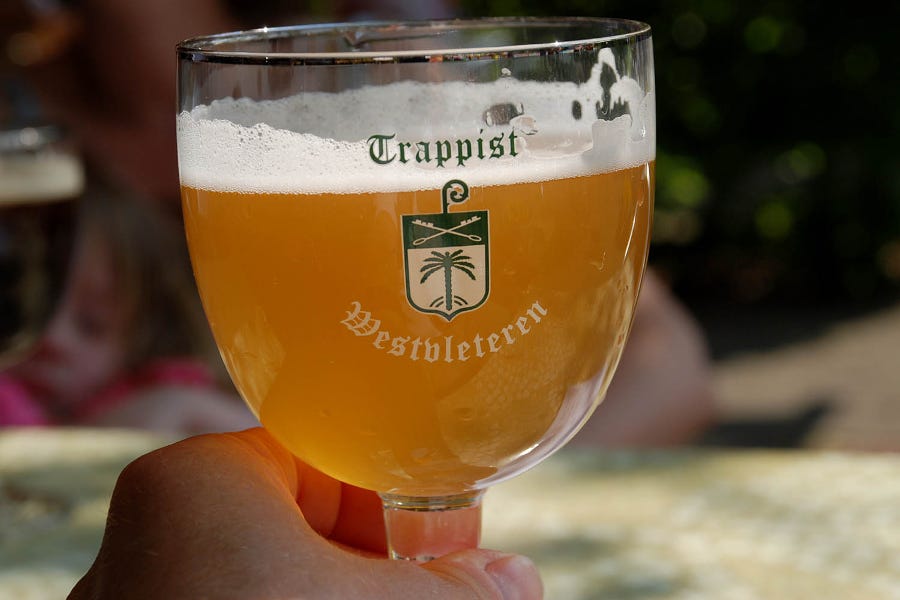
Monks target contraband Trappist beer sales


The monks of Belgium’s Saint-Sixtus Abbey don’t brew their coveted Trappist beer for profit.

So when they realized their product was being resold illegally at inflated prices over the border in the Netherlands, they decided to take action.

The abbey announced May 22 that its three beers — Trappist Westvleteren Blond, Trappist Westvleteren 8, and Trappist Westvleteren 12 — would be sold in independent Dutch liquor stores for a trial period of a year. 

A spokesman for Saint-Sixtus Abbey told The Pillar May 25 that in 1946, the monks decided to limit the production of Trappist Westvleteren beer so they could focus on their monastic duties, rather than being brewers.

“They only brew in order to to pay for their livelihood, to pay for the salaries of the people who are working in the abbey, to do the necessary investments, and the upkeep of the monastery. If there’s anything left, they donate it to good causes,” he said.

But demand for the beer far exceeds its production, which presented black marketeers in Belgium with an opportunity to resell the beer at exorbitant prices.

“The monks were not very happy with that because it’s against their values,” the spokesman said in a phone interview. “They want to brew a good beer. They do not maximize profits.” 

In 2019, the monks introduced an online reservation system that enabled them to identify and exclude several resellers. The problem then shifted to the Netherlands.

“We saw that in supermarkets and shops all of a sudden large amounts of crates were appearing,” the spokesman explained. Excise duty had not been paid on the crates, posing a potential problem for vendors with the authorities.

The monks decided that the best way to tackle the black market in the Netherlands was to reserve around 10% of beer production for Dutch consumers and set up a formal distribution system in the country.

A trusted Dutch importer will supply shops at regular intervals with a limited amount of bottles, which they will sell individually to individual consumers. The bottles will not be delivered in the monks’ traditional wooden crates, which hold 24 bottles.

“If a shopkeeper does not follow the agreed rules, other shopkeepers might get priority,” the spokesman said. “So it’s in their interest that they follow the rules.”

The advisory price is less than 5 euros per bottle.

“The good thing is that as soon as in the Netherlands one sees appearing wooden crates, or beers being sold at 10, 12, or 15 euros per bottle, one knows immediately that they are not from the formal distribution system,” he explained.

The abbey brewery, in the Belgian province of West Flanders, produces approximately 7,500 hectoliters annually over 42 brewing days

The monks employ the infusion brew method, using only natural ingredients including water, barley malt, hops, and yeast. The beer is unfiltered and unpasteurized.

Only five of Belgium’s celebrated beers bear the Authentic Trappist Product logo: Chimay, Orval, Rochefort, Westmalle, and Westvleteren. The Trappist Westvleteren beers are the rarest of the five.

To qualify for the label, products must be created within the environs of an abbey. The process should be supervised by monks or nuns, and profits go to the religious community or charitable works.

There are just 13 abbeys worldwide that belong to the International Trappist Association while brewing and selling their own beer.

The brewery at Saint-Sixtus Abbey — which belongs to the Order of Cistercians of the Strict Observance and has 20 monks and nine lay workers — dates back to 1839, when it received a brewer’s license signed by Belgium’s King Leopold I.

KC archbishop clarifies wine validity norms

Petition calls for Archbishop Naumann's removal as bishops' pro-life chair  | National Catholic Reporter

The Archbishop of Kansas City has warned priests that they could be offering Mass with invalid matter, and that they should ensure their altar wine is both free from additives and especially vinted for sacramental use.

The archbishop wrote to priests May 31 to warn that he had recently learned of parishes using wine that would invalidate their attempts to offer the Holy Sacrifice of the Mass.

“It has recently been reported by two priests, having served in three different parishes, that upon their appointment to these parishes they soon discovered the long-term use of wines that were in fact invalid matter for the confection of the Eucharist,” Archbishop Joseph Naumann noted in a May 31 letter obtained by The Pillar

As a result, he wrote, in those parishes, “for any number of years all Masses were invalid and therefore the intentions for which those Masses were offered were not satisfied, including the obligation pastors have to offer Mass for the people.”

“This is a gravely serious situation for which we must now petition the Holy See for guidance on restorative matters.”

Canon and liturgical law stipulate that wine produced only from grapes can be used for the Eucharistic sacrifice. 

The 2004 Vatican instruction Redemptionis sacramentum explains that: “the wine that is used in the most sacred celebration of the Eucharistic Sacrifice must be natural, from the fruit of the grape, pure and incorrupt, not mixed with other substances…It is altogether forbidden to use wine of doubtful authenticity or provenance, for the Church requires certainty regarding the conditions necessary for the validity of the sacraments. Nor are other drinks of any kind to be admitted for any reason, as they do not constitute valid matter.”

While the Dicastery for Divine Worship and the Discipline of the Sacraments has confirmed that minute amounts of sulfites, which acts as food preservatives, can be permitted in a sacramental wine, it has stressed that other additives can render wines as dubious or doubtful matter for the valid celebration of the Mass.

In Kansas City, Naumann noted that many commercially available wines “contain additives such as elderberry extract, sugars, alcohol, etc” — all of which could render the wine invalid matter.

To avoid the possibility of invalidly offered Masses, the archbishop issued a decree mandating that “only those wines commercially produced specifically for use at Mass may hereafter be used in the celebration of the Most Holy Eucharist in all parochial and non-parochial churches, chapels, and oratories within the Archdiocese of Kansas City.”

While many dioceses require that only wine marketed for sacramental use be used in the Mass, there is no definitive process for seeing a bottle of wine marketed to that effect. In some dioceses, bishops have certified that certain wine producers bottle wine only produced by grapes, without additives, and that the wine is therefore acceptable matter for the Eucharist. But other wineries self-certify their wine as acceptable use, presumably after scrutinizing their production process.

O-Neh-Da Vineyard, one of the country’s largest producers of pure grape wine, was launched in 1872 directly by Bishop Bernard McQuaid, who wanted a reliable source for altar wine.

The vineyard was eventually taken over as an apostolate of the Society of the Divine Word, before it passed into private hands, while remaining “totally dedicated to producing a valid and licit sacramental wine,” according to the company

Some U.S. dioceses, among the Diocese of Davenport, Iowa, maintain lists of local vineyards which produce wine suitable for the Mass

But at least one diocese has taken a different tack: In an FAQ posted on its website, the Diocese of St. Petersburg informed pastors that in its view, “the labeling of wine as ‘sacramental’ or ‘altar’ wine is a marketing strategy similar to that of ‘organic.’”

“Any good house wine is fine and there are many good wines available in boxes or cubitainers, these have the advantage of lasting several weeks after opening because air is expelled and spoilage is retarded. Bottom line: the finer quality of wine, the better it is. This is an important consideration since the wine selected will become the Body and Blood of Christ.”

The diocesan FAQ did not acknowledge the possibility that additional sugars might be added during the wine-making process, along with other additives, especially in states where winemaking is not heavily regulated.

In addition to establishing that wine must be produced only of grapes, canon law has other norms requiring the valid matter for the Eucharistic celebration. While “wine” is generally considered to be a grape-based substance containing 8% - 14% alcohol, the Church permits the use of “mustum,” in its stead — a grape juice produced in the same manner as wine, whose fermentation is suspended by freezing or some other natural method.

Mustum can be used if a priest offering Mass has an alcohol intolerance, or is an alcoholic. 

The Church also regulates hosts, explaining that in the Latin Catholic Church, “the bread used in the celebration of the Most Holy Eucharistic Sacrifice must be unleavened, purely of wheat, and recently made so that there is no danger of decomposition.”

In recent years, Catholics have become aware of gluten intolerances; gluten is a protein contained in wheat. 

The Church has allowed for the production of low-gluten hosts, produced by wheat stripped of nearly all its gluten, but has stipulated that: 

“Hosts that are completely gluten-free are invalid matter for the celebration of the Eucharist.  Low-gluten hosts (partially gluten-free) are valid matter, provided they contain a sufficient amount of gluten to obtain the confection of bread without the addition of foreign materials and without the use of procedures that would alter the nature of bread.”

Syro-Malabar priest warns ‘vindictive’ approach won’t solve liturgy dispute

 Indian archbishop blocked from entering cathedral amid liturgy dispute

A spokesperson for dissidents in an internal fight currently lacerating the second-largest eastern Catholic church has warned that an upcoming emergency meeting ordered by the Vatican to resolve the dispute may reflect a “vindictive” and “retaliatory” approach, rather than a genuinely Catholic effort.

“The tone is not very positive, and it indicates that there is no possibility of rethinking the decision on uniformity. This gives the impression of being retributive,” said Father Paul Thelakat, a former spokesman for the Syro-Malabar Church and one of the members of the church concerned about recent liturgical decisions.

Cardinal George Alencherry, Major Archbishop and head of the Syro-Malabar Church, has convened an emergency meeting of the Synod of the Church at its headquarters of Mount St. Thomas in southern India June 12-16.

A statement from the Syro-Malabar Church said the official order convening the meeting has been transmitted to members of the Synod by Alencherry.

The synod is being convened on instructions from the Vatican after permanent synod members visited Rome early this month, said the statement issued by Father Antony Vadakkekara, a public relations officer and media commission secretary for the church.

At issue are liturgical changes in the way the Syro-Malabar Mass in celebrated.

In 2021, the church’s synod decided to adopt a uniform mode of celebrating the liturgy, which priests face the people during the Liturgy of the Word and then the altar during the Liturgy of the Eucharist, turning around again to address the congregation after communion.

While virtually all of the church’s dioceses have adopted the new system, clergy and laity in the Archdiocese of Ernakulam-Angamaly, by far the largest Syro-Malabar jurisdiction, have rejected it, arguing that facing the people throughout the Mass is a legitimate liturgical variation and one more consistent with the reforms of the Second Vatican Council (1962-65).

In early May, Alencherry led synod members to Rome to hold discussions with Italian Cardinal Pietro Parolin, Secretary of State in the Vatican, and Italian Archbishop Claudio Gugerotti, Prefect of the Dicastery for the Eastern Churches, where the division over the celebration of the Mass was discussed.

In the meanwhile, Archbishop Andrews Thazhath, Apostolic Administrator of the archdiocese, sent out an appeal to church members to cooperate to reopen the St. Mary’s Basilica, which was closed on the eve of Christmas 2022 after protests in and around the church.

In an interview with Crux, Thelakat expressed skepticism that the emergency meeting will resolve the underlying issues.

“First of all, there is a lot of secrecy with the issue concerned. There is no openness to dialogue and discussion on the issues at debate,” he said.

“I appreciate the Vatican decision to ask the synod itself to reconsider the problem. It is the synod which made the problem, and the synod itself must solve it.”

Thelakat pointed to an earlier decision by the Syro-Malabar synod in 1999, which countenanced diversity in the mode of celebrating the Mass.

“May I point out that uniformity is not at all a great ideal the synod must seek?” he said. “It must attempt to restore unity at all costs.”

Thelakat then cited a talk delivered by Pope Francis in 2014.

“I would like now to reflect upon some themes which I consider important. The first is unity in diversity. Uniformity is not Catholic, it is not Christian,” the pontiff said. “Rather, unity in diversity … Unity does not imply uniformity; it does not necessarily mean doing everything together or thinking in the same way. Nor does it signify a loss of identity.”

Thelakat argued that the pope’s sentiments are opposed to the idea of imposing a uniform liturgy on the church.

“The press statement from the Major Archiepiscipal Curia on the special synod says it ‘will be a resolution of the problems confronting the Ernakulam-Angamaly Archdiocese in implementing the unified Mass’,” he said. “I am afraid there is a dialectical process, and not a dialogical process. The synod must abstain from a Manichean fight of ideology.”

Thelakat also pointed to a 2005 homily from then-Cardinal Joseph Ratzinger, later Pope Benedict XVI, to the College of Cardinals in 2005 the day before his election. Reflecting on Jesus quoting a text from the prophet Isaiah, Ratzinger noted that Jesus omitted a reference to “the day of vindication by our God.”

“The vindictive approach, in other words, the retaliatory approach, may hamper resolution of the issues at stake,” Thelakat said.

Pope’s pick in Argentina delights slum priests, alarms conservatives

 Category:Jorge García Cuerva - Wikimedia Commons

Appointed as the new Archbishop of Buenos Aires by Pope Francis on May 26, Jorge García Cuerva has a vast experience with the poor in Argentina.

For years, García Cuerva worked with inmates, drug addicts, and slum residents. That background has some Catholics excited, especially the so-called curas villeros (“slum priests”), while conservatives fear the politicization of the Church.

After García Cuerva’s appointment, a video of him celebrating Mass in 2016 went viral in the South American country. The clip shows him defending Peronism during a homily and combining political and Biblical remarks.

Since the video of the 2016 celebration went viral, García Cuerva has drawn criticism from many in the Church. In a story published by the leading Argentine newspaper La Nación, an unidentified bishop said his remarks were “unfortunate and imprudent” and that they intensify the political divide in Argentina.

Inspired by the late President Juan Domingo Perón (1895-1974), “Peronism” is the most popular political movement among the poor in Argentina. Though elastic and difficult to define, its core principles include political sovereignty, economic independence, and social justice.

The state, according to Peronists, must mediate conflicts between workers and companies and provide social aid to the poor.

Such ideas are often contested by conservatives and libertarians, who support a policy of more limited government. In October, those groups will dispute the Argentine presidency in general elections.

Incumbent President Alberto Fernández will not be a candidate, and his Vice President, Cristina Kirchner – formerly president herself – has said on many occasions she will not run. Many analysts consider the left-wing Peronists weak after an administration tainted by economic crisis and high inflation rates, and believe that a right-wing candidate may have the upper hand.

In that context, observers say that reactions to García Cuerva’s nomination have been influenced by the political situation.

Father Lorenzo De Vedia, known as “Padre Toto,” is a longtime cura villero in a slum called Villa 21-24 in Buenos Aires. He said it’s noticeable that more and more people have been losing their jobs and begging for food in his parish.

“Unemployment and informal employment are huge. As slum priests, we collect donations among Catholics and from the government and distribute to the people in need in the neighborhood, which is a rising group,” he told Crux.

De Vedia argued that García Cuerva has a “broad social sensibility” and will probably strengthen the archdiocese’s social works, something that makes him slightly more hopeful about the future.

“The neoliberal ideas expressed by several potential candidates show that the situation will be difficult,” he said. “The poor still hope that a candidate who corresponds to their needs will emerge.”

According to Spanish-born Father Francisco Olveira, known as “Padre Paco,” who has been living in Argentina for decades and is part of the movement Curas en Opción por los Pobres (“Fathers in the Option for the Poor”), many people in the slums are angry about the government’s failure to secure better living conditions for the neediest in society.

Olveira is an unabashed fan of the new archbishop.

“If the far-right and the defenders of the military dictatorship in Argentina [1976-1983] are criticizing him, it is clear that Pope Francis was right when he nominated him,” he said.

Olveira emphasized that the new archbishop knows Buenos Aires’s slums very well and that he will be a “shepherd with the smell of the sheep,” like Pope Francis want the clergy to be.

“When you step on mud and your shoes get dirty, people may not like you. But that is the kind of bishop that I want,” he said.

Paco hopes that the “Church of the poor” will be promoted under García Cuerva.

That’s certainly not everyone’s reaction. Earlier this week, an audio message about García Cuerva sent by a priest to a group of friends came to light and demonstrated how fierce the backlash about his political views can be.

Father Rodrigo Vásquez, who served as a military chaplain in the past, said in the message that the new archbishop is a “Peronist” and a “Kirchnerist” who “supports terrorism … and the LGBT, all that garbage.”

Vásquez also accused García Cuerva of being gay. He later apologized for his comments.

Father Pedro Bayá Casal, another slum priest, coordinates assistance to drug addicts in his district, most of them homeless men and women, and applauded the choice of García Cuerva.

“Archbishop García Cuerva also worked with addicts and knows the theme very well. That is a problem that has been continually growing,” he told Crux.

Juan Domingo Romero, a 60-year-old man who works at a community radio station in a Buenos Aires slum, thinks García Cuerva “certainly has a great experience in social work and will possibly increase the church activities in the slums,” but he should not get involved in politics.

“I think he should not have mixed Catholicism and Peronism in that speech [that appears in the viral video]. We are all brothers according to the Bible, and politics can divide us,” he told Crux.

Olveira said that despite the current difficulties in Argentina, the “Gospel always gives us reasons to be hopeful.”

“García Cuerva’s designation is certainly a motivation to have hope,” he said.

Latest Vatican gig cements Farrell as Francis’s favorite American

 Pope names U.S. Cardinal Farrell next head of Vatican City high court -  Detroit Catholic

When Irish-born American Cardinal Kevin Farrell was appointed president of what is essentially the Vatican City State’s Supreme Court last week, it marked yet another way in which his star continues to rise, making him arguably the most prominent American, and one of the most prominent figures generally, in this pontificate.

A native of Ireland, Farrell moved to the United States and became a priest in the Archdiocese of Washington in 1984, and despite his noticeable Dublin accent, considers himself an American.

Last Friday the Vatican announced that Farrell had been appointed as the new president of the Court of Cassation, which is essentially the Vatican’s Supreme Court, with the position going into effect January 1 of next year.

Until recently, the president of the Court of Cassation was always the prefect of the Apostolic Signatura, the Holy See’s highest appeals court, a position currently held by Italian Cardinal Dominque Mamberti. Pope Francis modified the rules of the Vatican judiciary in April, among other things separating those roles.

Farrell’s appointment to the court is the latest high-profile gig that he has been assigned under Pope Francis, who has now given him charge over five important offices.

The former bishop of Dallas, the 75-year-old Farrell – whose brother Bishop Brian Farrell is secretary for the Vatican Dicastery of Promoting Christian Unity – in mid-August 2016 was tapped as prefect for the then-newly minted Dicastery for Laity, Family and Life.

At the time, that department was the first new mega-dicastery in Pope Francis’s reform of the Roman curia, combining several different offices into one, and Farrell was one of the pope’s first major appointments in his curial reform.

Ghanian Cardinal Peter Turkson was named head of the mega-dicastery for Integral Human Development a couple of weeks later, in late-August 2016, but Farrell beat him by around two weeks.

Since then, Turkson has been demoted over what many observers believe were managerial and administrative shortcomings, and since last year has served as Chancellor of the Pontifical Academy of Sciences.  Farrell not only remains in his position, but his influence in the Francis papacy has continued to grow over the past seven years.

In February 2019, he was tapped for the key position of Camerlegno, a position responsible for administering the Vatican after a pope dies or resigns and before a new one is elected.

A year later, in October 2020, Farrell was appointed head of a Vatican commission that determines which of its economic activities remain confidential.

That commission was established as part of a new set of transparency laws enacted by the pope that year covering contracts for the purchase of goods, property, and services for both the Roman Curia and offices within the Vatican City State in a bid to centralize control of Vatican finances.

One of the main goals of the laws is to save money through the establishment of central purchasing offices in the Government of the Vatican City and the Administration of the Patrimony of the Holy See, which manages the Vatican’s real estate and assets.

Under Farrell’s leadership, this commission is tasked with judging on a case-by-case basis which of the Vatican’s financial activities and public contracts ought to remain confidential.

In June 2022, Farrell was also appointed as head of the Vatican Investment Committee, established by Pope Francis in his apostolic constitution reforming the Roman curia, Predicate Evangelium, and which is comprised of four experts in the field of financial investments from around the world.

According to Praedicate Evangelium, meaning “Preach the Gospel,” the Investment Committee is responsible for “ensuring the ethical nature of the Holy See’s movable investments according to the social doctrine of the church and, at the same time, their profitability, adequacy and risk.”

Given the authority increasingly placed in his hands through his growing list of key assignments, Farrell is increasingly emerging as not only a trusted papal advisor, but one of the most influential figures in the Francis papacy.

He also appears to be Pope Francis’s favorite American, as the pontiff has promoted him over other Americans initially touted as top aides, but whose star has since faded, such as American Cardinal Sean O’Malley of Boston, who leads the Pontifical Commission for the Protection of Minors but is widely seen as less powerful than when he took the position almost 10 years ago.

Many observers have noted the irony of a pope seen as being fairly skeptical of Americans essentially setting one up as arguably among the most powerful officials in his papacy.

The fact that Pope Francis named him president of the court and appointed several other close allies as judges, including Cardinals Matteo Zuppi of Bologna; Paolo Lojudice of Siena; and Mauro Gambetti, papal vicar for Vatican City, signals another trend unique to Francis of side-stepping those who would traditionally be seen as close aides, such as his Secretary of State Cardinal Pietro Parolin, and opting instead for those with whom he feels he enjoys a shared vision and a significant level of personal trust.

Critics of the papacy sometimes have derided Farrell as “Bergoglio’s hatchet man,” a sort of backhanded tribute to his importance.

Farrell has drawn fire not only over ideology and his commitment to the Francis agenda, but also lingering question marks in terms of his knowledge and awareness of allegations against former priest and cardinal Theodore McCarrick, accused and found guilty of sexually abusing minors and sexually harassing young seminarians and priests.

Prior to his appointment as archbishop of Dallas, Farrell in 1984 had been a priest for the Archdiocese of Washington, where McCarrick served as archbishop from 2000 until his retirement in 2006.

Shortly before McCarrick came on board, Farrell was named vicar general for the archdiocese, and in 2001 he was tapped as an auxiliary bishop for Washington, where he stayed until his appointment to Dallas in 2007.

Despite repeatedly denying that he had any knowledge of McCarrick’s misdeeds or the rumors about his conduct, Farrell has faced questioning over the affair. While the frenzy eventually died down, some still believe that given his proximity to McCarrick, Farrell had to have known more than he’s let on.

Such question marks, however, have not hindered his ascent up the ecclesial ladder. His appointment to a 5-year term as president of the Vatican’s Supreme Court despite having already reached the mandatory retirement age of 75 suggests he won’t be going anywhere anytime soon, and will likely continue to be a fixture of influence in Francis’s Vatican.

Vatican holds rite of reparation after naked man climbs onto St. Peter’s altar

 A naked man climbed the altar in St. Peter's Church in Rome - Free Press

After a man stripped off his clothes in St. Peter’s Basilica and leapt naked onto the main altar, apparently to protest the war in Ukraine, Italian Cardinal Mauro Gambetti, archpriest of the basilica, was scheduled to celebrate a rite of reparation Saturday.

The incident happened Thursday, June 1, in the late afternoon, as St. Peter’s Basilica was preparing to close its doors to visitors and tourists.

A 34-year-old man of Russian-Polish origin described as suffering from a severe form of depression and various mental disorders entered the basilica and made his way up to the main altar, where he undressed and jumped onto the main altar completely naked, apart from his sneakers, with a message reading “Save children of Ukraine” on his back.

Recently the issue of returning Ukrainian children deported to Russia has been a hot topic for the Vatican, as Pope Francis often has expressed the Holy See’s willingness to help, and he was asked to do just that by Ukrainian President Volodymyr Zelenskyy during a visit to the Vatican last month.

Photos taken by onlookers and guides present in the basilica at the time of Thursday’s incident began to circulate on social media showing the man, who did not shout or display any physical aggression, standing on the marble altar between three ornate candelabra that rest under the exquisite canopy designed by famed Italian sculptor Gian Lorenzo Bernini.

Vatican Gendarmes quickly hauled the man off of the altar and made him put his clothes back on before taking him to their offices for identification. He spent the night in Vatican custody, was charged and ordered to leave Italian soil.

On Saturday, Gambetti, who also serves as Vicar General for the Vatican City State and President of the Fabric of Saint Peter, was scheduled to celebrate a special rite of reparation along with the priest-canons of St. Peter’s Basilica.

In the Catholic Church, an act of reparation, including the celebration of a liturgy, is done to compensate or make amends for one’s own sins or the sins or sacrilege of others committed against Christ.

Thursday’s incident has raised security concerns and doubt over the efficacy of the Vatican’s security measures, as the man had time to completely undress and climb on the altar unnoticed before the alarm was finally sounded, and it marks the latest in a series of recent security breaches.

Just over two weeks ago, a man found to be mentally ill was arrested after ramming his car into the Saint Anne’s entrance gate to the Vatican and driving through the small city state.

Gendarmes guarding the door gate shot at the tires of the vehicle in an attempt to stop it, but it continued plowing forward until reaching the San Damaso courtyard of the Vatican’s Apostolic Palace, where heads of state and other officials typically arrive for their meetings with the pope, before being stopped by police.

The driver of the car was detained and underwent a full medical evaluation before being sent for mandatory treatment for mental illness.

Another incident happened in August of last year, when climate activists entered the Vatican Museums and glued their hands to the base of the famed “Laocoön and Sons” statue, considered to be among the most important ancient works in the Vatican collection and which is believed to date to the 1st century.

The activists, who belonged to the Ultima Generazione, or “Last Generation” environmental group, also hung a banner reading, “Last Generation: No gas and no carbon.”

Accused of aggravated damage, the activists face a penalty of up to three years in prison and $3,230 in fines.

Legend holds that Laocoön warned his fellow Trojans against accepting a wooden horse given by the Greeks during the Trojan War. The Last Generation group said the climate crisis, like Laocoön’s words of caution, is a modern warning that is not being heeded.

In 2019, another man described at the time as psychologically disturbed was arrested by Vatican gendarmes for climbing onto the main altar in St. Peter’s Basilica and tossing a candelabra onto the floor.