Sunday, April 09, 2023

Pope Francis appoints Father Paul Connell as Bishop of Ardagh and Clonmacnois

Diocesan Office | Diocese of Meath

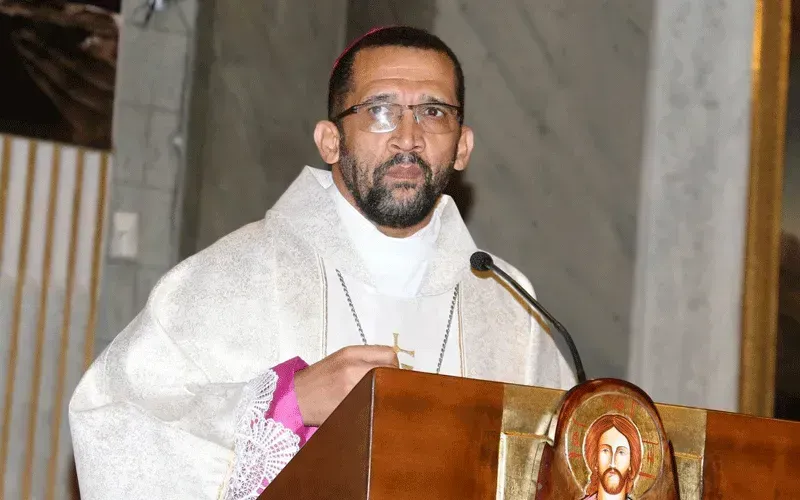
His Holiness Pope Francis has appointed Father Paul Connell, a priest of the Diocese of Meath, as the new Bishop of Ardagh and Clonmacnois.  

The news of this Episcopal appointment was announced by Monsignor Julien Kaboré, Chargé d’Affaires of the Apostolic Nunciature in Ireland, in Saint Mel’s Cathedral, Longford, Diocese of Ardagh and Clonmacnois Wednesday at 11am, followed by Mass in the Cathedral.

During Father Paul’s address on his new appointment, the bishop-elect said, “As we gather this morning on Spy Wednesday in the midst of the holiest of weeks in the Church calendar, there is no one more surprised to be here than I am.  When I was asked early last week by Monsignor Julien to come to see him at the Nunciature in Dublin, I was rather hoping it was for the purpose of briefing him on an educational issue.  Given my presence here today you can see that the Lord had something else in mind!  Monsignor Julien was most gentle and kind in relaying the news to me that the Holy Father, Pope Francis, wished to appoint me as the new Bishop of Ardagh and Clonmacnois in succession to Archbishop Francis Duffy.

“I am most grateful to the Administrator of the diocese, Father Tom Healy, for his gracious warm welcome and encouragement.  Over the past fifteen months he has served this diocese with great commitment and generosity.  My grateful thanks to Father James McKiernan and his team here in Saint Mel’s Cathedral for their help and support and in particular the organisation of today’s event.  I am acutely aware that I have added greatly to their burden on this the busiest of weeks.  Finally thank you all for coming here this morning.”

Bishop-elect Paul Connell, a native of Mullingar, Co Westmeath, was born on 27 January 1958, the second of four children to Thomas and Philomena Connell.  He began his primary education with Mrs Katherine Mullaly before attending Saint Mary’s CBS primary school in Mullingar.  In 1970, he commenced his secondary education in Saint Finian’s College, Mullingar, sitting his Leaving Certificate in 1975.  From Saint Finian’s he entered Saint Patrick’s College, Maynooth, where he completed his seminary training in 1982.  He was awarded a BA in 1978, followed by a BD in the Pontifical University in 1981.  The following year he was recipient of the Gilmartin prize in Ecclesiastical History from the Pontifical University.

Bishop-elect Connell was ordained to the priesthood in the Cathedral of Christ the King, Mullingar, on 20 June 1982.  Following ordination, he was briefly attached to Rochfortbridge parish before being appointed to the staff of Saint Finian’s College, completing his Higher Diploma in Education in 1983.  He became Vice-President of the College in 1989 and succeeded as President and Principal in 1998.  From 1992 to 1994 he completed an evening Masters in Local History in NUI Maynooth, and was awarded a doctorate in history by the university in 2002.  Subsequently, Bishop-elect Connell spent a number of years lecturing part-time in Ecclesiastical History at the Milltown Institute of Theology, Dublin, and has published a number of works in the area of local history.

Bishop-elect Connell remained as President and Principal of Saint Finian’s College until 2019.  Under his direction the college became a co-educational secondary school in 2003, and its boarding school closed in 2007.  In addition, he was President of the national support body for secondary schools, the Secretariat for Secondary Schools, from 2013 to 2018.  In January 2019, he resigned his position as Principal of Saint Finian’s, whilst remaining as its President.  This following his appointment as Executive Secretary of the Council for Education of the Irish Episcopal Conference, based in Columba Centre of Saint Patrick’s College, Maynooth.  In 2020, he was appointed by Bishop Tom Deenihan, Bishop of Meath, as Chancellor of the Diocese of Meath.

Since his appointment to Saint Finian’s in 1982, Father Paul has held the position of chaplain in Saint Mary’s Hospital, Mullingar (Cluain Lir).  For many years during the summer months he has worked in the dioceses of All Saints and Saint Gabriel’s in the Archdiocese of Miami, USA, and more recently in the parish of Saint Gregory, San Diego.  In August 2021 he was appointed as Administrator of the Parish of Multyfarnham, Co Westmeath.

Diocese of Achonry - Chrism Mass Homily 2023

 Diocese of Achonry | "Companions on the Journey"

St. Nathy’s Cathedral – 3rd April 2023

I have the opportunity this year, for the first time since Covid, to visit the children in schools that I will be Confirming.  Last Wednesday week I was visiting a school, I won’t name it, but it was up the Sligo end of the Diocese.  I had a lovely visit and the children, and their teachers were fantastic.  After my little talk with them there was an opportunity for questions from the children, and all sorts of wonderful questions were put to me.  But one child asked what the typical day of a Bishop is like.  It was a good question and I said I’d share with them what that day was like for me…

I was on the 8am Mass in the Cathedral that morning, then I got a bit of breakfast afterwards, then I went to the Office and collected the post, normally there is a lot of post.  I went through it and replied to some letters immediately others I left until later.  Then I opened my emails, again normally a lot of emails, I went through them and replied to most of them.  Then someone was calling in to see me, that meeting lasted about half an hour.  Then I had to get ready to come up to the school.  I will be a couple of hours in the school visiting all the classrooms and the teachers and so on.  Then I’ll head back for lunch and go to my Office again.  I have to prepare for some upcoming events and meetings, finish off on the post.  I had another person calling into me about something and then I had a Zoom meeting later that evening. 

After I had shared all this, and was almost exhausted telling it, one little fellow put up his hand and said, in all innocence, “And do you have a real job as well?”  I think the fact that there was no animals or land mentioned pointed to the fact that it didn’t really constitute a “real job”!

But it got me thinking!  What is my real job?  Is it all about administration, and letters, and emails and meetings and so on and so on.  Now they are important and necessary, I’m not saying otherwise, but my real job is to preach the Gospel.  I have news for us all here, that just doesn’t apply to me, it applies to us all.  We all share in a common baptism, that means we are all called to be disciples, we are all called to preach the Gospel through word and witness.  That’s our real job, our real mission given to us on the day we were immersed into the life of Christ in baptism. 

I mention this today because there is a lot going on in our world and our Church and our Diocese.  Change is happening and there are questions about the future.  It can be daunting and somewhat confusing, perhaps even wearisome, it’s easy to lose focus in the midst of it all.  That’s why I love the readings presented before us this evening.  They provide us with a clear focus.  The passage from Isaiah in the First Reading and it is the same text Jesus proclaims in the synagogue…

The spirit of the Lord has been given to me, for he has anointed me.  He has sent me to bring good news to the poor, to proclaim liberty to captives and to the blind new sight, to set the downtrodden free, to proclaim the Lord’s year of favour.”     

“The spirit of the Lord has been given to me” That same spirit was given to us in baptism.  “He has anointed me.”  We were anointed in baptism and confirmation, some of us deepened that commitment when we were anointed in ordination.  “He has sent me…”  Our faith is not just something for ourselves it calls us out of ourselves to mission.  That reality is really put up to us, when the prophet talks of “the poor, the captives, the blind, the downtrodden…”  They are at the heart of the mission.

The Word of God is very real.  It speaks to reality of our world today.  The Gospel outlines Jesus’ mission, which is our mission, the mission to liberate people from all that holds them back, from all that prevents them from living life to the full.  Its easy to talk about this but it’s not so easy to live it, especially when we live in a society where being a follower of Christ is an uphill battle.  To give an example, there was an article yesterday in one of the Sunday papers by a well-known Irish author who proclaimed the Catholic Church was “evil” and that it should be “abolished.”  He’s not the first to proclaim these sentiments.  By the way, this is nothing new, the Church of Christ has faced such opposition from its very beginnings, so we shouldn’t be too surprised or upset.  But we do have some choices as we face this reality:

We can lie down in defeat and give up? 

We take a back seat and let others worry about it.

We can wallow in our pessimism.

Or we can be optimistic and proclaim Christ in the midst of the reality.

Jesus always reached out and called the disciples to dig deep, especially when they were tired, fed up and weren’t too optimistic!  In those moments he always said, try again, throw the net out in a different direction this time… trust me!

Pope Francis is very much aware of these challenges, he said yesterday:

Whenever you or I or anyone else seems pinned to the wall, lost in a blind alley, plunged into the abyss of abandonment, sucked into a whirlwind of so many whys without an answer, there can still be hope: Jesus himself, for you, for me.”

He reminds us to go back to Jesus, the way, the truth, the life.  He is the foundation of all that we do.  Sometimes, perhaps, as the sand shifts, we can forget that.  He’s in charge and I believe we get glimpses of him along the way that encourage us and gives us the strength to keep going.

A Jesuit priest called Fr. Daniel Berrigan who along with others in the 1960s went to jail over Vietnam, has a poem called “Tulips in a Prison Yard.”  It describes the dull, grey world of prison life.  Then one day as he came out into the concrete prison yard, he happened to see a tulip in the corner and in the midst of the greyness and the horror of the daily grind, it’s colour and beauty seem almost miraculous, and it lifts his heart.  I like that because I think it captures the faith journey; in the darkest moment, when all seems lost, the Lord can give us a glimpse of himself that offer us hope and encouragement.  These are the miraculous moments that lift the heart and help us to keep going knowing we are on the right track.  

As Jesus handed back the scroll to the assistant, we hear that “all eyes were fixed on him.”  What a powerful image.  We are the pilgrim people of God, our ancient story is developing and evolving.   We are not alone, but we must keep focus, we need to keep our eyes fixed on Jesus.  A young child in the Confirmation class up in Co. Sligo last week reminded me that that’s our real job.

In Easter Message, Nigerian Archbishop Cautions against Despondency after “botched” Polls

Kalu congratulates newly appointed Archbishop of Owerri Diocese, Most  Reverend Lucius Ugorji – New Telegraph

The President of the Catholic Bishops’ Conference of Nigeria (CBCN) has cautioned Nigerians against sinking into “despondency and depression” as a result of the “2023 botched general elections”. 

In his Easter 2023 Message shared with ACI Africa Thursday, April 6, Archbishop Lucius Ugorji looks back at the events following the February 25 polls that he says resulted in “aborted dreams and shattered hopes”, and goes on to highlight other challenges that the people of God in the West African nation are facing, including economic hardship, youth unemployment, and “the ever-growing phenomenon of extremism and terrorism”.

“Notwithstanding the aborted dreams and shattered hopes resulting from the 2023 botched general elections in our nation, we should never surrender to despondency and depression,” Archbishop Ugorji says. 

“The blind greed of a few for power at all cost must not prevail over the positive aspiration of the generality of Nigerians, who look forward to the dawning of a new nation, where the dignity and rights of each individual are recognised and respected; where all Nigerians are accorded equal opportunities in all spheres of life; where ethno-religious cleavages are overcome; and attitudes of discrimination and intolerance rejected,” the Local Ordinary of Nigeria’s Owerri Archdiocese further says in reference to the general elections in Africa’s most populous nation. 

On March 1, Nigeria’s electoral body, the Independent National Electoral Commission (INEC), declared the ruling party candidate, Bola Ahmed Tinubu, winner of the presidential election, BBC News reported.

INEC leadership announced that Mr. Tinubu garnered 8.8 million votes against 6.9 million garnered by Mr. Abubakar and Mr. Obi’s 6.1 million votes.

Nigeria’s main opposition parties, the People’s Democratic Party (PDP) and Labour Party (LP) disputed the results, accusing the INEC of not uploading the presidential results from the polling stations. A petition against the Presidential election was later filed with the Court of Appeal in Nigeria.

In his Easter Message, the President of CBCN says, “Easter brings a healing message of hope to the disillusioned and broken-hearted. Now that the aggrieved contestants in the last general elections are seeking redress in the court of law, the fate of the country is in the hands of the judiciary.”

Archbishop Ugorji calls on the Nigerian Judiciary to “endeavor to live above board and serve as a healing balm to a hurting nation.”

He appeals to the Judges at the Court of Appeal “to rescue our nation from the tipping point by looking beyond narrow pecuniary, religious or ethnocentric interests and to administer justice with courage, honesty and impartiality.”

"He is risen, alleluia! This is the joyous proclamation of Easter, which strengthens our faith in Christ, the Prince of life, who died and now reigns immortal,” Archbishop Ugorji says.

The event of the resurrection, he continues, “is a message that powerfully proclaims that life is stronger than death; that good is stronger than evil; that love is stronger than hate; and that truth is stronger than falsehood.”

“The risen Christ signals the path of hope along which our sinking nation can rise again,” the Nigerian Catholic Church leader who started his Episcopal Ministry in July 1990 as Bishop of Nigeria’s Umuahia Diocese says.

The Catholic Archbishop who has been at the helm of Owerri Archdiocese since his installation in June last year also reflects on some of the challenges the people of God in the West African nation face.

“Our Easter joy should not be eclipsed as economic hardship continues to sweep across the nation, with soaring inflation, cash crunch and rising cost of fuel,” he says, and adds, “The appalling economic situation is worsened by the spreading poverty and high level of youth unemployment.”

This state of affairs, Archbishop Ugorji continues, “impels us to condemn with renewed vigor the greed, graft and corruption of the political elite that have continued to undermine our national economy.”

There is need for the Nigerian government “to urgently address the economic situation of the country to ameliorate the sufferings of the masses,” the Local Ordinary of Owerri who also serves as Apostolic Administrator of Nigeria’s Ahiara Diocese since the 2018 resignation of Bishop Peter Ebere Okpaleke who was later created Cardinal, says.

In reflecting on the challenges in Africa’s most populous nation, Archbishop Ugorji calls attention to the “ever-growing phenomenon of extremism and terrorism”.

“We cannot ignore the ever-growing phenomenon of extremism and terrorism, which despises life, recklessly sheds blood, brings anguish and uncertainty to innocent persons and produces thousands of internally displaced people,” he decries.

The Catholic Archbishop further says, “While we applaud the government for taking bold steps to overcome terrorism and insurgency with military might, we must be aware that terrorism will continue to thrive in our nation as long as its underlying causes remain unaddressed and the structures of inequality are not dismantled.”

Archbishop Ugorji continues, “The needs of the jobless, hungry and homeless cannot be ignored without dreadful consequences for our nation.”

“We look forward to having civil leaders, who do not perceive governance as an opportunity for self- aggrandizement but as a call to humble service for the common good, that is to say our people yearn for leaders who can provide basic social amenities and security of life and property, respect the sanctity of human rights and the rule of law, and stamp out corruption, ethnocentrism and religious bigotry in our public life,” he says.

The 71-year-old Catholic Church leader adds, “May our hope not be in vain.”

“Glimmer of hope”: Catholic Bishop in South Africa in Easter Message amid “darkness”

The celebration of the resurrection of Jesus Christ offers a “glimmer of hope” amid the current situation of “darkness” from various spheres of life, a Catholic Bishop in South Africa has said.

In his 2023 Easter Message shared with ACI Africa, the Bishop of South Africa’s Mthatha Diocese who doubles as the President of the Southern African Catholic Bishops’ Conference (SACBC) says, “Believers are excited about Easter because it gives a glimmer of hope in the social, economic and political darkness surrounding us.”

“The risen Christ gives believers the zest and the courage both at personal and at the social and political levels to do what needs to be done to change the situation of the darkness into a situation of light, to change death-dealing situations into life-giving situations and to turn chaos into a life of order,”  Bishop Sithembele Anton Sipuka adds. 

The South African Catholic Bishop says that the resurrection of Jesus Christ “offers hope to existential concerns that are part and parcel of our life.”

“These existential concerns include complex relationships in our circles and our families, incurable diseases, tragedies that befall us, emotional effects of neglect and abuse, deep-seated anger, guilt feelings, depression, betrayal, rejection, disappointment, unfulfilled dreams, emotional imbalance, addictions, aging, and the prospect of death,” the Bishop of Mthatha says in his message shared with ACI Africa Thursday, April 6.

He goes on to highlight different forms of “darkness” that characterize “our time” that the Risen Lord can “conquer”. 

“All sorts of darkness seem to prevail in our time, the darkness of greed and corruption compounded by lack of leadership to deal with it, the darkness of addiction that is holding our children and youth in ransom and causing much pain in families, the darkness of crime that makes us feel unsafe in a country that is supposed to be free, the darkness of unemployment that eats away the dignity and confidence of our young people,” Bishop Sipuka says.

In the celebration of the Easter Vigil on Saturday night, he goes on to say, “a candle is lit in a dark Church to symbolize Christ as the light that dispels the darkness.”

“The risen Christ is leading us to conquer it,” the South African Catholic Bishop says in reference to darkness, and adds, “With the conviction of the risen Christ among us, believers are invited to roll up their sleeves and deal with darkness instead of wallowing in despair.”

Making reference to the story of creation recounted in the Book of Genesis, Bishop Sipuka says, “The first book of the Bible tells us that in the beginning, there was chaos, and God’s Spirit breathed over the chaos and brought order and purposeful creation.”

He finds regrettable that the order God brought about at creation “remained only for a while, and sin brought back the disorder.”

“The message of Easter is that with the rising of Christ, God is restoring that order,” Bishop Sipuka emphasizes, and continues, “While it is not known exactly how and when, the message of the resurrection is that the situation will not remain the same. With the resurrection of Christ, God is creating the world and its order anew.”

The Catholic Bishop who will turn 63 on April 27 and who has been at the helm of Mthatha Diocese since his Episcopal Consecration in May 2008 notes that the Risen Christ “guides and empowers us in dealing with (challenges of life) and gives us the strength and peace to live with those conditions we cannot change.”

“The joy of believers about Easter is the knowledge that while difficult situations of their life continue to attain, they can be happy and peaceful because their Risen Lord is journeying with them, loving them, supporting them and assuring them that they are not alone because He has Risen,” Bishop Sipuka says.

Good Friday: Papal Preacher Warns against Relativism, “black hole of spiritual universe”

At the Vatican’s Good Friday liturgy, the papal preacher warned against the danger of believers being drawn into the “vortex of nihilism” by the post-modern world’s "total relativism."

Cardinal Raniero Cantalamessa, O.F.M. Cap., compared Friedrich Nietzsche’s words “God is dead” with the Catholic Church’s proclamation of the death of Christ as he preached at the Liturgy of the Lord’s Passion on April 7 in St. Peter’s Basilica in the presence of Pope Francis.

At the beginning of the liturgy, Pope Francis arrived at the basilica dressed in red vestments in a wheelchair. Unlike in previous years, he was unable to lay prostrate but spent a moment in silent prayer before the main altar at the beginning of the liturgy.

The Vatican announced earlier in the day that the 86-year-old pope, who was hospitalized with bronchitis last week, will not be attending the Stations of the Cross at the Colosseum on Friday night due to cold weather.

In his homily, Cantalamessa noted that the Catholic Church has proclaimed the death of Christ for 2,000 years. He said: “At every Mass, after the consecration, we say or sing: ‘We proclaim your death, O Lord, and profess your Resurrection until you come again.’”

“Yet another ‘death of God’ has been proclaimed for a century and a half in our de-Christianized Western world. When, among cultivated people, one speaks of the ‘death of God,’ it is this other death of God – ideological and rather than historical – that is meant. To keep up with the times, some theologians hastened to build a theology around it: ‘The theology of the death of God.’”

“We cannot pretend to ignore the existence of this different narrative, without leaving prey to suspicion many believers,” he added.

Cantalamessa, who was made a cardinal in 2020 in recognition of his more than 40 years as Preacher of the Papal Household, said that he chose to speak about this topic “to keep believers – who knows, perhaps even just one or two university students – from being drawn into this vortex of nihilism which is the true ‘black hole’ of the spiritual universe.”

With relativism in the fields of ethics, philosophy, art, and religion, “nothing more is solid; everything is liquid, or even vaporous,” the cardinal said.

“As believers, it is our duty to show what there is behind, or underneath, that proclamation, namely the flicker of an ancient flame, the sudden eruption of a volcano that has never been extinguished since the beginning of the world,” he said.

After the homily, a deacon and Pope Francis read the 11 Good Friday Solemn Intercessions, which included prayers for the Jewish people, those who do not believe in God, and those suffering from war.

The Adoration of the Cross then took place, followed by the recitation of the Our Father and Holy Communion. Pope Francis kissed the crucifix after spending a moment in silent adoration standing at the foot of the cross.

During his homily, Cantalamessa urged Christians to heed a warning from Dante Alighieri, who wrote in the Divine Comedy: “‘Christians, be ye more serious in your movements; Be ye not like a feather at each wind, And think not every water washes you.’”

The cardinal said: “Let us, therefore, continue to repeat, with heartfelt gratitude and more convinced than ever, the words we proclaim at every Mass: ‘We proclaim your death, O Lord, and profess your Resurrection until you come again.’”

Pope Francis Celebrates "birthday of priesthood" with 1,800 Priests on Holy Thursday

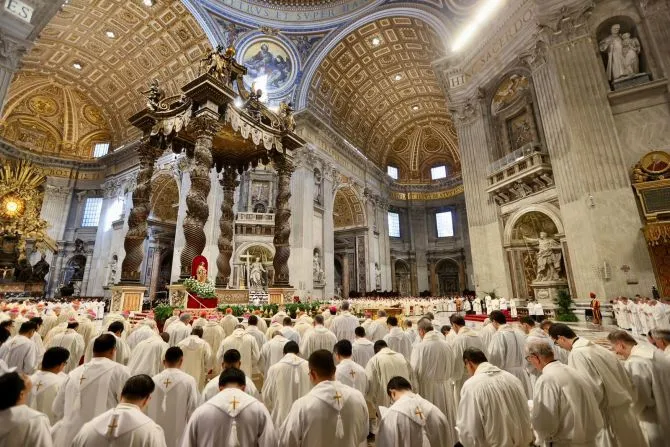
On Holy Thursday, Pope Francis presided over a chrism Mass at which more than 1,880 priests, bishops, and cardinals renewed the promises made at their ordinations.

Pope Francis thanked the priests for the “hidden good” that they do, often in a ministry carried out “with great effort and little recognition.”

In his homily, the pope said that on “the birthday of the priesthood,” he wanted to highlight the vital presence that the Holy Spirit plays in the ministry and life of every priest.

“For without the Spirit of the Lord, there can be no Christian life; without his anointing, there can be no holiness,” he said in St. Peter’s Basilica on April 6.

Holy Thursday celebrates the institution of the Eucharist and institution of the sacrament of the priesthood at the Last Supper. Pope Francis will celebrate a Mass of the Lord’s Supper on Thursday evening at a youth detention center in Rome.

During the Vatican’s chrism Mass, the pope, as the bishop of Rome, blessed the oil of the sick, the oil of catechumens, and the chrism oil, which will be used in the diocese during the coming year.

Forty-seven cardinals, 42 bishops, and 1,800 priests living in Rome concelebrated the Mass.

Pope Francis, who was hospitalized for three days last week, arrived at the Mass in a wheelchair and sat in a white chair to the side of the basilica’s main altar.

Speaking during his homily, the pope underlined how the Holy Spirit transformed the lives of Jesus’ apostles after Pentecost.

“After receiving the Spirit, Peter’s fear and wavering dissipated; James and John, with a burning desire to give their lives, no longer sought places of honor; the others who had huddled fearfully in the Upper Room, went forth into the world as apostles,” he said.

The pope added that the Lord “has poured out upon us the anointing of the Holy Spirit, the same Spirit who descended upon the apostles.”

Pope Francis gifted a book to the priests at the Mass by René Voillaume called “La Segunda Llamada” (The Second Call).

Quoting the book, Francis said that a decisive stage of the spiritual life can come at a moment of disillusionment or a personal crisis when “the ultimate choice has to be made between Jesus and the world, between heroic charity and mediocrity, between the cross and comfort, between holiness and dutiful fidelity to our religious obligations.”

“It is that grace-filled moment when, like the disciples at Easter, we are called to be ‘sufficiently humble to admit that we have been won over by the suffering and crucified Christ, and to set out on a new journey, that of the Spirit, of faith and of a love that is strong, yet without illusions.’”

The pope added another line from the book: “‘It is not enough to abandon boat and nets in order to follow Jesus for a certain time; it also demands going to Calvary, learning its lesson and receiving its fruit, and persevering with the help of the Holy Spirit to the end of a life meant to conclude in the perfection of divine charity.’”

Pope Francis Washes Feet of Young Inmates on Holy Thursday 2023


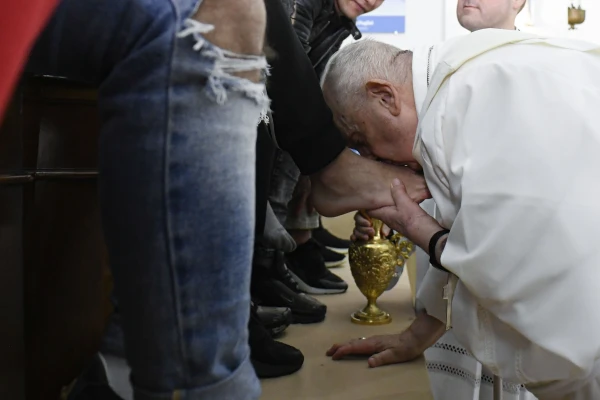
Pope Francis washed the feet of 12 young men and women, inmates at a juvenile prison in Rome, during a Mass of the Lord’s Supper on Thursday.

The pope presided over the livestreamed Mass for more than 80 inmates, family, staff, and guards in the chapel of the Casal del Marmo juvenile detention center on Rome’s outskirts on April 6.

In an off-the-cuff homily, Francis reflected on the meaning of Christ’s choice to wash the feet of his disciples.

“Washing the feet was a habit at that time,” he said. “But who washed the feet? The slaves.”

He explained that Jesus performed this gesture to help his disciples better understand what would happen the next day at his crucifixion.

The lesson we should take from this is to help one another, the pope said. “Jesus, today, with this celebration, wants to teach us this: nobility of heart.”

Pope Francis, who was in the hospital for three days last week for treatment for bronchitis, arrived at the prison in a white Fiat. He was brought inside the chapel in a wheelchair and during the Mass he mostly remained seated.

At the end of his homily, Francis said he will repeat Jesus’ gesture of the washing of the feet as a reminder of the lesson to help one another. “Life is more beautiful like that,” he said.

“During the washing of the feet — I hope to get there because I can’t walk well — during the washing of the feet, think: Jesus washed my feet, Jesus saved me,” he urged the young people.

“[Someone might think,] ‘but I have this difficulty, this…’” he added. “It will pass! The Lord is next to you and he will never abandon you, never. Think of this.”

After the homily, Pope Francis walked with the help of a cane to where 10 young men and two young women sat on a raised platform near the altar.

The platform allowed the pope to wash and kiss their feet without getting all the way on the ground as he has done in past years.

The Mass of the Lord’s Supper, offered on the evening of Holy Thursday, marks Christ’s institution of the Eucharist and the Mass.

Pope Francis told the young prison inmates that Jesus is never shocked by what we are on the inside, because he already knows our weaknesses: “He is never scared, because he has already paid [our debt]. He just wants to accompany us, he wants to take us by the hand so that life is not so hard for us.”

We often see the many bad things in society, he said, and we think, “thank goodness I am not like that!”

“If I’m not like that it’s for the grace of God,” he said. “Each one of us could stray. Each one of us.”

During his time as pope — and as a bishop before that — Francis has made it a regular tradition to celebrate Holy Thursday Mass with the imprisoned.

His first Holy Thursday Mass as pope, just 15 days after his election, was also at Casal del Marmo prison on the northwest outskirts of Rome.

The juvenile detention center has approximately 50 young people ages 14-25, from different countries and with diverse ethnicities, backgrounds, and religions, according to Vatican News.

In the morning on Thursday, Pope Francis presided over a chrism Mass with more than 1,800 priests in St. Peter’s Basilica. He thanked priests for the “hidden good” they do, often in a ministry carried out “with great effort and little recognition.”

Despite his illness and hospitalization last week, Francis was expected to preside over an intense schedule of Holy Week liturgies and services.

“So notoriously narcissistic, myopic”: Catholic Archbishop Faults Nigeria’s Politicians

Politicians in Africa’s most populous nation “are so notoriously” keen on their own interests and foster narrow and discriminatory relationships with their respective constituents, a Catholic Archbishop in the country has said

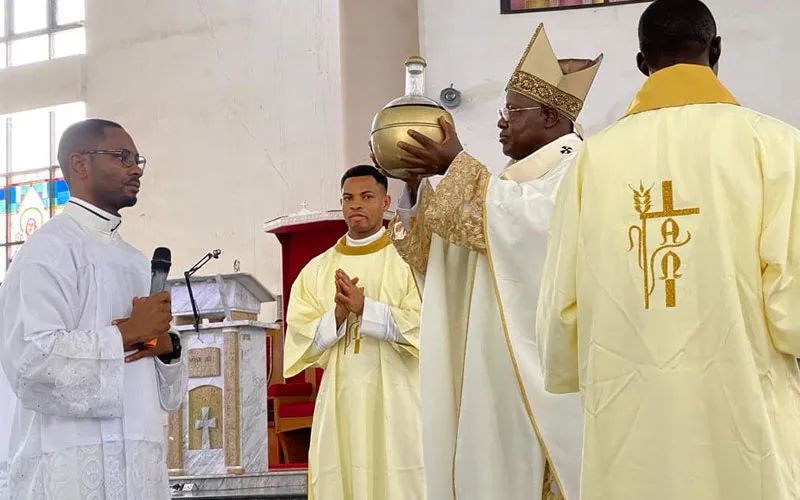
Archbishop Ignatius Ayau Kaigama who was presiding over anticipated Chrism Mass on Tuesday, April 4 expressed his doubts about “political maturity” and “democratic maturity” in Nigeria, considering the tendency to make decisions on the basis of ethnic affiliation, the fostering of violent conflicts, as well as voter apathy.

“No doubt, our political maturity is still in question,” Archbishop Kaigama said, adding that politicians in Nigeria continue to make decisions on the basis of “region, religion, and ethnicity”.

Some of the politicians who seek to be elected as leaders in Nigeria “are so notoriously narcissistic and myopic that they only see the interests of theirs or their narrow religious or ethnic or political constituencies,” the Local Ordinary of Nigeria’s Abuja Archdiocese further said.

He decried the fact that during the concluded elections, many voters in Nigerians “were denied voting rights and even those who voted questioned the objectivity of the statutory bodies meant to guarantee fairness and justice.”

“The voter apathy and violence in some cases are signs of dissatisfaction and that we still have a long rough and tough journey to democratic maturity,” Archbishop Kaigama said adding that the discontentment of Nigerians calls for an examination of conscience by government, security agencies, political parties and the Independent National Electoral Commission (INEC). 

“We should search our hearts to see our infidelities, falsehoods, hypocrisies, the good intentions betrayed, promises broken and resolutions unfulfilled,” he said during the anticipated Chrism Mass, traditionally celebrated on Holy Thursday

The Catholic Church leader who started his Episicopal Ministry in April 1995 as the Bishop of Nigeria’s Jalingo Diocese cautioned his compatriots against divisions based on religion or region. 

“Those who saw the recent presidential elections as a referendum between Christians and Muslims or the north and the south have badly missed the point, and such a view is the most divisive understanding of the Nigerian political reality,” he said in his April 4 homily during the Eucharistic celebration at Our Lady Queen of Nigeria Pro-Cathedral of Abuja Archdiocese.

In the Holy Mass during which Holy Oils were blessed, Archbishop Kaigama said the Lenten period presented Christians with a chance to fast from bad habits. 

During the Lenten Season, he said, “Our fasting was not limited to material food but also from bad habits, such as telling white lies, gossips, demonizing others.”

The 64-year-old Archbishop went on to highlight other “bad habits” that Christians were expected to fast from, including “rationalizing sin in a manner that we do not see immoral practices as offensive, such as extortion on the highways, demanding money before services are rendered in government offices.”

Christians were also expected to fast from “biased recruitment into government agencies and parastatals, biased appointment to sensitive or high positions, inflation of contracts by officials, with jobs very poorly done to maximize illegal profit, changing of age without qualms by youth, all these call us to a conversion of heart,” Archbishop Kaigama said during anticipated Chrism Mass April 4.

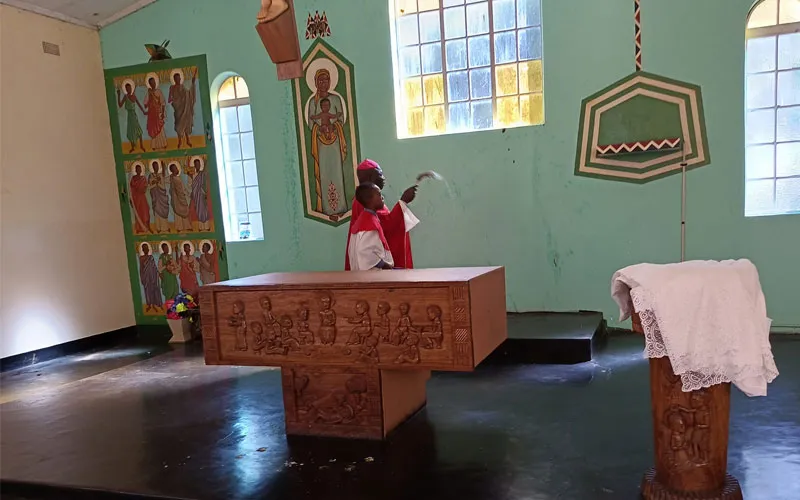
Catholic Parish in Zimbabwe Reconsecrated after “woman destroyed sacred vessels”

The Uganda Martyrs Church of Zimbabwe’s Gokwe Diocese has been reconsecrated following its desecration by a woman alleged to be suffering from mental health disorders. 

The Zimbabwean Catholic Parish has been closed since March 21 after the woman in question “went in and destroyed sacred vessels including the tabernacle and two ciboria which contained holy communion,” a Monday, April 3 report by Catholic Church News Zimbabwe indicates.

The report further says, “The woman also attacked and pulled down stations of the cross and everything that bore the image of Jesus while she profaned the altar by scattering altar clothes.”

The Apostolic Administrator of the Zimbabwean Diocese, Bishop Rudolf Nyandoro, presided over the reconsecration of the Catholic Parish that is now open for public worship.

In the April 3 report, the Parish Priest of Uganda Martyrs Mission, Fr. Benjamin Moyo, has been quoted as saying, “The re-consecration started with a procession of three parishes comprising of St. John Cathedral, Christ the King and Uganda Martyrs.”

“Hordes of Catholics from the three parishes, led by Bishop Nyandoro, met at Gokwe Primary School to perform the Palm Sunday ritual and to witness the re-consecration process of the Uganda Martyrs Church.,” Fr. Moyo recounts.

He continues, “Bishop Nyandoro then went round the Church building blessing it with holy water before he blessed its interior, culminating in the consecration of the altar.”

“There was ululation, singing and dancing when the Bishop opened the doors of the Church to rededicate it to God,” the Parish Priest says, and adds, “Bishop Nyandoro explained the meaning of the practice which he said was meant to cleanse the Church and return it to its state as the house of God.”

Fr. Moyo continues to explain the events of Palm Sunday, “The Bishop then challenged people of Gokwe to respect and protect Church property, especially sacred things and sacramentals.”

The Catholic Bishop, Fr. Moyo further says, also encouraged parishioners “to be always engaged in prayer and adoration so that they are protected from evil powers.”

Following the desecration of the Parish, the Apostolic Administrator called for fasting and prayer for reparation.

In a statement issued March 23, the Vicar General of Gokwe Diocese, Fr. Damian Gumbo, encouraged “the clergy, sisters, brothers and the laity of the diocese to engage into a Triduum of prayer for an act of reparation.” 

“The Apostolic Administrator of Gokwe Diocese summons the clergy, sisters, brothers and the laity into a Triduum of prayer for an act of reparation,” Fr. Gumbo said.

He said, “The three days will begin on Thursday 30th of March to Saturday 1st of April 2023. The Church will be re-consecrated on Sunday the 2nd of April 2023.”

Pope Francis’ Pastoral Leadership Upsets “extreme leftist group”: South African Bishop

Bishop in South Africa Laments Rotating Outage, Says Call for Resignations  “makes sense”

Pope Francis stands out for adopting a pastoral style of leadership, which has left the Church polarized, the Bishop of Mthatha in South Africa has said. 

In his reflection to celebrate the 10th anniversary of Pope Francis’ Pontificate, Bishop Sithembele Anton Sipuka speaks broadly about the Holy Father who he describes as “a Pope of communion and Synodality”, “a Pope of simplicity and accessibility” as well as “a Pope presiding over a polarized Church”.

In his description of “a polarized Church”, Bishop Sipuka identifies various groups of people, including those he says appreciate the leadership of Pope Francis.

The South African Catholic Bishop also identifies what he describes as “the extreme group on the left” who he says are “annoyed with the Pope” for not moving fast and making radical changes in the Church.

“Pope Francis’ call about prioritizing the identity of the Church and being pastoral has been met with varying reactions. These reactions range from a balanced sense of appreciation of what the Pope is doing to a sense of disappointment for not doing enough and to a sense of anger and disgust for allegedly changing the nature of the Church,” Bishop Sipuka says in his reflection published in the Monday, April 3 Newsletter.   

He explains, “In other words, some realize that the Pope is doing nothing new but implementing the Vatican II vision of the Church in which everybody feels part of the Church and in which all formations are given space to exercise roles proper to them in a harmonized manner that advances the mission of the Church. This group understands the Pope as not seeking to change any moral or dogmatic teaching of the Church but to apply them in a pastoral, contextual, and caring manner.” 

The “extreme group on the left”, he says, wants hurried changes such as allowing same-sex marriage, giving communion to the divorced, and allowing married men and women to be Priests.  

On the “far-right group”, he says, are people who think that the call for a communal and Synodal Church by Pope Francis is a trick to change the true nature of the Church by substituting her teachings and traditions for liberal views and secular ideologies. 

According to the President of the Southern African Catholic Bishops’ Conference (SACBC), the leftist reaction is more prevalent in Europe, while the far-right view “vociferously” prevails in America and “silently” exists in Africa.  

Bishop Sipuka’s sentiments echo the observation of Fr. Stan Chu Ilo, a Research Professor in the Department of Catholic Studies at DePaul University, who noted that while Pope Francis has introduced a paradigm shift in the Church, he does not seek to alter the Church teachings, especially pertaining to issues considered controversial.

“Pope Francis has changed the tone of messaging and leadership at the Vatican. He hasn't altered any teachings of the church regarding some of the topics that have been seen as controversial, including family, sexuality, gender theories, and celibacy; but rather, he has introduced a new ecclesial climate that is more open, inclusive, and one that orients itself as a humble, poor and merciful Church that listens,” Fr. Stan told ACI Africa on March 5, when he shared about how the Holy Father has shaped his work.

He added, “We now have a Church that is listening more and more to the voices from the peripheries of people who feel abandoned and regarded as sinners. We have a Church where those who are divorced and separated are welcome to find healing under a tent of comfort.”

According to the Nigerian Catholic Priest who also serves as the producer and host of African Catholic Voices, a podcast service of the Pan African Catholic Theology and Pastoral Network (PACTPAN), not everyone, including some Theologians, understands the theology of Pope Francis.

In the interview with ACI Africa, Fr. Stan explained why Pope Francis is sometimes misunderstood, noting that people who want “a Church with pre-packaged answers” and those who find it difficult to grasp what he described as the “aesthetics” of Pope Francis’ theology are most likely to misunderstand the Holy Father.

“Whoever doesn't understand the theological aesthetics of Pope Francis is likely to misunderstand him,” Fr. Stan said, and added, “Some people want a pure Church; a Church with pre-packaged answers. Catholics who are used to the idea of ‘what is the Church saying’ find it difficult to understand most messages of Pope Francis.”

He added, “Pope Francis is saying that we don't have answers to a lot of things that are happening in the world today and that we have to enter into mysteries guided by the Holy Spirit. When we do this, based on what we encounter, God will allow us to see the face of the poor man of Galilee. We need to accept that there are people who do not accept the same conclusion, and my work has been to give a theological explanation of this.”

Meanwhile, Bishop Sipuka has proposed “as the way forward in this polarization”, to remember that the people of God are people of faith, “not just a club gathered by similar ideas and coinciding personality temperaments.”

“We must remember that we are gathered not by our agreement but by common baptism, which invites us to look further than ourselves when differences occur,” Bishop Sipuka says in the reflection published April 3, and adds, “We must therefore seek together what the will of God is by looking at the tradition of the Church in a Spirit-guided (not political or ideological) way with the openness to modifying our ideas as we listen to each other.”

The SACBC President observes that journeying together in the Synodality that Pope Francis proposes calls for charity, humility, and patience.