Monday, July 08, 2024

'Funerals have always been part of our family': Meet one of Ireland's youngest embalmers

'Funerals have always been part of our family': Meet one of Ireland's youngest embalmers

At just 22-years-old, Ronan Conneely is already recognised as one of Ireland’s leading embalmers.

The Galway man, who works as a funeral director and is the head of embalming in Conneely Funeral Directors, has been honing his skills from an extremely young age.  

Having come from a long line of funeral directors and embalmers, he has always been passionate about the family business — or rather family businesses.

“I’m probably unusual in that my mum and dad both came from families who operated funeral homes, namely O’Flaherty’s and Conneely’s,” he told the Irish Examiner. 

“I don’t think this had anything to do with them meeting but that was how it worked out. 

"Now, my uncle runs Conneely Funeral Directors while my mum  — Cathriona O’Flaherty — and dad — William Conneely — run O’Flaherty’s. 

"I work between both but I’m head of embalming with Conneely’s.

After earning top grades from the British Institute of Embalming as well as a bachelor’s degree in commerce, Ronan has already been included on an elite database of international embalmers.

“I’ve been recruited by an international company which takes care of disaster cases and reconstructive work across the world. 

"It means that I am on call for them too. 

"I could potentially get a call today and have to fly out to a cruise ship to take care of someone who has passed away. 

"There are a lot of different aspects to the job that people who aren’t in the funeral industry might not be aware of.” 

Funerals have been part of Ronan’s life for as long as he can remember.

“It’s like anything. If your parents own the local shop then you are going to be coming back with the gossip from customers. 

"It was normal for us to be talking about funerals but there was always a lot of respect. 

"Sometimes my brothers and I would be arguing in the back of the car. 

"However, the minute the phone rang we just stopped and went quiet as we knew it could be a family calling my mum.” 

Ronan started helping out with the family businesses from the age of 15.

“My granddad William Conneely was the first person to introduce embalming in the West of Ireland and my aunt was the first female embalmer in Galway. 

"Mum was pregnant with me the year she became the first female president of the Irish Association of Funeral Directors so there is a lot of history there. 

"Like any young person helping out with the family business, I was doing minor jobs like sweeping the yards and changing the bins at first. 

"I knew this was something I wanted to do and I wanted to do it well. 

"Slowly but surely I started going into the embalming theatre and watching the embalmers at work. 

"I helped them clean and over time got more involved. It was completely my decision. It was really comfortable for me. 

"I felt it was an amazing thing that you could preserve the memories of someone for the days leading up to their funeral. 

"It’s so important for a family to see their loved one looking well.” 

The 22-year-old is grateful to be learning about the business from both sides of his family.

“The family businesses still operate separately. Conneely’s is run by my uncle who is my dad's brother, and my dad works with my mom in O’Flaherty’s. 

"I get to work between the two of them which is quite unique and I feel really lucky to be able to do that.” 

He described the more challenging parts of his career.

“Sometimes I hear people say that you can get desensitised to the work, but I don’t think you do. You just get better at managing your emotions.

"When there’s a younger person involved it is upsetting but you have to be able to control your emotions for the duration of the funeral.

He remembers one tragic case involving a young person, and the realisation that a young life had been lost.

“We brought this young man home who looked really well. 

"Everyone said he looked great but commented that there was something wrong. 

"Straight away my heart sank before I realised what they meant. 

"They had never seen him sit still during his life. 

"He had always been messing or slagging someone.

"Suddenly, that was all gone. That was the thing that was different. 

"It kind of opened my eyes and made me realise just how hard it is for people to see someone lying down and still when they were once so full of life.“ 

However, Ronan says thankfully, burying young people is still a rare enough occurrence.

"The majority of the time, funerals are a celebration of someone who has had a full and healthy life. 

"Families are sharing memories, stories, and old photographs, which is how it should be.” 

Ronan and his family's skills are in big demand.

“We take care of the embalming for lots of the funeral directors in Galway, Co Galway, and surrounding areas. 

"Often, we act as the middle man for funeral homes who don’t have their own embalmers. 

"We take care of nearly 85% of the people in Galway who have passed away which is a huge honour. 

It’s a great privilege to look after people and their family.

"This is seven days a week for my family. We could be called in the middle of the night to go and collect someone from a house. 

"It’s similar to farming in that it’s a vocation but it never seems like work to me. 

"We’re happy that people have trusted us to take care of their families. This really is an honour.” 

Death has never been an uncomfortable subject for Ronan.

“Naturally, I suppose I’m a little more comfortable with death because I’m surrounded by it every day. 

"When you see a big family complete with grandchildren and they are all together it really is like a celebration. 

"Even in the case of a sudden death, it’s amazing to see families coming together and supporting each other through difficult days. 

I, myself have a lot of faith, which gives me a more positive outlook on death.”

Sunday, July 07, 2024

Close ‘confidante’ says Cardinal Pell’s nose broken when body sent to Australia by the Vatican

A close confidante of Cardinal George Pell has attested that the late cardinal’s nose was broken and his body treated with “gross disrespect,” upon the arrival of his body in Australia from the Vatican.

In a July 4 program, Sky News Australia host Andrew Bolt commented on what he called a “final insult to a great and innocent man,” namely Cardinal Pell. Bolt said that he had “promised not to reveal what I know to spare Pell’s grieving family,” but that following recent comments made by the Vatican’s ex-auditor general Libero Milone to The Australian – and after checking with Pell’s brother David – he was free to share “most” of his information.

A “Pell confidante at the opening of the coffin” after the Vatican sent Pell’s body to Australia for burial reportedly found that Pell had been treated with “gross disrespect,” said Bolt.

“Perhaps it was just incompetence, but some of Pell’s closest associates have told me they suspected some in the Vatican had not forgiven Pell for exposing corruption,” Bolt continued.

Pell’s brother David told Bolt on July 3 that “the embalming… had been mucked up, or buggered up.”

“A Sydney undertaker had to clean the body – Pell’s nose had also been broken. Pell was also shoeless,” Bolt said that David Pell had confided.

Bolt continued: In fact, I’d been told he wasn’t only shoeless – all his clothes had simply been just thrown in the coffin… The Vatican should now be deeply, deeply ashamed to have treated his body so shabbily.

Pell died on January 10, 2023 after reportedly suffering a cardiac arrest following “routine hip replacement surgery,” an operation which was itself successful. 

As noted by Veteran Vaticanista Edward Pentin at the time of Pell’s death, the hip surgery had proceeded well and the cardinal had been “in good spirits, chatting with hospital staff” after the operation before succumbing to the reported cardiac arrest.

The cardinal’s death came as a huge shock to his close friends and to the Church at large. Some of his confidants, including Cardinal Raymond Burke, had urged him to return to Australia for his surgery rather than have the procedure done in Rome – something which Burke has mentioned a number of times in subsequent interviews. However, Pell chose to remain in Rome and undergo surgery at the Salvator Mundi hospital, citing his cardinal’s duty to be present at the Vatican. 

Bolt added that the treatment of Pell’s body suggested his enemies in the Vatican were still at large.

“Pell once told me didn’t feel safe in the Vatican as he chased the thieves,” Bolt recounted.  “He hid documents in London and Sydney. What was done to him after his death makes me suspect he was right.”

The Sky News host’s comments came in light of an interview given to The Australian on July 2, in which Libero Milone revealed his concerns about circumstances surrounding the sudden death of Pell. 

Milone worked alongside Pell to reform the Vatican finances, and told The Australian that the cardinal’s death is “shrouded in mystery.”

Milone – hired as the first auditor general for the Vatican in 2015 – said that when paying his respects to the late cardinal in Rome, he had made a promise to “get to the truth.”

Since the initial publication of this report by LifeSiteNews, Milone has clarified to this correspondent that this phrase referred to finding out the cause for Milone’s forced resignation in 2017, and that he did not mean it in reference to an investigation into Pell’s death. Another source close to the late Cardinal Pell suggested to this correspondent that The Australian had collated speculation from other sources and attributed it to Milone.

The Australian wrote that it had asked the hospital “to comment on claims by senior sources that internal CCTV cameras were not working on and around January 10 last year and that no medical doctor was on duty the evening the cardinal died.” 

LifeSite sent its own enquiries to hospital management and lead clinicians to comment on such reports, and also asked about the details of Pell’s final autopsy. Neither The Australian nor LifeSiteNews received a response. 

Indeed, this silence around the details of Pell’s death is somewhat of a trend. Pentin stated that he had asked the hospital similar questions “some months ago” but had received no response. 

As highlighted by The Australian, “rumours have swirled around the Holy See for months that Pell’s body was left in post-autopsy disarray and not been properly dressed, sparking further concerns about his last hours.”

The Australian also reported that Pell’s coffin being closed during his wake, rather than open, raised eyebrows.

Milone is having his first day in Vatican appeals court to challenge the January ruling against him as part of his ongoing legal battle attesting that he was unjustly fired in 2017.

Pell was named by Pope Francis as first prefect of the newly established Secretariat for the Economy in February 2014. He swiftly set about implementing reforms to the financial system within the Vatican, and according to Italian journalist Gianluigi Nuzzi – as recounted in Henry Sire’s The Dictator Pope – Pell announced in February 2015 that he had found “€1.4 billion” which was unaccounted for in the Vatican’s balance sheets.

Milone, along with his recently-deceased deputy Ferrucio Panicco, worked alongside Pell to reform the Vatican finances, at the express wish of Pope Francis. 

The Australian cardinal’s investigations made him no friends in the Vatican, and, according to widespread reports, earned him opposition from key personnel, including former number two in the Secretariat of State, Cardinal Angelo Becciu. In December, Becciu was sentenced to 5 and a half years in jail by the Vatican over financial crimes; he has yet to serve any time in jail. 

Such opposition to Pell’s reforms has even been linked to the false allegations of sexual abuse made against Pell – again with reports of Becciu’s involvement – for which Pell was imprisoned for over 400 days in his native Australia, before being unanimously acquitted in 2020.

Together with Pell, Milone was apparently “increasingly effective” in the investigations into the Vatican finances, and “came too close to uncovering dangerous things.”

Milone and Panicco were abruptly fired in 2017, and in a prior $9.25 million suit against the Vatican Secretariat of State they argued that they were unjustly accused of spying and embezzlement in June 2017 by Becciu: accusations which, they argue, stemmed from their audit of Vatican finances which uncovered widespread corruption within the hierarchy of the Holy See.

Milone has continually insisted that Becciu’s accusations against him and Panicco are absolutely false. 

He has also consistently argued that the accusations were the result of his audit uncovering uncomfortable financial corruption like the infamous London apartment deal which cost the Vatican hundreds of millions of euros, investments in pharmaceutical companies that produced abortifacients and contraceptives, contrary to the Church’s moral doctrine, embezzlement by high-ranking cardinals and officials, and money laundering conducted by the Secretariat of State and the Vatican Bank.

“I was threatened with arrest,” Milone said of his forced resignation. “The head of the Gendarmerie [the Vatican police] intimidated me to force me to sign a resignation letter that they had already prepared weeks in advance.”

In a curious coincidence of timing, only days after Milone went public with his revelations about his sudden departure from the Vatican, it was announced that Pell was to face charges for allegations of historic sexual abuse in his native Australia. 

Milone’s complex court cases have not gone well so far. In January – as reported by LifeSiteNews – the Vatican court ruled against him, a ruling which he is now appealing. His appeal began July 3, with the Vatican’s lawyers arguing that no-one acting in the name of the Secretariat of State was involved in Milone and Pannicco’s firing. 

In a press briefing in June prior to his appeal hearing, Milone stated that “seven years have passed without any tangible results and when we submitted our legal request we found ourselves in front of a rubber wall.” 

The former auditor general intends to take his case to the Hague if necessary, stating recently that seeking justice is in the best interests of all involved.

Heads of the Franconian Apostles travelling from Würzburg to Ireland

Saint Kilian - Wikipedia

The relics of the Franconian apostles Kilian, Kolonat and Totnan will embark on a pilgrimage to their native Ireland in autumn. 

This is reported by the "Würzburger Katholisches Sonntagsblatt" in its current issue. 

The skulls of the saints will be brought to the diocese of Kilmore. 

The former missionaries are said to have travelled from there to Würzburg in the seventh century.

The exact date of the transport will not be communicated, said the diocesan curator and deputy art officer Wolfgang Schneider. 

He only revealed one detail: "This will not be done by plane, as otherwise there would be no permanent control, so the relics will be transported by lorry."

According to the information, Bishop Franz Jung of Würzburg and Vicar General Jürgen Vorndran will set off with a group of pilgrims to the Irish diocese of Kilmore on 2 October and stay there for four days. 

The relics should already be there when they arrive.

Vatican astronomers can work in Italy again

Vatican Observatory - FAQ

At last, Vatican astronomers will once again be able to observe the sky from their historic headquarters in Castel Gandolfo, Italy. 

As the Vatican Observatory announced on Thursday, its telescope in the US state of Arizona has been equipped with an automatic control system. This allows astronomers to use the space telescope remotely.

This is particularly interesting for the employees in Castel Gandolfo. Previously, they had to travel to the observatory on the 3,270 metre high Mount Graham in Arizona to use the telescope.

Researching since 1582

Astronomers have been exploring the universe on behalf of the Pope for centuries. The calendar reformer Pope Gregory XIII (1572-1585) first commissioned Jesuits to observe the heavens in 1582. 

The Vatican Observatory, now located in the park of the former papal summer residence Castel Gandolfo, was officially founded in 1891.

The Vatican research centre in the USA is in turn one of the largest and most modern centres for observational astronomy. 

The sky conditions above the 30-year-old "Alice P. Lennon" telescope are considered ideal. 

With its new control system, the instrument can now track celestial objects for 20 minutes with great precision and without human guidance.

Vatican still in a financial bottleneck – German donations fall

Church money Stock Photos, Royalty Free ...

Despite a recent slight increase in St Peter's collection, the Vatican is apparently still in a financially precarious situation. 

This is evident from figures recently published by the Holy See. 

The proportion of German donations from the collection for the Pope has been declining for years. For the head of the church and his apparatus alone, 90 million euros had to be raised from the St Peter's pence budget. 

An additional 13 million euros were budgeted for aid projects. 

Accordingly, a total of 103 million euros was spent from St Peter's pence.

However, donations from the faithful worldwide only generated 48.4 million euros in 2023. An additional 3.6 million euros came from interest and the like. The total income totalled 52 million euros. 

According to the press release, 51 million euros were therefore withdrawn from the assets of St Peter's Pennies last year. This was the only way to raise the required 103 million euros. Among the donor nations, the USA was far ahead with a share of 28.1 per cent, as it has been for years, followed by Italy (6.4 per cent). This was followed by Brazil (3.9 per cent) and then Germany, tied with South Korea (2.7 per cent each).

The proportion of donations from Germans was still 4.9 per cent in 2021, fell to 3 per cent in the following year and reached a new low of 2.7 per cent in 2023. In addition, according to information from the German Bishops' Conference (DBK) on Wednesday, the German dioceses transfer a "mid-single-digit million euro amount" to the Holy See. 

The German bishops have been transferring an annual sum of around 5 million euros for decades. The church tax revenues of the German dioceses totalled around seven billion euros in 2023.

Christ as Apache: Icon back in church


Joy and relief among the indigenous faithful in the parish of St Joseph in Mescalero in the US state of New Mexico: the icon depicting Jesus Christ as an Apache is back in the church.  

As "OSV News" reported on Thursday morning, parishioners have returned the artwork to the church after having received it back. 

"It is with great joy that we announce that the paintings taken from St Joseph's Apache Mission have been returned to the tribe and will return to their place in the church," the Mescalero Apaches had previously written on their Facebook page.

According to media reports, the icon had been taken down by the parish priest at the end of June without prior notice or consultation with the parishioners. 

It had been hanging in a central position under the crucifix behind the altar. 

Indigenous parishioners spoke of being "shocked" when they realised the icon was missing. 

According to them, the priest described the icon as problematic and not Catholic. 

In a Lenten sermon that year, he had said that being a Christian and belonging to the Apaches did not go together. 

The priest initially did not want to comment on the incident, but announced an explanation for next week.

The icon has been hanging behind the altar in the parish church since 1989. 

It was made by a Franciscan friar and the caption refers to Christ as the "Giver of Life" in the tribal language. 

The church is located on an Apache reservation and is part of the Las Cruces diocese.

Independent commission rejects criticism from the advisory board of those affected

The Independent Commission for Recognition Services has rejected the criticism from victims of sexualised violence in the church. 

The Independent Commission regrets the "confrontational approach" of the German Bishops' Conference's Advisory Council for Victims of Sexualised Violence, announced Chairwoman Margarete Reske in Bonn on Wednesday.

The Advisory Council represents the interests of people who have been victims of abuse in the church. 

In a statement on Monday, the advisory board repeatedly criticised the lack of transparency in the recognition procedures. There had been a dispute over a panel discussion at the Katholikentag in Erfurt, among other things, in which one participant allegedly claimed that, on average, decisions on applications were made within three and a half minutes in the commission.

Reske has now refuted this. 

In fact, several members prepare each case for the meetings, often by studying the files for several hours. Each case is discussed in the commission until a common result is reached.

Decisions for all dioceses

The Independent Commission processes applications for recognition benefits for victims of sexual abuse from all 27 dioceses and decides on the amount of benefits to be paid out. 

The commission is active nationwide so that comparable decisions are made. It is made up of experts from the fields of law, medicine and psychology.

The advisory board for those affected had also once again demanded written reasons for the decisions. Reske referred to the rules of procedure laid down by the Bishops' Conference. 

The Commission will not comment on any demands made by the Advisory Council on the Rights of Persons Concerned in connection with a necessary amendment to the Rules of Procedure, as they are directed at the authors of the Rules of Procedure and not at the Commission, according to the statement.

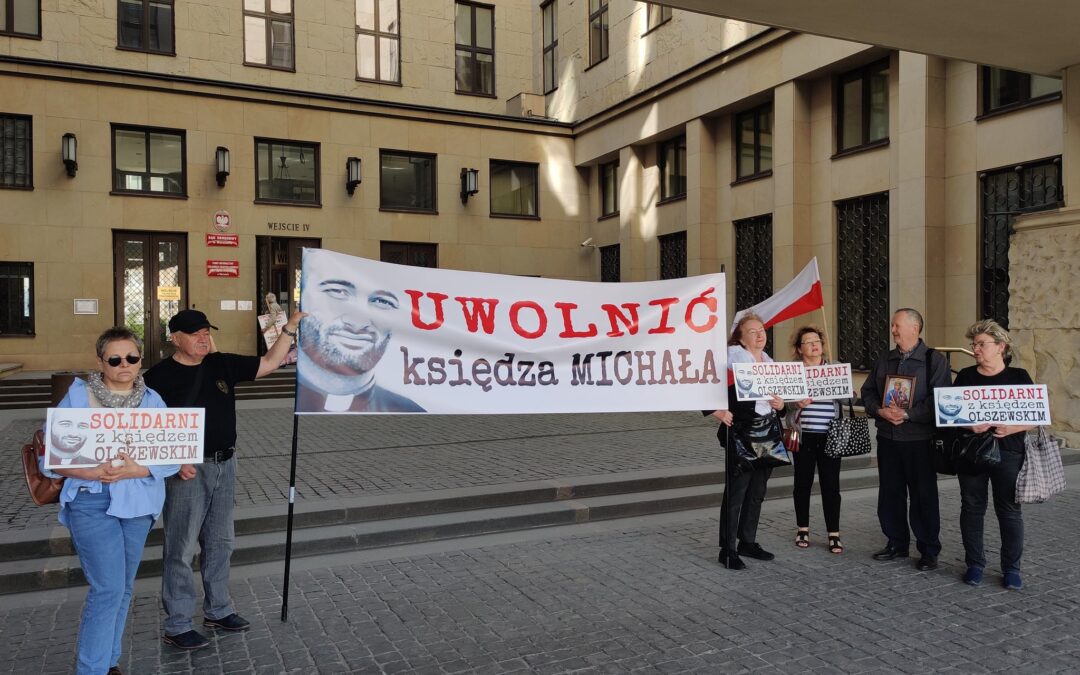
Polish government rejects opposition claims imprisoned priest was tortured


Poland’s interior minister has rejected claims by the opposition that a priest who was placed in pretrial detention earlier this year in relation to alleged corruption under the previous government was tortured. 

The prison service has also appealed to politicians and media to stop “spreading false information”.

Opposition figures, however, insist that they believe claims of torture made by the priest, Michał Olszewski, and his lawyers. 

They have called on international organisations, including the UN’s Committee against Torture and Amnesty International, to investigate.

Olszewski was detained in March as part of an investigation into alleged corruption in the disbursement of funds by the justice ministry under the former national-conservative Law and Justice (PiS) government. That same investigation has led prosecutors to seek charges against two former deputy justice ministers.

In Olszewski’s case, it is claimed that there were irregularities in the granting and spending of money his foundation received for building a centre to help victims of crime. Media have reported that Olszewski is a friend of Zbigniew Ziobro, who served as justice minister in the PiS government. 

Shortly after Warsaw’s district court had approved an extension to Olszewski’s detention, Sieci, a conservative news weekly, published a letter in which the priest alleged mistreatment at the hands of the prison authorities.

He claimed to have been kept in “the hole” for his first two weeks in prison, where throughout the whole day he was kept in handcuffs and at night lights were left on in his cell.

Olszewski also said that when he was first placed in the cell he was denied food and water. “I begged for half a bottle of tap water,” said the priest, who then claimed he was told by guards to use the same bottle to go to the toilet in.

Shortly after the letter was published, one of the priest’s lawyers confirmed that it was genuine and said Olszewski had received nothing to eat during his first 60 hours in prison. Another lawyer said Olszewski had lost 15kg (33lbs) of weight so far during his imprisonment.

In response to the claims, Poland’s human rights commissioner, Marcin Wiącek, announced that his office had launched an investigation.

Meanwhile, politicians from Ziobro’s Sovereign Poland (Suwerenna Polska) party, which is allied with PiS, announced that they would submit applications to the UN’s Committee against Torture, Amnesty International and the Helsinki Foundation for Human Rights to investigate the case.

PiS leader Jarosław Kaczyński accused the authorities of using “methods of torture from the Tsarist era”, referring to violent repression when part of Poland was under Russian rule.

He said the government was seeking to “intimidate and terrorise society, especially those organisations, such as the church, that from its point of view may be dangerous”.

The government has, however, rejected the claims. On Monday, Prime Minister Donald Tusk called them “so absurd that I do not even want to comment”. But he said that he had asked the prosecutor general to “clarify details of this case” given the severity of the accusations.

On Wednesday, interior minister Tomasz Siemoniak – who has oversight of the prison service – likewise told Polsat News that the accusations are “absurd” and “nonsense”.

Noting that the allegations were made at the end of June, long after the alleged torture began in March, Siemoniak asked: “How can you say after three months that someone was tortured? Didn’t the priest tell his attorney or family about it?”

The prison service also released a statement on Wednesday calling on politicians and journalists to “stop repeating false information…about the alleged use of torture against Michał Olszewski by officers of the prison service”.

It said that hundreds of emails and phone calls had been received making threats against prison officers. The prison service published examples of three such emails.

In an earlier statement, they also noted that Olszewski has “not submitted any complaints to the prison service regarding his detention or treatment by officers”. 

The Helsinki Foundation for Human Rights likewise noted that it has not received any request from Olszewski or his lawyers for support.

Mayo priest invites others to minister on Croagh Patrick for Reek Sunday

Reek Sunday Pilgrimage, Croagh Patrick ...

Fr John Kenny of St Mary’s Church in Westport has invited other priests around the country to Minister on Croagh Patrick for Reek Sunday.

The theme for Reek Sunday this year is ‘to pray for and honour grandparents and the elderly’.

This year, the annual pilgrimage takes place on the weekend of July 26-28, when thousands of pilgrims are expected to scale Croagh Patrick, Ireland’s Holy Mountain, to pray and participate on the summit in the Sacraments of Reconciliation and of the Eucharist.  

Father John Kenny, Administrator of nearby Westport Parish, is ‘delighted’ that the three-and-a-half year ‘undertaking to complete the Pilgrims’ Path on Croagh Patrick has now been completed’.

“Accordingly, and on behalf of the Croagh Patrick Stakeholders’ Group, I welcome all to our annual Reek Sunday weekend pilgrimage that will start on Garland Friday, 26 July,” he added.

Friday, July 05, 2024

Archbishop Viganò excommunicated

The Vatican doctrine office announced Friday that it had found Archbishop Carlo Maria Viganò guilty of the canonical crime of schism and declared his automatic excommunication.

A July 5 statement from the Holy See press office said that the verdict of the Dicastery for the Doctrine of the Faith (DDF) was reached on Thursday and communicated to the former papal nuncio to the United States Friday.

The statement said: “On 4 July 2024, the congress of the Dicastery for the Doctrine of the Faith met to conclude the extrajudicial penal process referred to in canon 1720 CIC against the Most Reverend Carlo Maria Viganò, titular Archbishop of Ulpiana, accused of the reserved delict of schism (canons 751 and 1364 CIC; art. 2 SST).”

“His public statements manifesting his refusal to recognize and submit to the Supreme Pontiff, his rejection of communion with the members of the Church subject to him, and of the legitimacy and magisterial authority of the Second Vatican Council are well known.”

The statement added: “At the conclusion of the penal process, the Most Reverend Carlo Maria Viganò was found guilty of the reserved delict of schism.”

“The dicastery declared the latae sententiae excommunication in accordance with canon 1364 § 1 CIC.”

“The lifting of the censure in these cases is reserved to the Apostolic See.”

The archbishop had not responded publicly to the declaration by press time.

The outspoken former Vatican diplomat announced June 20 that he had received a citation in an extrajudicial process, authorized by the congress of the DDF’s members on May 10. 

According to the citation, dated June 11, the DDF’s senior membership voted to proceed with Viganò’s prosecution via an abbreviated extrajudicial process, as opposed to a full canonical trial. 

The citation also ordered the former Vatican ambassador to appear at the dicastery in Rome to answer the charges on June 20, either in person or via formal legal representation.

The charge of schism is defined by canon law as the “refusal of submission to the Supreme Pontiff or of communion with the members of the Church subject to him.”

According to the decree of citation sent to Viganò, the archbishop was accused of making “public statements resulting in a denial of the elements necessary to maintain communion with the Catholic Church: denial of the legitimacy of Pope Francis, breaking of communion with him, and rejection of the Vatican Council II.”

The dicastery is authorized to judge cases of crimes against the faith, as well as the most serious crimes against morals and the sacraments, and by special papal mandate can judge those who would otherwise be subject only to the Bishop of Rome, including cardinals, patriarchs, papal legates, and bishops.

Viganò, a prominent critic of Pope Francis and Vatican Council II, and an outspoken supporter of Russian president Vladimir Putin, issued a lengthy statement June 20 in response to his citation for schism, which he called a “badge of honor.”

“It is no coincidence that the accusation against me concerns the questioning of the legitimacy of [Pope Francis] Jorge Mario Bergoglio and the rejection of Vatican [Council] II: the Council represents the ideological, theological, moral and liturgical cancer of which the Bergoglian ‘synodal church’ is necessary metastasis,” the archbishop wrote.

The citation to appear before the DDF was, the decree said, Viganò’s opportunity to inspect the evidence against him, in line with canonical procedure for an extrajudicial process.

An extrajudicial process — not to be confused with an extralegal process — is an abbreviated canonical disciplinary procedure that can be used when the evidence gathered during a formal preliminary investigation is sufficiently clear, such that a full canonical trial is not merited.

In such cases, the accused’s rights to legal representation, to see the evidence against them, and to make their own defense remains intact, but several rounds of formal trial procedure are omitted. 

The same extrajudicial process was used in the case of former cardinal Theodore McCarrick, who was accused of several acts of sexual abuse and was laicized as the result of the process.

In Viganò’s case, the canonical penalty attached to the crime of schism is the declaration of a latae sententiae excommunication, which can have added to it other penalties, including a prohibition or order concerning the schismatic’s place of residence, removal from ecclesiastical office, and prohibition on the exercise of ministry.

Loss of the clerical state is not ordinarily a penalty imposed for schism, since the law presumes first the application of “medicinal penalties,” intended to effect the offender’s repentance and which can be lifted later. 

But canon law states that laicization, which is a perpetual penalty, can be imposed for schism if the person found guilty is judged to be obstinate in their crime, or “the gravity of scandal demands it.”

Viganò appeared to affirm the substance of the charges against him in his response to them, in which he suggested Pope Francis and Vatican Council II represent a cancer in the Church. 

Having been charged with breaking communion with the pope, who he referred to in his press release as “Jorge Maria Bergoglio,” Viganò said: “I believe that the very wording of the charges confirms the theses that I have repeatedly supported in my interventions.”

In a June 28 statement, Viganò underlined that he did not recognize “the authority of the tribunal that claims to judge me, nor of its prefect, nor of the one who appointed him.”

The DDF decree noted that if the archbishop declined to appear in Rome June 20, as directed, or send a duly appointed canon lawyer, he would have a canonist assigned to defend him ex officio by the dicastery.

Viganò confirmed June 21 that he did not answer the charges in person.

The archbishop, who left office in 2016, emerged as a strident and increasingly erratic critic of the Church and hierarchy in the wake of the 2018 Theodore McCarrick scandal.

After first issuing a lengthy “testimony” in which he claimed to have repeatedly warned Vatican superiors about McCarrick, including Pope Francis, he later became an outspoken supporter of then-president Donald Trump, appearing via video link at several “Stop the Steal” rallies in the wake of the 2020 presidential election, which he called “the most colossal electoral fraud in history.” He also urged resistance to the “deep state” and “New World Order.”

Since then, he has been described as living “in seclusion” in an undisclosed location from which he issues regular “declarations” via the internet and makes occasional appearances on cable television in which he has denounced Pope Francis and Vatican Council II.

In 2022, Viganò broke with his previous support of Trump, and issued a lengthy statement on the Russian invasion of Ukraine in which he recognized Moscow as the “Third Rome,” and described the sees of Rome and Constantinople as “deserted and silent,” and “hostage to apostates.”

The archbishop hailed Russia as having “an epochal role in the restoration of Christian civilization, contributing to bringing the world a period of peace from which the Church too will rise again purified and renewed in her ministers.”

Thursday, July 04, 2024

CWI : The Oratory Society (4)

On Monday, 1st July 2024, we published a story in relation to the 'new' Oratory Society website, and asked some questions of both Eduardo and Paul Creaner in relation to the website.

Within a few hours of our publishing that story, the 'new' website was taken down, and remains down at this time of publishing.

But, it also should not take from some of the questions that we put to you Eduardo, and indeed you also Paul, and we repeat them here for your benefit.

1. Are you still using the address of 6 Princes Gardens? This property is due to be reclaimed by the RC Diocese of Down and Connor by the end of August, but it seems that Eduardo is not willing to relinquish it.

2. Do you, Eduardo, think that the agreement between your allegedly celibate partner/husband, Patrick Buckley and the Diocese of Down and Connor extends to you also?

3. Are either of you willing to meet with us here in CW?

4. Are you Eduardo, willing to meet any of the 55 men infected with HIV by your allegedly celibate 'partner/husband', Patrick Buckley?

5. If so, when?

6. If not, why not?

7. Do you still think that your referring to those who dare to tell the truth as 'trolls' is appropriate? 

8. When the 'new' website goes up, will it be far more considerate of those who your allegedly celibate 'partner/husband', Patrick Buckley so certainly wronged, maligned and slandered on a daily basis? 

We certainly look forward to hearing from, and we will continue to pose more questions to you both as time proceeds.

_ _ _ _ _ _ _ _ _ _ _

AODHÁN DE FAOITE

Eagarthóir / Editor

US bishops shocked by cuts to justice and peace office

The US bishops’ conference made up to half of the staff in its Justice, Peace and Human Development (JPHD) office redundant.

According to Chieko Noguchi, spokesperson for the United States Conference of Catholic Bishops (USCCB), the staff cuts “will allow the conference to align resources more closely with recent funding trends”.

The JPHD office includes two full committees, one dealing with issues of domestic justice and the other with international justice and peace issues, and a permanent subcommittee which oversees the Catholic Campaign for Human Development (CCHD), the bishops’ principal anti-poverty programme.

CCHD has been targeted by some conservative groups that object to its community organising model, which entails collaborating with non-Catholic organisations that do not share the Church’s teachings.

The cuts shocked many bishops. At the spring meeting of the USCCB in Louisville two weeks earlier, the bishops discussed the future of the CCHD programme at length in response to questions raised about its finances, which like many programmes reliant on parish collections had not fully rebounded to pre-pandemic levels.

Most bishops emerged from the discussion believing the staff at the conference understood that the bishops wanted to maintain the programme.

The cuts announced last week, which amount to a restructuring of the conference and its priorities, were not mentioned at the Louisville meeting, raising concerns about the lack of consultation with the full body of bishops, or even with the conference’s administrative committee, which consists of committee chairs and 15 regional representatives.

Bishop John Stowe of Lexington, Kentucky, who sits on the CCHD sub-committee, said he was “sure the approval [regarding the redundancies] was not given at a broader level than the general secretariat and the executive committee”. The latter consists of the four bishops who serve as principal officers of the conference.

The USCCB wrote to all bishops on 28 June with details, but only after many had learnt of the cuts from reports. The conference’s message said its “commitment to working and advocating for the poor shall endure”.

Large changes in priorities and organisation would be expected to go through extensive consultation with relevant committees, the administrative committee, and the full body of bishops.

Other critics asked why financial problems were not addressed with staffing cuts to all committees, and what effect this would have on the conference’s mission.

“Why in a world at war, a nation with pervasive poverty, are the leaders of the conference minimising the conference’s commitments to overcome poverty, work for justice and pursue peace?” asked John Carr, who directed the JPHD office for more than 20 years.

What’s behind Venezuela’s new archbishop appointments?

On June 28, the Vatican announced the appointment of three new archbishops in Venezuela.

Pope Francis accepted the resignation of 79-year-old Cardinal Baltasar Porras of Caracas, and appointed Bishop Raúl Biord, SDB of the Diocese of La Guaira as his successor.

The pope also filled two major vacant sees.

Archbishop Jesús González de Zárate of Cumaná was appointed as the archbishop of Valencia. González is also president of the Venezuelan bishops’ conference.

Bishop Polito Rodríguez of San Carlos was appointed archbishop of Barquisimeto.

Those appointments - in three of the four largest sees in Venezuela - would appear to clear an episcopal deadlock in the country that had lasted for the past few years.

There are several possible reasons for the appointments - including a strategic decision in an election year or the result of Vatican diplomacy. 

But whatever the reason, the relationship between Church and state remains complicated in the volatile nation.

Complicated appointments

According to the concordat signed between the Vatican and Venezuela in the 1960s, the Venezuelan government has to give its placet — or approval — to episcopal appointments in the country.

Historically, government approval of episcopal appointments was always given - even by dictator Hugo Chávez, who ruled between 1999 until his death in 2013.

For the first few years of his rule, Nicolás Maduro also approved the appointments. However, in the last few years, the Maduro regime has started to use them as a tool against the Church.

For example, when Cardinal Jorge Urosa resigned from the Archdiocese of Caracas in 2018, Pope Francis appointed Cardinal Porras as his successor. 

While Francis had intended to make Porras the Archbishop of Caracas, the Venezuelan government did not give its consent. So instead, the pope named Porras apostolic administrator, a position which does not require government approval under the concordat.

Porras would serve as an apostolic administrator for almost five years, until January 2023, when he was finally named archbishop of Caracas.

The Archdiocese of Barquisimeto underwent a similar situation. Archbishop Antonio López Castillo resigned in March 2020, a few months before turning 75, due to health issues.

Pope Francis appointed Bishop Víctor Hugo Basabe of San Felipe as the apostolic administrator. Although Basabe was considered a rising star among the Venezuelan episcopate, the formal appointment as archbishop never came.

It was understood that Basabe was Francis’ preferred choice for Barquisimeto, but Basabe is perhaps the most strident critic of the Venezuelan regime in the bishops’ conference.

In January 2023, Basabe used the homily at the procession of the Divina Pastora - which attracts over a million people in the streets of Barquisimeto - to criticize the Venezuelan dictatorship for its corruption, inattention to poverty, and the lack of freedom in the country. The homily earned him threats of imprisonment from Diosdado Cabello, number two in the Venezuelan regime.

Basabe would end up being apostolic administrator of Barquisimeto for three years, until he was eventually appointed as the archbishop of Coro, a smaller, less influential see.

The situation in the Archdiocese of Valencia was slightly less complicated. Archbishop Reinaldo del Prette died in 2022 of lung cancer, leaving the see vacant. Since then, the diocese had as an apostolic administrator, Bishop Saúl Figueroa of the nearby diocese of Puerto Cabello. Figueroa was already past the normal episcopal retirement age at the time that he was named apostolic administrator, but the vacancy was not filled for almost two years.

Why now?

The fact that the new archbishop appointments were made last week means that the dictatorship of Nicolás Maduro approved them.

What changed? There are a few possibilities.

One is that Maduro considers these bishops to be less threatening than other potential candidates - for example, Basabe. 

Another name that was rumored as a potential candidate for Caracas is Archbishop José Luis Azuaje of Maracaibo, the second largest see in the country. Azuaje, the former president of the bishops’ conference, has also maintained a strong position against the Venezuelan dictatorship.

Instead, the government approved the appointments of González - the current president of the bishops’ conference - and Biord - who served as vice president of the conference until 2022. 

In recent years, the conference’s stance against the Venezuelan government has focused on opening pathways of dialogue while denouncing the poor economic and human rights situation in the country.

While Biord or González will likely not be any closer to Maduro than their predecessors, they are also likely to be less outspoken than some of the possible alternatives.

Another explanation for the appointments might lie in the visit of Archbishop Edgar Peña Parra, sostituto of the Vatican Secretary of State, to his home country in late 2022.

Peña, a native of Maracaibo, the second-largest city and archdiocese in the country, met with Nicolás Maduro in an apparently friendly visit. Just a month later, Porras was finally appointed as archbishop of Caracas, which many credited to Peña’s intervention.

Another possible factor is the presidential election coming up on July 28. Many international organizations have voiced suspicions of fraud surrounding the election, as many members of the main opposition campaign have been jailed or have taken asylum in embassies.

Whatever the outcome, the election will likely bring a renewed crisis to Venezuela. Many western governments are pressing Maduro to recognize the results, whatever they may be.

The election may have prompted Maduro to pick his battles carefully, alleviating his conflict with the Venezuelan bishops at a time when he might need them as mediators and certainly doesn’t want them as critics.

Whether that strategy could be successful remains to be seen - if recent Venezuelan history teaches us anything, it’s that Maduro will need more than a few conciliatory episcopal appointments to convince the Venezuelan bishops to keep their mouths shut.