A Sister who has spent 50
years helping the Northern Territory's Tiwi people has been named Senior
Australian of the Year, while Greg Craven, Vice-Chancellor of ACU, and
Jesuit publishing figure Anne O'Donovan have been made Officers of the
Order of Australia.
Sr Anne Gardiner was bestowed the honour on Wednesday night at a ceremony in Parliament House's Great Hall.
The 85-year-old used her acceptance speech to call for greater recognition of Australia's indigenous peoples in policy.
She said, sadly, Australia doesn't always accommodate for cultures
like Tiwi. "My hope is that this will be redressed in my lifetime," Sr
Anne said, with the Tiwi Islands flag draped over her shoulders.
"It is of paramount importance that those responsible for policy
development consult with the relevant persons and groups among our First
People, so that policies may recognise and appropriately include their
language and cultures, particularly in areas such as leadership,
education and employment."
Sr Anne arrived on Bathurst Island in 1953 and has worked tirelessly with the indigenous community.
 Future Vatican coins to
be issued starting in March will no longer show the face of Pope
Francis, but his coat-of-arms instead, sources said Friday.
Francis requested the change last year, they said.
Vatican euro coins, which are made by the Italian mint, were
first issued in 2002 when showed the face of Pope John Paul II.
At least one previous pope, Paul VI, has preferred to have
his coat-of-arms rather than his image on papal coins.
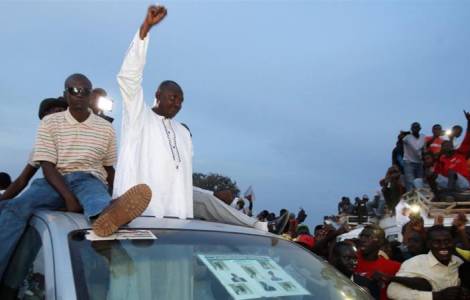
 "On his arrival in Banjul, yesterday, January 26, new President Adama
Barrow was greeted by a cheering crowd of hundreds of thousands of
people", says to Fides His Exc. Mgr. Robert Patrick Ellison, Bishop of
Banjul, capital of Gambia, a small African country out of the crisis
caused by the initial refusal of former President Yahya Jammeh to hand
over power to his successor.
Thanks to
international pressure Jammeh agreed to go into exile in Equatorial
Guinea, bringing 11 million dollars, about 1% of the Gross Domestic
Product of one of the continent's poorest Countries.
Despite this theft, according to Mgr. Ellison, "The Country is calm now.
Now they want to think about their future. The process will still be
long and difficult. The Country needs more than ever US and European
Union aid".
"The most urgent problem is to relocate internally displaced persons and
refugees in Senegal, who fled last month because of the political
crisis", said Mgr. Ellison. "These people need strong support". Out of 2
million inhabitants in Gambia, approximately 40-50,000 have taken
refuge in Senegal.
The main source of income is tourism, but the political crisis had
caused foreign tourists to abandon the Country. "I am sure - says the
Bishop - that tourists will come back very soon after the crisis that
put Gambia for the first time at the center of international media,
something I had never seen before. Now it is over. If you want to help
us, go back to Gambia as tourists", he concludes.
 On Thursday, January 26, a delegation of the Chaldean Church led by
Patriarch Raphael Louis Sako I visited the area of the Nineveh Plain
recently reconquered by the government army, also welcomed by local
political representatives.
In Telkaif, in the church of the Sacred
Heart, the Chaldean Patriarch led a moment of prayer to invoke the gift
of peace in the entire region and the prompt return of refugees to their
homes.
The Chaldean Patriarchate reports that committees have been set up and
the first funds have been allocated - by the Chaldean Patriarchate and
individual dioceses in Iraq - for a total of nearly 500 million Iraqi
dinars (equivalent to more than 380 thousand euro), in order to
accelerate the recovery of homes and churches damaged or destroyed
during the years of jihad occupation, and therfore allow the return of
those who wish to return to their homes, abandoned between June and
August 2014 before the advancing of the self-proclaimed Islamic
Caliphate militia.
The message issued yesterday by the media of the Patriarchate, appeals
to the generosity of parishes and Chaldean communities scattered around
the world to take charge of the financial support for the reconstruction
and reinstatement projects of the living conditions in the liberated
cities of the Nineveh Plain.
According to data provided by the
Patriarchate, and sent to Agenzia Fides, the first reconnaissance showed
that Batnaya is the most devastated town during the jihadi occupation,
and then during the fighting that led to the expulsion of the caliphate
militias.
Other cities, such as Tesqopa and the same Telkaif, suffered
less damage.
In Telkaif (see Fides 25/01/2017) government troops, when they regained
control of the city, found a 60-year-old Christian woman, Georgette
Hanna, who in August 2014 was not able to escape along with the other
members of her family, and since then had found refuge with a family of
Muslim neighbors, who took care of her.
 "We express our sorrow and rejection with regards to the construction of
this wall, and respectfully invite all to reflect on the ways through
which we can ensure security, development, work and other necessary and
fair measures, without causing further damage to those who are already
suffering, the poorest and most vulnerable", said the statement of the
Mexican Episcopal Conference (CEM).
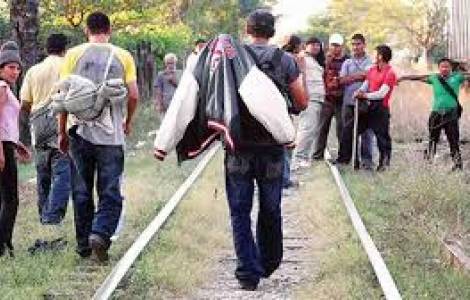
"We will continue to support our brothers who come from Central and
South America, who cross our country to head towards the United States"
is written in the statement of the Mexican Episcopate, which ends by
calling on the country's authorities to "continue in the search for
agreements" with the neighboring country, "in order to safeguard the
dignity and respect" of migrants, who seek only the best opportunities
in life.
The statement was signed by His Exc. Mgr. Guillermo Ortiz Mondragón,
Bishop of Cuautitlan, as Chairman of the Episcopal Commission for Human
Mobility of CEM.
In the text it is emphasized that the commitment of the
Mexican Bishops is in full harmony with the Episcopal Commission for
Migration of the United States.
 Drought is bringing the people in Malawi to their knees.
This is what
Fr. Piergiorgio Gamba, a Monfortan missionary says to Agenzia Fides,
"the water level in Lake Malawi has dropped a lot. The water from the
Shire River no longer allows the electric turbines to function so there
is no electricity for up to 20 continuous hours. Only rain can resolve
the lack of energy that has destroyed hundreds of small companies. It
has become dangerous even to buy food that has no guarantee of hygiene".
The population does not receive any help from the government because, as
the missionary writes, "unfortunately, the government excels in one
aspect: the endless corruption that now appears in all its shameful
presence in the wheat trade".
"The corruption in which the Country has sunk into has a definite cause
and it is corruption of democracy starting from the top. There are
still two years to the 2019 general election but the election campaign
that is funded by plundering the same aid given to Malawi for the poor
has already started. Only a strong position taken by the citizens, only a
recovery of values of community and justice can put an end to this
scourge that destroys the soul of Malawi".
But the missionary expects "a revolution from below, from the people
that take in their hands the construction of their future".
"Is it too
much to ask a population that often chooses silence and forbearance to
dissent? The innate goodness of people brings them to defend those who
oppress them. It can be a gift in a continent that has too many wars,
but also - and this is what many social and religious leaders of Malawi
say - can also become a sentence of an endless impoverishment and social
deprivation with uncontrollable consequences", concludes the
missionary.
 "I do not see why our people have to suffer so much", said the
Archbishop of Maracaibo, His Exc. Mgr. Ubaldo Ramón Santana Sequera,
F.M.I. with tears in his eyes, at a conference organized in recent days
at the Pontifical University de Comillas in Spain.
The Archbishop also
gave a long interview with the weekly Alfa y Omega, sent to Fides, where
he denounces the plight of the people of Venezuela and emphasizes child
malnutrition and lack of medicines, as well as the political
polarization in the country, which hinders a way out of the crisis.
The question posed by Alfa y Omega on the risk of a civil war in
Venezuela, the Archbishop replied: "To talk about a civil war now would
be out of place. Only a part has weapons. This does not mean that there
cannot be a bloodbath. In fact, it can be said that there is already a
bloodbath of considerable proportions in Venezuela. There is talk of
some 30,000 murders a year, and if we fail to find a peaceful way to
understand each other, the number could increase".
 The German bishops have published their own guidelines on Amoris laetitia allowing, in certain cases, for divorced-and-remarried Catholics to receive Communion.
The decision by the German bishops' conference comes on the heels of a similar announcement made by the bishops of Malta.
While the German bishops emphasized that access to the sacraments is a
question of each individual case, the new guidelines do allow the
“possibility of receiving the sacraments in these situations.”
Titled “The joy of Love, which is lived in Families, is also the Joy of the Church,”
the guidelines issued by the permanent council of the German bishops'
conference were released Feb. 1 and bear the subtitle “An invitation to a
Renewed Marriage and Family Pastoral Care in Light of Amoris laetitia.”
The German bishops' conference's permanent council
meets five or six times a year, and “each [German] diocesan bishop has
seat [sic] and vote in the permanent council and can send an auxiliary
bishop as his representative to the meetings.
In the document, the German bishops said that accompanying couples in
crisis, divorce, and remarriage is “a great challenge and an
opportunity to bring the Church and her understanding of marriage.”
“For the question of the reception of the sacraments, the bishops do not see in Amoris laetitia
a general rule or an automatism, but rather, they are convinced that
discerned solutions which do justice to the individual case are
required,” they said.
In regards to Amoris laetitia, the bishops said they will proceed “from a process of discernment, accompanied by a pastoral worker.”
However, they also clarified that “not all faithful whose marriage is
broken and who are divorced and civilly remarried, can receive the
sacraments without distinction.”
In a statement released alongside the guidelines, the bishops praised Amoris laetitia
for its “pastoral and theological benefits” and for introducing what
they called four pillars “of a pastoral approach to marriage and family
pastoral care.”
These pillars are: marriage preparation; marriage accompaniment;
strengthening the family as a place of learning the faith; and dealing
with fragility through accompaniment, discernment, and integration.
While the first three pillars are covered in just one or a few graphs, the fourth is the core of the new guidelines.
The bishops acknowledge that marriage is indissoluble, but at the
same time argue that specific attention should be given to persons'
individual situations and that judgements “which do not take into
account the complexity of the various situations” should be avoided.
Referencing sections 296 and 297 of Amoris laetitia, the
German bishops said that “with the guiding concepts” of accompaniment,
discernment, and integration, those affected “must be helped.”
While accompaniment requires “encouraging people on the way of life
and the Gospel,” they said discernment should not stop at what the
objective moral situation of those affected is.
On this point, they referenced footnote 351 of Amoris laetitia,
in which Pope Francis wrote: “In certain cases, this can include the
help of the sacraments. Hence, 'I want to remind priests that the
confessional must not be a torture chamber, but rather an encounter with
the Lord’s mercy'. I would also point out that the Eucharist 'is not a
prize for the perfect, but a powerful medicine and nourishment for the
weak'.”
The German bishops' conference commented: “At the end of such a
spiritual process, which is always concerned with integration, not in
every case will there be a reception of the sacraments of penance and
the Eucharist.”
The bishops stressed that “the individual decision of whether one,
under the respective circumstances, is able to receive the sacraments,
deserve respect and recognition. However, the decision to receive the
sacraments must also be respected.”
At the conclusion of the document the bishops encouraged those who
want to pursue marriage and family life in the Church “to personally
acquaint themselves with the groundbreaking text that is Amoris laetitia.”
A divided stance
Bishops from Germany who had
already advocated admitting the divorced-and-remarried to Communion
included Cardinal Walter Kasper; Cardinal Reinhard Marx; Bishop
Franz-Josef Bode; and Archbishop Heiner Koch.
However, despite the factions of bishops who seem to be opening the
door to a path to admitting divorced-and-remarried Catholics to
Communion, many are still resistant to the idea, including some
heavy-hitters who are themselves German.
Cardinal Walter Brandmüller, president emeritus of the Pontifical
Committee for Historical Sciences, was one of four signatories of a letter containing five “dubia” submitted to the Pope in September asking him to clarify ambiguous parts of Amoris laetitia, and which was later published.
Other prelates with German roots who have been outspoken against the
proposal to admit the divorced-and-remarried to Communion include
Emeritus Pope Benedict XVI; Cardinal Paul Cordes; Bishop Stefan Oster;
Bishop Konrad Zdarsa; Bishop Gregor Hanke; Bishop Rudolf Voderholzer;
Bishop Friedhelm Hofmann; Bishop Wolfgang Ipolt; Archbishop Ludwig
Schick; and Cardinal Joachim Meisner.
In addition, Cardinal Gerhard Müller, prefect of the Congregation for the Doctrine of the Faith, has on multiple occasions maintained that Amoris laetitia is in continuity with Church teaching.
In an interview with Italian monthly Il Timone
published the same day the German bishops’ guidelines were released,
the cardinal stressed that “it is not right that so many bishops are
interpreting Amoris laetitia according to their way of understanding the pope’s teaching.”
“This does not keep to the line of Catholic doctrine,” he said, stressing that Amoris laetitia “must clearly be interpreted in the light of the whole doctrine of the Church.”
Having so many bishops split off with their own interpretations “does
not keep to the line of Catholic doctrine,” he said, adding that the
Pope’s magisterium is able to be interpreted only by him or by the
Vatican’s doctrinal congregation.
“The Pope interprets the bishops, it is not the bishops who interpret
the Pope; this would constitute an inversion of the structure of the
Catholic Church,” he said, telling the bishops “who are talking too
much” to first “study the doctrine (of the councils) on the papacy and
the episcopate.”
As someone who teaches the Word of God to others, a bishop must
himself “be the first to be well-formed so as not to fall into the risk
of the blind leading the blind.”
Cardinal Müller pointed to Familiaris consortio,
St. John Paul II’s 1981 exhortation on the Christian family in the
modern world, in which the Polish Pope stipulated that the
divorced-and-remarried who for serious reasons cannot separate, in order
to receive absolution in confession which would open the way to
receiving Communion, must take on the duty to live in complete
continence.
This aspect of the text, Cardinal Müller said, “it is not
dispensable, because it is not only a positive law of John Paul II, but
he expressed an essential element of Christian moral theology and the
theology of the sacraments.”
Confusion on this point, he said, stems from a failure to accept St. John Paul II’s 1993 encyclical Veritatis splendor,
which taught that there are intrinsically evil acts, that absolute
truths exist across various cultures, and urged sharp caution against
moral relativism and the misuse of conscience to justify false or
subjective morals.
For Christians, “marriage is the expression of participation in the
unity between Christ the bridegroom and the Church his bride,” he said,
adding that “this is not, as some said during the synod, a simple vague
analogy. No! This is the substance of the sacrament, and no power in
heaven or on earth, neither an angel, nor the Pope, nor a council, nor a
law of the bishops, has the faculty to change it.”
The prelate then suggested that in order to quell the confusion generated by the differing interpretations of Amoris laetitia, everyone ought to study the Church’s doctrine, beginning with Scripture, “which is very clear on marriage.”
He advised against “entering into any casuistry that can easily
generate misunderstandings, above all that according to which if love
dies, then the marriage bond is dead.”
“These are sophistries: the Word of God is very clear and the Church
does not accept the secularization of marriage,” he said. The task of
priests and bishops, then, “is not that of creating confusion, but of
bringing clarity.”
Cardinal Müller stressed that amid the ongoing debate, “one cannot refer only to little passages” present in Amoris laetitia,
but must read the document “as a whole, with the purpose of making the
Gospel of marriage and the family more attractive for persons.”
“All of us must understand and accept the doctrine of Christ and of
his Church, and at the same time be ready to help others to understand
it and put it into practice even in difficult situations.”
 A priest who was murdered in 2016 had previously certified that he
would not want his murderer executed.
Three Catholic bishops say his
voice should be heard.
The district attorney in Augusta, Georgia is seeking the death penalty for his accused killer.
“I request that the person found guilty of homicide for my killing
not be subject to or put in jeopardy of the death penalty under any
circumstances,” Fr. Rene Robert said in 1995 in a signed and notarized
“Declaration of Life” that reflected on the possibility he could be the
victim of a capital crime.
The man believed to have killed him, Steven Murray, was indicted May
25, 2016 in Georgia by a Burke County Grand Jury for killing the priest
April 11, 2016.
Father Robert, a retired priest of the Diocese of St. Augustine, had
been helping his accused killer for months as part of his prison
ministry.
Police believe Murray forced the priest into the trunk of his
car, abducted him, and then murdered him in the woods of Georgia,
shooting him multiple times. Murray was arrested driving the priest’s
car in South Carolina. He led police to the priest’s body.
Three bishops emphasized Fr. Robert’s wishes at a Tuesday press
conference held at the Richmond County Court House in Augusta, Georgia:
Archbishop Wilton D. Gregory of Atlanta, Bishop Gregory J. Hartmayer of
Savannah; and Bishop Felipe J. Estevez of Saint Augustine.
Bishop Hartmayer said they wanted to be the priest’s voice and make
his declaration against the death penalty a part of the case.
“Father Robert shows us what the gospel teaches about being
merciful,” Bishop Hartmayer said. “He understood the plight of the poor,
the violent, the sociopath. He treated them with compassion. He
understood the risks and dangers of ministering to convicts. He died as a
martyr of mercy.”
Archbishop Gregory, a past president of the U.S. bishops’ conference,
said the slain priest was aware of the potential for violence among
those he served, “but he cared for those people nonetheless."
“We know that every human life comes from the hand of God and has
dignity that is never lost, that can’t be compromised,” he added. “No
human life loses its dignity.”
The archbishop hoped that the accused killer would face a life
sentence rather than the death penalty, and will seek God’s forgiveness.
“That could take many years but we are asking that he be given time to do it,” he said.
Murray, the accused killer, has made statements suggesting he is apologetic over the crime.
“If anybody loves Father Rene, they’ll forgive me because he was a
man of God, and forgiveness is forgiveness,” Murray said in an April
2016 court appearance, according to WALB News.
At a previous court appearance he had smiled and waved to other people in the room.
“I have mental problems and I lost control of myself. I apologize,” he said.
District Attorney Ashley Wright of the Augusta Judicial District intends to seek the death penalty.
Bishop Estevez cited Fr. Roberts declaration against the death penalty in a May 26 letter to the district attorney.
He did not receive a reply to the letter. In December, the bishop
received signatures of more than 6,400 Catholics in the Diocese of St.
Augustine who asked the Georgia courts to honor the priest’s wishes.
Wright has indicated that the opinions are not relevant to her decision.
“When I make a decision to seek a particular punishment it is based
upon fact and law, and not based on public opinion or sentiment,” Wright
told the St. Augustine Record last year.
Attending the Jan. 31 press conference were priests and deacons from the three dioceses.
“We have great respect for the legal system and we believe Murray
deserves punishment for the brutal murder but the sentence of death only
perpetuates the cycle of violence,” Bishop Estevez said. “It is
unnecessary and denies the dignity of all persons.”
Archbishop Gregory explained why the bishops were taking their stand.
“We do it because we love our faith, we love our country, and we hope
our nation will take the lead in preserving, defending and protecting
every human life,” he said.
 As some residents of the city of Mosul celebrate their new freedom
from the Islamic State group, an Iraqi Christian leader who visited the
war-torn city said Christian residents are unlikely to return.
“I don’t see a future for Christians in Mosul,” said Father Emanuel
Youkhana, a priest, or archimandrite, of the Assyrian Church of the
East.
Father Youkhana, who runs Christian Aid Program Northern Iraq, a
Christian program for displaced Iraqis around the city of Dohuk, entered
Mosul in a military convoy Jan. 27, the day Iraqi officials raised the
national flag over the eastern part of the city. Islamic State seized
the city in 2014, causing Christians and other minorities to flee.
Once inside Mosul, Father Youkhana moved about freely, talking to
residents and soldiers.
He visited two churches, both heavily damaged.
“The churches were used as warehouses by Daesh,” he said, referring
to the terrorist group by its common Arabic name. “They used the
churches to store what they looted from Christian and Yezidi villages,
but as the end neared they sold the buildings to local contractors, who
started tearing down the walls to reuse the steel inside. If the army
hadn’t entered for another couple of weeks, the buildings might have
been completely destroyed.”
One building, belonging to the Syriac Orthodox Church, had not been
completely swept for explosives, according to Iraqi soldiers in the
area. The front of the building was painted with an Islamist slogan by
the Islamic State, and a military commander told Father Youkhana his
troops would gladly paint over it. Father Youkhana replied that it was
not his church, so he had no authority to authorize the troops.
“And leaving it as is preserves the evidence of what Daesh did here,” he told Catholic News Service.
At another church, owned by the Assyrian Church of the East, the body
of an Islamic State fighter poked out of a pile of garbage in front of
the sanctuary.
Father Youkhana, who went to high school in Mosul, also photographed
several houses that belonged to Christians, but had been given or sold
to Muslim families by the Islamic State.
While he doubts Christians will
return, he believes they will be able to recover the value of their
properties, notwithstanding attempts by the Islamic State to destroy local government records.
“Christians aren’t going to come back to stay. The churches I saw
were not destroyed with bombs, but by the everyday business operations
of the community. How can Christians return to that environment? It’s
unfortunate, because Mosul needs their skills. Most Christians were part
of the intellectual and professional class here, they were doctors and
lawyers and engineers and university professors. But I don’t see how
they can return,” he said.
Father Youkhana would make no predictions how long peace will last
once the Islamic State is driven completely out of Mosul, a
predominantly Sunni Muslim city. The Iraqi army units that expelled the
Islamic State are largely Shiite Muslim. Several of the military’s
armored vehicles sported flags of the Popular Mobilization Units, a
Shiite militia, and Father Youkhana said he saw several examples of
graffiti written by Shiite soldiers calling for violence against the
Sunnis.
“Why do they do that?” he asked. “They are undermining their
achievement. People are thanking them for liberating them, and in return
they try to provoke them. Just because they have the upper hand now.
“They should think about sustainability,” he added. “The residents
are welcoming you as a savior, so don’t wear out your welcome by
provoking them.”
Father Youkhana also visited Qaraqosh, a Christian town 20 miles
southeast of Mosul that he described as “a ghost town.” While Mosul was
bustling with busy markets and people digging out from the rubble of
war, the streets of Qaraqosh were eerily silent, with most houses
blackened by fire but still standing.
He explored the remains of the Syriac Catholic cathedral, reportedly
the largest church in Iraq. Blackened by fire, its courtyard was filled
with the ashes of what had been the church’s library, as well as shell
casings and bullet-ridden mannequins that the Islamic State apparently
used for target practice.
Some Christian leaders are pushing for a quick return to Qaraqosh.
One Christian member of the Kurdistan parliament said he is looking for
$200,000 that would finance the return of 50 families, buying them the
basic furniture and household items they need to re-establish themselves
in their houses.
But Karim Sinjari, Kurdistan’s interior minister, told a visiting
ecumenical delegation that neither the necessary security nor
appropriate infrastructure are in place.
“I won’t stop them, but I would advise them not to go,” he said. “The conditions aren’t ready yet.”
Iraqi Christian leaders echoed his concern.
“Security is the most critical need we have,” said Chaldean Catholic
Archbishop Bashar Warda of Irbil. “Rebuilding our churches is the last
thing we should think about. We want to first build houses for our
people so they can live with dignity, and we need infrastructure in the
villages. But all this is only possible if we can have security.”
“Unless there is security, whatever we build will be for Daesh, not for us,” said Syriac Orthodox Bishop Nicodemos of Mosul.
Some residents of Qaraqosh have returned, carrying weapons and
wearing uniforms of the Ninevah Plain Protection Units, or NPU, a
militia formed by the Assyrian Democratic Movement, an Iraqi political
party allied with the Shiites. It operates in coordination with the
Iraqi military, which has assigned it primary responsibility for
protecting Qaraqosh and a nearby village.
Father Youkhana said he is troubled by the NPU’s role.
“They are trying to play politics as a big actor, when in reality
they don’t have that power,” he said. “What little role they have is
exaggerated in the Christian diaspora, where it starts to sound like a
Hollywood movie. If you’re sitting in Phoenix, Arizona, or Sydney,
Australia, you’re not aware of this.”
The NPU and other smaller groups “can offer a Christian cover to the
Shia militias,” Father Youkhana said, “allowing them to say, ‘Look, we
have the Christians on board with us. We are all the same.’ I’m sorry,
but we are not all the same.”
Fadi Raad is tired of running from the Islamic State, so the
25-year-old Qaraqosh native joined the NPU and today patrols the streets
of the town on the lookout for lingering terrorists.
“I’m here to defend my village, and because I want to save the
Christians in Iraq. It’s difficult here now, but when the government and
the NGOs repair all the houses, then the Christians will come back. The
NPU is here to stay. It’s different now. If Daesh comes back, we will
kill them all,” he said.
 The prayer intention of Pope Francis for February 2017 is “that all
those who are afflicted, especially the poor, refugees, and
marginalized, may find welcome and comfort in our communities.”
In a video message, the Pope remarks that while new developments grow
in cities, “they abandon a part of themselves to marginal settlements
on the periphery.”
He says that “great sections of the population are
excluded and marginalized: without a job, without options, without a way
out.”
“Don’t abandon them,” the Pope urged, calling the faithful to join in prayer for those who are suffering.
This year the Vatican has inaugurated a new system for announcing the
Pope’s monthly prayer intentions.
Rather than announcing two intentions
(one general intention, one for the missions) in advance each month,
the Pope is working with the Apostleship of Prayer to create a video
message promoting one intention each month.

 A Sister who has spent 50
years helping the Northern Territory's Tiwi people has been named Senior
Australian of the Year, while Greg Craven, Vice-Chancellor of ACU, and
Jesuit publishing figure Anne O'Donovan have been made Officers of the
Order of Australia.