Monday, October 31, 2022

Irish church leaders highlight need for ‘urgent action’ in meeting with UK Northern Ireland secretary

 Northern Ireland Secretary says he is aware of energy market differences |  Bicester Advertiser

Irish Church leaders called on the UK government to take “urgent action” to tackle the cost-of-living crisis in a meeting with the Secretary of State for Northern Ireland.

Leaders of the Catholic Church, the Anglican Communion’s Church of Ireland, the Presbyterian Church in Ireland, the Methodist Church in Ireland, and the Irish Council of Churches met with Chris Heaton-Harris on Wednesday.

The Conservative Party member was confirmed in his role by new UK Prime Minister Rishi Sunak on Tuesday.

“We stressed the need for urgent action to be taken in light of the fact that the people of Northern Ireland are experiencing the worst cost of living crisis in generations,” the members of the Church Leaders’ Group (Ireland) said in a statement.

(Most Christian denominations in Ireland are “all-Ireland” and encompass both the Republic of Ireland and Northern Ireland.)

“Together we were able to relay to him the reality of life for ordinary people from across our congregations and parishes, outlining the significant stress that is being caused by the fear of what is coming in the months ahead and the uncertainty about the support that is being offered,” the statement continued.

“While outlining some of the initiatives that our Churches are undertaking on the ground, as they seek to make a difference, we took the opportunity to urge the Secretary of State to give the clarity that is needed in relation to the support that has been promised, especially for the most vulnerable in our society, who are always affected the most when there is a cost of living crisis,” the Christian leaders said.

Northern Ireland has been in a political deadlock since the nationalist party Sinn Féin got the most seats in the Northern Ireland Assembly in May. The unionist DUP has refused to form a government, citing the Northern Ireland Protocol between the UK and European Union agreed to after Brexit, which would create a de facto trade border between Northern Ireland and the rest of the UK.

The deadline to form a government was missed this week, and Heaton-Harris pledged to call new elections on Friday.

In their statement, the Church leaders said they discussed “the current uncertainty around the political situation in Northern Ireland and the importance of maintaining stability” in the province.

“We also took the opportunity to highlight the increasingly strained relationships on these islands, and within local communities, caused by the outworking of Brexit and the resulting Northern Ireland Protocol,” it continued.

“Together we urged the Secretary of State to encourage his colleague, the Foreign Secretary, to work for a negotiated settlement with the European Union that deals with both the trade issues, and enables people to be secure in their identity, allowing relationships to improve.”

“As Church Leaders we also raised two important issues that the UK government had acted on in recent years – the introduction of the most liberal abortion regime on these islands, and the current legacy bill before Parliament – outlining the concerns of many on both these highly sensitive issues,” the letter concluded.

The leaders were referencing the 2019 decision by the UK government to impose legalized abortion in Northern Ireland, which had been the only part of the United Kingdom where it was outlawed. The unprecedented unilateral move by London was objected to by Church leaders and the DUP, which is a historically Presbyterian party. However, the nationalist Sinn Féin – which opposed British rule in Northern Ireland – was mute on the subject.

Meanwhile the Northern Ireland Troubles (legacy and reconciliation) Bill, would create an effective amnesty for those accused of murdering or injuring people during the Troubles, the 30-year conflict between the IRA and British government and unionist paramilitary forces that left over 3,500 people dead.

After his meeting with the Church leaders, Heaton-Harris tweeted that it was “an insightful discussion” on the challenges facing communities in Northern Ireland.

Commission starts planning global report on child protection efforts

 Tutela Minorum | Pontificia Commission for the Protection of Minors

With a renewed membership, the Pontifical Commission for the Protection of Minors met at the Vatican in late October and laid the groundwork for devising an annual report on child protection efforts by the Catholic Church globally.

Oblate Father Andrew Small, commission secretary, told reporters Oct. 28 that members also looked at the commission’s new relationship to the disciplinary section of the Dicastery for the Doctrine of the Faith and continued their efforts to promote greater transparency and fuller reporting to victims about the outcome of their cases.

“In our engagement with victim survivors, the acknowledgement of the wrong that was done to them is primary, being listened to, being believed,” Small said. “There’s nothing that takes the place of being believed and heard.”

But, he said, “seeing the wrongdoer continue to flourish at times or to appear without sanction is also very painful,” so victims are understandably confused or upset when they are not informed about actions taken by the church against an accused offender.

Because the commission is not involved in individual investigations and disciplinary procedures, Small said he could not comment on the case of Bishop Michel Santier of Créteil, France. When the Vatican announced in 2021 that the bishop was retiring, the bishop had said it was for health reasons. No one contradicted him publicly until mid-October when the Diocese of Créteil confirmed he had been credibly accused of sexual misconduct and disciplined by the Vatican.

The Vatican still needs to find a way to be more open while respecting local laws that protect the reputation of someone who is not guilty of a civil crime but may have violated church law, Father Small said.

If the church cannot figure that out, he said, not only will it be bad for the institutional church, “but it will be continually painful for the victims, who are the source and summit of the commission’s focus.”

When Pope Francis reorganized the Roman Curia, he linked the commission to the disciplinary section of the Dicastery for the Doctrine of the Faith. Small, writing in L’Osservatore Romano, the Vatican newspaper, said the move ensures the commission “would maintain its independence as an advisory body to the pope, with access to the bodies that exercise leadership within the church and with the mandate to oversee the adequacy of the church’s policies and procedures in the area of abuse prevention and safeguarding.”

So, Small wrote, the commission “will continue to be led by a president delegate, appointed by the pope and reporting directly to the pontiff. And decisions regarding the personnel, the members of the commission, as well as the proposals it produces, will remain independent of the dicastery. Pope Francis has been very clear that the independent voices of the members of the commission and those it serves should not be compromised.”

U.S. Cardinal Seán P. O’Malley of Boston has been president of the commission since its establishment in 2014.

During the commission’s meeting Oct. 27-29, it also announced the launch of a fund to help finance the establishment of “suitable centers where individuals who have experienced abuse, and their family members, can find acceptance and an attentive hearing, and be accompanied in a process of healing and justice, as indicated in the motu proprio ‘Vos Estis Lux Mundi.'”

Small told reporters that he believed 70 to 80 of the 114 bishops’ conferences in the world do not have stable, publicly accessible reporting mechanisms called for in Vos Estis, mainly because they do not have the resources. But with major funding from the Italian bishops’ conference and contributions from others, those listening and reporting posts will be established.

As for the annual report on the church’s child protection efforts worldwide, a report the pope asked the commission in April to develop, Small said commission members outlined a design for the report.

The first section, he said, would summarize reports bishops give to the commission while making their “ad limina” visits to the Vatican regarding their guidelines and implementation of Vos Estis.

For the second section, commission members will divide into teams to look at the church in specific geographical areas, focusing on giving a broader overview of child protection efforts in Africa, in Asia and Oceania, in Europe and in the Americas.

A third section will look at how dicasteries of the Roman Curia are including safeguarding in their activities; for example, how the Dicastery for Clergy promotes safeguarding awareness in seminaries, he said.

The final section will look at broader church efforts to protect children in the world by, for example, rescuing child soldiers, protecting migrant and refugee children, ensuring their safety in orphanages and foster care homes.

While Small said the commission should have something to give the pope in 2023, he does not expect to collect enough “actionable data” to begin doing a full annual report until 2024.

What does the synod document say about ordination of women, LGBTQ issues, and the liturgy?

 Enlarge the space of your tent

At the heart of the synodal process is “a Church capable of radical inclusion,” according to a key document released by the Vatican on Thursday to guide the Synod on Synodality.

Titled “Enlarge the space of your tent,” the 44-page working document for the Synod on Synodality’s Continental Phase is meant to spark dialogue and arouse feedback.

“It is not a conclusive document because the process is far from being finished,” it says.

Catholic dioceses around the world have been asked to respond to the document by highlighting what intuitions resonate and what divergences emerge with the reality of the Church in their continent.

Here is what the document has to say about the ordination of women, LGBT inclusion, and the liturgy:

Ordination of Women

64: “After careful listening, many reports ask that the Church continue its discernment in relation to a range of specific questions: the active role of women in the governing structures of Church bodies, the possibility for women with adequate training to preach in parish settings, and a female diaconate. Much greater diversity of opinion was expressed on the subject of priestly ordination for women, which some reports call for, while others consider a closed issue.”

The document says that “almost all reports raise the issue of full and equal participation of women. … However, the reports do not agree on a single or complete response to the question of the vocation, inclusion and flourishing of women in Church and society.”

61: “The Church faces two related challenges: women remain the majority of those who attend liturgy and participate in activities, men a minority; yet most decision-making and governance roles are held by men. It is clear that the Church must find ways to attract men to a more active membership in the Church and to enable women to participate more fully at all levels of Church life.”

The document also quotes the Holy Land’s report: “In a Church where almost all decision-makers are men, there are few spaces where women can make their voices heard. Yet they are the backbone of Church communities, both because they represent the majority of the practicing members and because they are among the most active members of the Church.”

LGBTQ and polygamous inclusion

39. "Among those who ask for a more meaningful dialogue and a more welcoming space we also find those who, for various reasons, feel a tension between belonging to the Church and their own loving relationships, such as: remarried divorcees, single parents, people living in a polygamous marriage, LGBTQ people, etc."

The document also includes a quotation from the Southern African Catholic Bishops’ Conference report, which summarizes the challenge facing the synod of reducing many different views on Church teaching within a community into “a definitive community stance”:

“Southern Africa is also impacted by the international trends of secularization, individualization, and relativism. Issues such as the Church’s teaching on abortion, contraception, ordination of women,  married clergy, celibacy, divorce and remarriage, Holy Communion, homosexuality, LGBTQIA+ were raised up across the dioceses both rural and urban. There were of course differing views on these and it is not possible to give a definitive community stance on any of these issues.”

Polygamous marriages are mentioned twice in the document. Paragraph 94 said: “many summaries also give voice to the pain of not being able to access the Sacraments experienced by remarried divorcees and those who have entered into polygamous marriages.”

Liturgy

91. “Many reports strongly encourage the implementation of a synodal style of liturgical celebration that allows for the active participation of all the faithful in welcoming all differences, valuing all ministries, and recognizing all charisms. The synodal listening of the Churches records many issues to be addressed in this direction: from rethinking a liturgy too concentrated on the celebrant, to the  modalities of active participation of the laity, to the access of women to ministerial roles.”

The document cites the U.S. report, which describes division regarding the traditional Latin Mass: “The most common issue regarding the liturgy is the celebration of the pre-Conciliar Mass. The limited access to the 1962 Missal was lamented; many felt that the differences over how to celebrate the liturgy ‘sometimes reach the level of animosity. People on each side of the issue reported feeling judged by those who differ from them.’”

93. “The reports do not fail to point out the main shortcomings of the actual celebratory praxis, which obscure its synodal effectiveness. In particular, the following are emphasized: the liturgical protagonism of the priest and the risk of the passivity of the wider liturgical community; poor preaching, including the distance between the content of the sermon, the beauty of faith and the  concreteness of life; and the separation between the liturgical life of the assembly and the family network of the community. The quality of homilies is almost unanimously reported as a problem.”

38. “Longing for a home also characterizes those who, following the liturgical developments of the Second Vatican Council, do not feel at ease.”

Synodal governance

71. “The synodal journey has brought out a number of tensions … We should not be afraid of them, but articulate them in a process of constant communal discernment, so as to harness them as a source of energy without them becoming destructive: only in this way will it be possible to continue walking together, rather than each going their own  way. This is why the Church also needs to give a synodal form and way of proceeding to its own institutions and structures, particularly with regard to governance. Canon law will need to accompany this process of structural renewal creating the necessary changes to the arrangements currently in place.”

In particular, the document recommends: “Economic, diocesan and parish councils should then be added, taking note also of the episcopal and presbyteral councils around the bishop. Many reports show the need for these bodies to be not only consultative, but places where decisions are made on the basis of processes of communal discernment rather than on the majority principle used in democratic regimes.”

82. “The overwhelming majority of reports indicate the need to provide for formation in synodality. Structures alone are not enough: there is a need for ongoing formation to support a widespread synodal culture.”

South Korea’s Catholic bishops pray for Halloween crowd surge victims

 South Korea - Martin's Ecclesiastical Heraldry

Catholic bishops in South Korea have offered condolences to the bereaved families of the more than 150 people killed in a crowd surge during Halloween festivities in Seoul on Saturday night.

The South Korean bishops’ conference released a statement on Oct. 30 offering prayers for the immediate recovery of the injured and calling on civil authorities to “thoroughly examine” what led to the disaster.

The bishops underlined that nothing in society should be put before human life and dignity and asked local authorities to respond accordingly to ensure that a disaster like this is never repeated.

Police in Seoul announced on Oct. 31 that they had launched a 475-member task force to investigate how the crowd surge developed. The Associated Press reported that an estimated 100,000 people celebrated in Seoul’s Itaewon neighborhood when the crowd surge occurred.

Among the victims was Anne Gieske, an American college student from Kentucky studying abroad in South Korea, and 25 other foreign nationals.

The Korean bishops offered to accompany the bereaved families of the disaster victims and entrusted “the victims who sadly lost their lives in the disaster in Itaewon in Seoul to God’s mercy.”

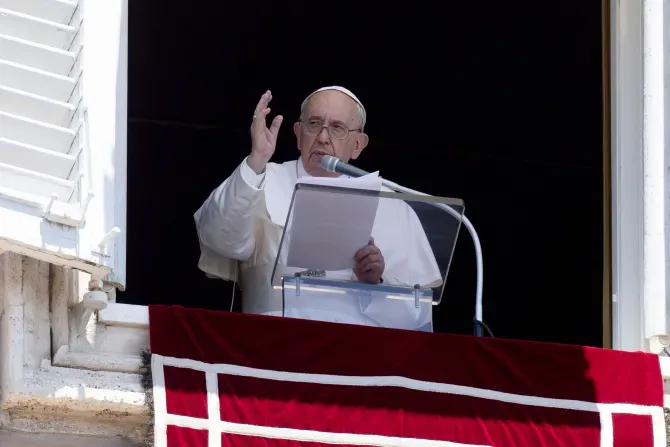
Pope Francis prayed for the victims of the crowd surge at the end of his Angelus address.

“And let us also pray to the Risen Lord for those, mostly young people, who died last night in Seoul from the tragic consequences of a sudden crowd surge,” the pope said.

New Orleans priest arrested again on sexual abuse of minor charge

Former Northshore priest arrested for on sex abuse charges

An Archdiocese of New Orleans priest who is scheduled to be tried in January on child sex abuse charges was arrested again Oct. 25 on an additional molestation charge. 

Father Patrick Wattigny was arrested by the St. Tammany Parish Sheriff’s Office located in Southeastern Louisiana after an investigation was initiated by a sexual abuse complaint brought to the office in August. 

Wattigny’s bond was set at $75,000, according to Nola.com. The outlet reported that as of Wednesday afternoon he was still in jail.

“The victim, who is an adult now, disclosed that he was abused by Wattigny while he was an elementary student at a Covington-area Catholic school,” the sheriff’s office said in a statement about the new arrest. 

According to the sheriff’s office, Wattigny was booked into the St. Tammany Parish Correctional Center on one count of molestation of a juvenile.

“It is deeply disturbing when an individual in a position of authority uses that position to prey on the most defenseless of our population — our children,” Sheriff Randy Smith said in the statement.

The investigation is ongoing, according to the statement.

Wattigny, 55, was originally arrested in October 2020 and entered a plea of not guilty to molestation of a juvenile that allegedly occurred in 2013, according to Nola.com. The archdiocese announced Wattigny’s removal from ministry Oct. 1, 2020. 

At the time of Wattigny’s removal from ministry, New Orleans Archbishop Gregory Aymond wrote in a statement: “Reverend Patrick Wattigny disclosed today his sexual abuse of a minor in 2013. His name will be added to the list of the Archdiocese of New Orleans Clergy Abuse Report. Law enforcement has been notified.” 

Wattigny’s trial in the original case is expected for January 2023, according to nola.com. 

The Associated Press reported in July that the FBI had launched an investigation into the decades-long clergy sexual abuse in New Orleans. 

The FBI is investigating whether federal charges, including charges under the Mann Act, can be used in prosecution.

Canada census shows 2 million fewer Catholics as disaffiliation grows


The Catholic population in Canada has declined by almost 2 million people in the last 10 years, the Canadian census has found in a report that indicates the religiously unaffiliated now outnumber Catholics.

The latest census figures, compiled in 2021, show the Catholic Canadian population has declined to 10.9 million. Catholics now make up about 29.9% of the country’s people. According to the 2011 census, the Catholic population that year was 12.8 million.

Just 53.3% of Canadians, 19.3 million people, now identify as Christian, a decline from 67.3% in 2011 and 77.1% in 2001. Statistics Canada, Canada’s national statistical office, presented the latest figures in an Oct. 26 report.

Catholicism is still the most popular religious affiliation in all provinces and territories except for Nunavut, the sparse population of which has a large Anglican component.

Quebec is the only majority Catholic province, but Catholic numbers declined “considerably,” Statistics Canada said. In 2011, 74.7% of Quebec residents reported that they were Catholic. The 2021 figures indicate 53.8% of Quebec residents identified as Catholic.

CNA contacted the Canadian Conference of Catholic Bishops and the Archdiocese of Quebec for comment but did not receive a response by publication.

Among other Christian identities in Canada, the most numerous are the 7.6% of Canadians who identify as Christian without specifying a denomination. This is double the proportion from 2011.

About 3% of Canadians are adherents to the United Church of Canada, a mainline ecclesial community, and another 3% belong to the Anglican Church. Orthodox Christians, Baptists, and Pentecostal and other Charismatic Christians make up the remainder.

Among Christians, only the Orthodox Christian population and the non-specific Christian population grew in the last decade.

Religious practice has also declined. A separate Canada Statistics summary, released in October 2021, said that in 2019 only about 20% of Canadians attended group religious activities at least monthly. This compares with 40% of Canadians who reported the same in 1985. Women were more likely than men to declare a religious affiliation, as were people born in older generations.

The religiously unaffiliated now make up 34.6% of the Canadian population, according to Statistics Canada’s latest report.

Some regions are less affiliated than others. Almost 60% of the people in Yukon are religiously unaffiliated, as are 52% of those in British Columbia.

Non-Christian religious adherents make up 12.1% of Canada’s population.

About 5% of Canadians are Muslim. Their population has doubled in size since 2011. About 2.3% of Canadians are Hindu and 2.1% are Sikh. The Jewish population numbers about 335,000, a slight increase over the last decade, but their proportion of Canadians has declined to 0.9%. They are slightly outnumbered by self-identified Buddhists.

Non-Christian religious adherents disproportionately live in large urban centers and their numbers have increased largely due to immigration. They make up 16.3% of the population in Ontario, with Muslims and Hindus the most populous. About 16.7% of British Columbia residents adhere to non-Christian religions and Canada’s Sikhs have their largest presence there.

Canada’s 1.8-million indigenous people are largely unaffiliated, with 47% reporting no affiliation. About 26.9% identified as Catholic. Only 81,000 people overall, about 0.2% of the total Canadian population, reported adhering to a traditional indigenous spirituality.

Catholic involvement with government-subsidized residential schools for indigenous Canadians has come under scrutiny in recent decades because of these schools’ efforts to eradicate indigenous culture and assimilate children to the dominant culture. Many of the schools were poorly run and poorly funded, while staff could be negligent or even abusive toward children. Thousands of children died of injury, neglect, or diseases like tuberculosis, often at a rate far higher than other children in Canada.

Arlington bishop condemns Biden’s abortion agenda

 Michael Francis Burbidge - Wikipedia

Bishop Michael Burbidge of Arlington has denounced U.S. President Joe Biden’s stated intention to codify a national right to abortion should Democrats win control of Congress.

“President Biden recently stated that if the Democratic Party has control of Congress following the November 2022 election, his top priority will be pro-abortion legislation. I condemn abortion and any political tactic that would codify abortion as national policy,” Burbidge said.

“Fundamentally, abortion ends the life of a precious child and deeply wounds the child's mother. The role of Congress is to pass laws that serve the common good — and yet this priority of the president only brings about pain and death.”

Biden, a Catholic, declared in an Oct. 18 speech at a Democratic National Committee event held at the Howard Theatre in Washington, D.C., that “Here’s the promise I make to you and the American people: The first bill that I will send to Congress will be to codify Roe v. Wade.”

The president also pledged to veto a Republican-backed proposal to bar abortion under federal law at 15 weeks into pregnancy except in cases of rape, incest, or threat to the mother’s life.

The 2022 U.S. elections, which will be held Nov. 8, will decide control of the U.S. Senate and the U.S. House of Representatives.

Burbidge wrote in response to Biden’s agenda: “We witness firsthand the wounds women and men endure after ending the life of their child. It is clear that they deserve better than abortion. Through various ministries, the Diocese of Arlington accompanies those who have suffered the pain of abortion.”

He added: “Any attempt to codify abortion, rather than to enact policies that support unborn children and mothers, should be met with peaceful, active, and staunch opposition from the Catholic faithful and all people of good will.”

Though June’s Dobbs decision by the U.S. Supreme Court “was perhaps the most significant pro-life victory in the last century, there is much work to be done to make abortion unthinkable and support mothers in need,” Burbidge said. 

“The Catholic Church has long offered hope, healing and material support to the vulnerable. We stand ready to continue serving all expectant families in need.”

Burbidge’s statement referred to an Oct. 25 statement from Archbishop William Lori of Baltimore, chair of the U.S. Conference of Catholic Bishops’ Committee on Pro-Life Activities, which also responded to Biden’s legislative plan for abortion.

“The president is gravely wrong to continue to seek every possible avenue to facilitate abortion, instead of using his power to increase support and care to mothers in challenging situations,” Lori said.

“This single-minded extremism must end, and we implore President Biden to recognize the humanity in preborn children and the genuine life-giving care needed by women in this country,” he added.

The canonization process of the Armenian Cardinal Agagianian, Prefect of Propaganda Fide from 1960 to 1970, has begun

 Gregorio Pietro Agagianian - Wikipedia

"The little Armenian will one day have a great mission in the Church". 

Thus Pope Saint Pius X addressed the twelve-year-old Ghazaros Lazarus Agagianian, meeting him during his 1907 visit to the College of Propaganda Fide. 

Prophetic words, recalled today by Cardinal Angelo De Donatis, Vicar General of His Holiness for the Diocese of Rome, in his speech delivered on the occasion of the solemn opening session of the diocesan phase of the cause of beatification and canonization of the Servant of God Gregory Peter XV Agagianian, Catholicos Patriarch of the Catholic Armenians and Cardinal of the Holy Roman Church, who died in Rome in 1971. The solemn session took place on the morning of Friday, October 28, in the Basilica of Saint John Lateran.


The Servant of God Agagianian, a memorable figure in the Church of the twentieth century, was also Prefect of the Congregation of Propaganda Fide from 1960 to 1970. In his speech, Cardinal De Donatis recalled the unique features of Agagianian's biography, dwelling on the multiple interconnections that unite the itinerary of this son of the Armenian people with the work of the Congregation of Propaganda Fide, in the universal horizon of the mission entrusted by Christ to his Church.


Ghazaros Lazarus Agagianian, born on September 18, 1895 in Akhaltisikhe (Georgia), left for Rome at the age of 11 to train for the priesthood. He was ordained on December 23, 1917, in the church of the Urban College in Rome. After carrying out his priestly and episcopal ministry at the service of the Armenian Catholic Church, he was elected Patriarch of Cilicia of the Armenians on November 30, 1937, at only 42 years of age. Pope Pius XII created him a cardinal in the Consistory of 1946. After the death of Pius XII - Cardinal De Donatis recalled - the name of Agagianian resonated with some insistence in the Conclave of 1958. Later, Pope John XXIII entrusted him with the office of Pro-Prefect and then Prefect of the Congregation Propaganda Fide. 

"In this new service to the Church - said the Cardinal Vicar - Agagianian courageously began his missionary work, becoming the first prefect to personally visit the missions of Africa, Asia and Oceania. Eager to establish direct contact with the faithful in that part of the world, he visited Pakistan, Thailand, Burma, Taiwan, Australia, the Philippines, Vietnam, Japan and India on several trips. Before each celebration, he made his 'charitable visits', meeting the sick, orphans, lepers, prisoners, all those who had material needs or lived in poverty. For the Servant of God, the suffering represented a face-to-face encounter with Christ. Cardinal Agagianian liked to say to those who assisted this suffering humanity: 'Be the hands of Christ and the feet of Christ, but above all be the heart of Christ. Be the compassion of Christ. Because this, as he himself said, means 'working tirelessly, without rest, serving others in every moment of life and giving the best of oneself every day to conquer so many nations for Christ'.


With courage and an assiduous spirit of service - Cardinal De Donatis continued - Agagianian contributed to giving a new face and a new expansion to the mission of the Church, called to be faithful to the Lord's mandate: 'Go into all the world and proclaim the Gospel to every creature'.


"At the Second Vatican Council, as moderator and president of the Commission for the Missions - Cardinal De Donatis recalled -, Agagianian understood that 'the time had come to start a more profound work, without staying on the surface, and to be like yeast placed in flour ferments the whole mass, a parable that teaches us to work from within'. He liked to repeat: 'No true believer can remain cold at the call of Christ. Who has had the grace to open his eyes to the light of God almost at the same time that he opened them to the light of the earth, cannot fail to express his gratitude to the Lord; and the best way to do it is to strive by all means, with living faith and laborious charity, to contribute to giving full glory to the Lord in the salvation of all peoples' ".


The opening session of the Cause of canonization of the Agagianian Servant of God was also attended by Rafael Bedros XXI Minassian, Cilician Catholic Patriarch of the Armenians, together with several Armenian Catholic bishops.


The Cause for the beatification of the Servant of God Agagianian will be led by Father Carlo Calloni, Procurator General of the Capuchin Friars Minor, and will have Father Nareg Naamo, Rector of the Pontifical Armenian College, as vice-postulator.

Pope Francis Prays for Victims of Deadly Islamic Terrorist Attack in Somalia


Pope Francis prayed on Sunday that God may “convert the hearts of the violent” after an al-Qaida-affiliated terrorist attack in Somalia.

“As we celebrate Christ's victory over evil and death, we pray for the victims of the terrorist attack in Mogadishu that killed more than 100 people, including many children. May God convert the hearts of the violent,” Pope Francis said on Oct. 30.

Somalia’s President Hassan Sheikh Mohamud reported that at least 100 people were killed and nearly 300 other people were wounded by two car bombings in the country’s capital on Saturday.

Al-Shabab, a Somali-based branch of al-Qaida, claimed responsibility for the attack, according to the Associated Press. The extremist group said that it targeted the country’s education ministry, calling it an “enemy” that is “committed to removing Somali children from the Islamic faith.”

Speaking at the end of his Angelus address, the pope also prayed for the victims of a crowd surge at a massive Halloween festival in South Korea that killed at least 151 people, according to Reuters.

“And let us also pray to the Risen Lord for those, mostly young people, who died last night in Seoul from the tragic consequences of a sudden crowd surge,” the pope said.

In his reflection on Sunday’s Gospel, Pope Francis told the pilgrims gathered in St. Peter’s Square during life’s most difficult moments “Jesus always looks at us with love.”

“God's gaze never stops at our past full of mistakes, but looks with infinite confidence at what we can become,” the pope said.

The pope noted that Jesus looked up to see Zacchaeus in the sycamore tree in the Gospel of Luke.

“This is the history of salvation: God has never looked down on us to humiliate and judge us, no; on the contrary, he lowered himself to the point of washing our feet, looking at us from below and restoring our dignity to us,” he said.

“In this way, the meeting of eyes between Zacchaeus and Jesus seems to summarize the whole of salvation history: humanity, with its miseries, seeks redemption, but firstly, God, with mercy, seeks his creature to save it.”

Pope Francis encouraged all Christians to have the “gaze of Christ, who embraces from below, who seeks those who are lost, with compassion.”


Christmas 2022: Vatican to Display Hand-carved Wooden Nativity Scene

 Energy-efficient lights to adorn Vatican Christmas tree -  TheCatholicSpirit.com : TheCatholicSpirit.com

For Christmas 2022, the Vatican has commissioned a nativity scene made of life-sized figures hand carved out of alpine cedar trees.

The display will be unveiled in St. Peter’s Square on Dec. 3, during a lighting ceremony for the Vatican Christmas tree.

A second nativity scene, which will be displayed in the Paul VI Hall, was donated by the government of Guatemala.

The Holy Family and an angel were handmade by Guatemalan artisans in the local tradition, using wood and colorful decorations.

The Vatican has placed a nativity scene in front of St. Peter’s Basilica for the Christmas season since the 1980s. For about a decade, the Vatican has asked different countries or Italian regions to lend the nativity to be displayed. In 2021, the scene came from Peru.

Some Vatican manger scenes in recent years have come under criticism: The ceramic figures of the 2020 display elicited a lot of strong reactions on social media, many of them negative.

In 2022, the display will come from Italy’s northeastern-most region, Friuli-Venezia Giulia.

The life-sized wooden figures were carved in 2021 out of cedar tree trimmings. The Vatican said no trees were cut down solely for the purpose of making the nativity scene.

The scene will include a wooden grotto with an ox, donkey, angel, Mary, Joseph, and the baby Jesus. The wooden figures will also have tradesmen and tradeswomen typical of the area where the nativity was made, a shepherdess, and a family and children.

The Christmas tree is an almost 100-foot-tall white fir from Rosello, a mountain village with around 182 inhabitants in the central Italian region of Abruzzo.