Sunday, February 26, 2023

Nuns fight off Vatican decree ordering removal of their Mother Superior

  Tweets with replies by Elaine Murray (@murray_33) / Twitter

Earlier this month, two Poor Clare nuns were expelled from religious life for defying a Vatican order to abandon their 13th century convent on Italy’s Amalfi coast. 

Now 13 Benedictine sisters in Tuscany could face a similar fate as they too resist a Vatican decree, in this case involving the removal of their mother superior.

The drama centers on the “Mary Temple of the Holy Spirit” convent in Pienza in the southern part of Tuscany, nestled on a hill with a breathtaking view of the nearby Val d’Orcia, a lush green valley bisected by the Orcia River. 

Before becoming a convent, the property formerly hosted the diocesan seminary.

A group of 13 Benedictine sisters arrived in the convent in 2017 under the leadership of their newly elected superior, Sister Diletta Forti, who has a background as a marshal in the Forest Guards, more or less the Italian equivalent of the Park Rangers in the United States.

Under Diletta’s leadership, the sisters began a series of ventures, some intended to promote new vocations – such as taking to Facebook to invite young Italian women between the ages of 18 and 38 to spend five days with the sisters in the convent, “sharing our daily life, praying and working with us, to meet Christ and to discover the meaning of your life.”

Other undertakings were commercial, intended to help the convent become self-sustaining. They included the sale of homemade candies and votive candles in an open-air market, and also transforming unused wings of the convent into a sort of B&B, promoted on Facebook under the slogan, “It’s small but it’s got all the comforts … what do you think?”

According to media accounts, this essentially unlicensed commercial activity got the sisters into hot water with local authorities, who complained to the Diocese of Montepulciano-Chiusi-Pienza.

“These sisters surprised us a little bit,” said the deputy mayor of Pienza, Gianpietro Colombini.

“Traditionally this enclosure was different, but evidently they’ve determined rules that permit them to go out and conduct certain activities, such as running a market in an anomalous fashion,” Colombini said.

Local media reports suggest that the diocese made various efforts to rein in the sisters in recent years, which eventually led to an appeal to the Vatican and an apostolic visit of the convent conducted by Cardinal Paolo Lojudice of Siena, a close ally of Pope Francis.

According to a statement posted earlier this week on the web site of the Diocese of Montepulciano-Chiusi-Pienza, the review culminated in a decision to depose Sister Diletta and to name new leadership for the convent.

“On Feb. 13, 2023, the sisters of the ‘Mary Temple of the Holy Spirit’ convent were notified of decrees issued by the Dicastery for Institutes of Consecrated Life and Societies of Apostolic Life … The dicastery has ordered a change in leadership in the convent,” the statement said.

The statement added that the diocese will continue to pay the bills for the convent, but that “obviously everything must be done in obedience to civil laws and canonical norms, and by welcoming the dispositions of the Holy See in communion with the church.”

The statement also noted, however, that as of Sunday, Feb. 19, the Vatican orders had not yet been implemented by the sisters. In fact, local media reports suggest that the sisters have suspended their communications on social media, a padlock has been placed on the entrance to the convent and all its phone lines have been disconnected.

Forti released her own statement on Feb. 20, accusing the diocese of spreading “false and distorted news” and claiming that the Vatican decrees are legally problematic,

“This monastic community has been accused of disobedience and resistance to the dispositions of superiors, while it has simply refused to implement a provision with gross anomalies and conspicuous issues of a juridical nature, such as to call into question its validity and efficacy,” the statement said.

“For this reason, the convent has deemed it necessary to make use of the protections and guarantees of canon law in the competent offices, considering the communication forwarded to it to lack the requisites that would make it effective,” Forti said.

“We’re sorry to note,” she said, “that the diocese hasn’t had any consideration for the necessary discretion with which certain situations should be handled in an intra-ecclesial environment.”

Forti affirmed the sisters’ “filial devotion and obedience to the Holy Father Francis, trusting that this unfortunate situation can be resolved soon, and that a climate of serenity can be recomposed and justice reestablished.”

For its part, the diocesan statement said, “We hope a solution will soon be found that preserves everyone’s best interests,” while also stipulating that the convent isn’t authorized to raise any money for its accounts.

While there has not been any formal threat of returning the sisters to the lay state, media reports suggest that officials in the diocese are becoming increasingly frustrated and some have suggested privately that the community may need to be dissolved.

Clarity grows on when Vatican ‘trial of the century’ may end, if not how

Vatican Finance Trial: What Has Happened So Far and Where is it Heading?|  National Catholic Register

As the Vatican’s “trial of the century” lumbers towards its two-year mark in July, it’s now clearer when it might conclude, with the presiding judge recently announcing he hopes to have things wrapped up by the end of the year.

How it will finish, on the other hand, seems as obscure as ever, after new testimony that seemed a mixed bag for the prosecution.

It was in July 2021 that the Vatican’s tribunal ordered ten people and a handful of institutions to stand trial for various forms of alleged financial crime related to a failed $400 million land deal in London entered into by the Secretariat of State. 

For the first time, the defendants included a Prince of the Church, Italian Cardinal Angelo Becciu, who served as the pope’s chief of staff from 2011 to 2018.

Last Friday, the tribunal’s president, Italian jurist Giuseppe Pignatone, announced that while the court originally had hoped to have things wrapped up by this summer, the process will have to extend into the fall.

The aim now, Pignatone said, is to finish hearing all the witnesses this spring, and then to allow the prosecution to wrap up its case before the traditional Italian summer break in August. In late September defense lawyers would present their summations, along with any defendants who wish to be heard directly by the court.

According to Pignatone, if that schedule can be upheld – and it’s not clear it can, given that there are at least 20 lawyers representing the various defendants and parties to the case – verdicts could be delivered as early as October.

When and if that happens, this week may have lowered the odds of a conviction for Becciu.

Aside from the London fiasco, Becciu has also been charged with illicit movements of money from the Secretariat of State to a Catholic charity run by his brother in the Diocese of Ozieri in the family’s native Sardinia.

Yet on Friday, a former bishop of Ozieri, Bishop Sebastiano Sanguinetti, and the current head of the diocese, Bishop Corrado Melis, both testified that Becciu  “was never even minimally involved” in running the charity in question, and that more generally, he’d never attempted to influence the financial administration of the diocese.

Both prelates also described Becciu’s brother Antonio as a trusted figure who helped the diocese launch a charitable organization that could give employment to disadvantaged persons, including ex-prisoners, recovering alcohol and drug addicts, people with mental illnesses and the unemployed. 

That charity is still operative and employs around 70 people, the bishops said, with no suggestion of financial misconduct.

Melis also testified that he had asked Becciu for a donation from the Secretariat of State for a charitable project in Sardinia in 2018 for which he received $100,000, money which is still in the accounts of the diocese, he said.

In addition, this week’s testimony cast new doubt on the stability of the key prosecution witness, Italian Monsignor Alberto Perlasca.

A former official in the Secretariat of State, Perlasca was among the architects of the London deal seemingly destined to be indicted himself, until he decided in 2020 to cooperate with prosecutors by providing information on his erstwhile colleagues.

Perlasca’s credibility already has suffered during the trial, among other things from revelations that he was indirectly coached in preparing his testimony by Francesca Chaouqui, a key figure in the Vatileaks 2.0 scandal early in Francis’s papacy who was convicted by the Vatican tribunal of leaking confidential documents to journalists.

On Friday, another former official in the Secretariat of State, Italian Monsignor Paolo Vianello, testified as to Perlasca’s behavior during the summer of 2020, when his decision to become a prosecution witness crystallized. 

At one point, according to Vianello, Perlasca sent a text to Becciu announcing his intention to “get it over with,” which, in context, seemed a possible reference to suicide.

Vianello described Becciu’s efforts to find Perlasca, who eventually turned up at the Case Santa Marta residence in which Vianello called a state of “unease.” Vianello said Perlasca claimed he hadn’t slept for several nights, so a Vatican doctor was called who prescribed a sleeping aid. The Vatican gendarmes, according to Vianello, were also called to keep an eye on Perlasca.

In other testimony, Jean-Baptiste De Franssu, president of the Institute for the Works of Religion, better known as the “Vatican bank,” described the series of events in 2019 which led the bank to alert Vatican prosecutors that something might be amiss in the London deal.

According to de Franssu, throughout 2019 the bank was in conversation with the Secretariat of State and also the Financial Information Authority (AIF), the Vatican’s anti-money laundering watchdog agency, regarding a $150 million loan the Secretariate of State had requested to buy its way out of the London deal.

In general, de Franssu said he felt “pressured” by AIF and the Secretariat of State to issue the loan despite concerns over both due diligence and the amount involved.

Finally, a former official of the Vatican bank, Alessandro Nardi, told the court that one of the defendants, an Italian layman named Fabrizio Tirabassi who worked in the Secretariat of State, had applied a different kind of pressure during a dinner at the well-known Roman restaurant Lo Scarpone.

“There are dangerous people behind the London deal, capable of committing murder,” Nardi recalled Tirabassi saying. Nardi testified that he took the remark as a threat and told both his wife and de Franssu about it, but did not make a formal complaint.

Tirabassi denied the claim, telling the court “I never threatened Nardi, nor did I relay threatening expressions by third parties.”

Scottish Catholic Church warns against anti-Christian bias in public life

Scotland runs the risk of denying public service to people with “talent and ability” if people with strong Christian convictions are kept from public office, according to the spokesperson for the country’s Catholic Church.

Scottish Finance Secretary Kate Forbes is running to replace Scotland’s First Minister Nicola Sturgeon, who announced she was resigning on Feb. 15.

However, Forbes – a member of the Free Church of Scotland – has come under fire for her personal belief in traditional marriage norms, including saying having children outside of marriage “would be wrong according to my faith.”

She addressed the concerns in a post she published Thursday on her social media platforms.

“I feel greatly burdened that some of my responses to questions in the media have caused hurt, which was never my intention as I sought to answer questions clearly. I will defend to the hilt the right of everybody in Scotland, particularly minorities, to live and to live without fear or harassment in a pluralistic and tolerant society,” Forbes wrote.

“I will uphold the laws that have been won, as a servant of democracy, and seek to enhance the rights of everybody to live in a way which enables them to flourish. I firmly believe in the inherent dignity of each human being – that underpins all ethical and political decisions I make,” she said.

In an interview with The Herald, Catholic Church spokesperson Peter Kearney claimed that in Scotland’s “pursuit of diversity we have embraced conformity.”

“There is absolutely an intolerance of certain types of difference. We are less tolerant of people’s religious orientations. Some of the things that have been said about religious opinions leave a lot of Catholics and a lot of Christians feeling marginalized,” he told the Scottish daily publication.

“Human rights law describes certain ‘protected characteristics’, among them: Race, gender and sexual orientation, which cannot be used as a basis for discrimination. It is important that we remember religion is also a protected characteristic, deserving of respect,” Kearney said.

“If someone was deemed unsuited to office on the basis of any other protected characteristic there would, quite rightly, be outraged and indignant reactions. As a society we will be guilty of hypocrisy if we don’t defend everyone’s right to freely hold, manifest and express their religious beliefs,” he told the newspaper.

He brought up the recent Gender Recognition Reform Bill, which would have made it easier to obtain a Gender Recognition Certificate, which is legal recognition of a change in birth gender, including lowering the age to receive such a certificate to 16.

Most of the major parties in Scotland – including the ruling Scottish National Party (SNP), Labour, Greens and Liberal Democrats – refused to allow members to vote their conscience on the bill. The legislation passed, but was later blocked by the national government in London.

“The political parties should have allowed a free vote on the Gender Recognition Reform Bill. It is a very obvious example of a contentious moral issue,” Kearney told The Herald.

“The danger here of not allowing individuals to vote according to their conscience is that it will dramatically reduce the pool of people who want to go into parliament. People will believe their views won’t be respected. We run the risk of denying ourselves people with talent and ability,” he told the newspaper.

“We do have evidence that this debate is leaving people feeling very, very uncomfortable,” he continued, citing a poll by a Catholic group on the issue.

“It’s difficult to imagine anyone entering elected politics who didn’t have ‘deeply held views’, whether they are economic, social, environmental or religious views shouldn’t matter. What matters is that they don’t impose those views on others, but instead respect differences,” he told The Herald.

“Previously this was possible by political parties allowing certain moral matters such as: Abortion, same sex marriage and assisted suicide, to be treated as matters of conscience, where parliamentarians were permitted to vote freely in accordance with their conscience. This was an example of tolerance, sadly it has given way to conformity in politics,” he said.

Despite the controversy in the media over Forbes’s religious beliefs, she has the most support in the first poll of SNP voters. She is the preferred choice of 28 percent of party members. Scottish Health Secretary Humza Yousaf has 20 percent, and former Minister for Community Safety Ash Regan has 7 percent.

Expanding outreach to Islam, Vatican establishes diplomatic ties with Oman

Vatican, Oman establish diplomatic ties | Oman – Gulf News 

In yet another sign of Pope Francis’s consistent outreach to Islam, the Vatican announced Thursday that it had established full diplomatic relations with Oman, further extending the Holy See’s relations with the Arab and Muslim worlds.

In a joint statement published Feb. 23, both sides said the move was born of a desire to promote “mutual understanding and further strengthening friendship and cooperation,” and voiced confidence that the decision serves the interests of both nations.

They said that a Vatican apostolic nunciature in Oman and an Omani embassy to the Holy See would soon be established, and envoys named to fill the new posts.

With Thursday’s announcement, the Holy See now enjoys diplomatic relations with every country on the Arabian Peninsula apart from Saudi Arabia. In total, the Vatican now has diplomatic relations with 184 of the 195 nations recognized by the UN, which includes 193 member states and two observers, the State of Palestine and the Holy See.

Beyond Saudi Arabia, the nations with which the Vatican does not yet have full diplomatic relations include China, North Korea, Vietnam and Afghanistan.

Oman, a Sultanate, is bordered by the United Arab Emirates, Saudi Arabia, and Yemen, as well as the Gulf of Oman and the Arabian Sea.

Pope Francis has made outreach to the Arabian Peninsula a priority, having visited the United Arab Emirates in 2019 and the Kingdom of Bahrain last November. In both places, he participated in high-level interfaith meetings aimed at promoting dialogue among religions.

In Abu Dhabi, the pope signed a joint “Document on Human Fraternity” with the Grand Imam of al-Azhar, Ahmed el-Tayeb, which has become the basis of his outreach to the Muslim community, and is often quoted by Francis when he visits Islamic nations.

Following the pope’s visit and the signing of the document, Abu Dhabi established a Higher Committee of Human Fraternity, an independent national committee whose members include Vatican officials, representatives of various religions, including Judaism and Islam, as well as peace activists and UN representatives.

Pope Francis has also been consistently outspoken about the ongoing war in Yemen, often condemning what he has said is the indifference of the world to the conflict, and lamenting the impact the violence is having on children.

In 2017, the Sultanate of Oman assisted in the location and rescue of Father Tom Uzhunnalil, an Indian priest who had been kidnapped in Aden, Yemen, and who spent 18 months in captivity before Omani authorities helped secure his release.

At the time, Oman coordinated with officials in Yemen to locate Uzhunnalil, who was considered a “Vatican employee,” and after the priest’s release, the Vatican formally thanked Oman for its role in the rescue in a public statement.

Like many other countries on the Arabian Peninsula, Oman is a majority Muslim nation where Islam has been declared the formal state religion, and which is governed by Sharia Law.

However, despite the enforcement of Sharia, Oman insists that religious freedom is also guaranteed, and that its Basic Law prohibits discrimination of any kind on a confessional basis.

The Catholic Church in Oman belongs to the Apostolic Vicariate of South Arabia, which is headquartered in Dubai, and which is currently led by Bishop Paolo Martinelli, who was appointed in May of last year.

There are just four parishes in Oman and 12 priests, yet the Vatican in a separate statement Thursday voiced hope that with the establishment of full diplomatic relations, “the Catholic Church in Oman, through priests and religious, will continue to contribute to the social welfare of the Sultanate.”

Oman has a population of roughly 4.5 million, mainly Arabs, but with a significant portion of foreign workers who come mainly from other Middle Eastern countries, the Philippines, India, and Pakistan.

Most Catholics in the country are foreign workers, coming either from the Middle East, the Philippines, and India.

Previously under British control, Oman has been independent since 1971, and functions as a monarchy with a sultan system, currently led by Sultan Ṭāriq bin Taimūr Āl Saʿīd since Jan. 11, 2020, who governs from the capital city of Muscat.

At an administrative level, Oman is divided into 11 different governorates, which are in turn divided into 61 provinces.

Its government operates with a bicameral system including a chamber of democratically elected officials, an advisory council of elected representatives serving 4-year terms, and a State Council, the Majlis Al-Dawla, members of which are named by the Sultan.

Like nearly all countries in the Persian Gulf, Oman’s economy largely hinges on the hydrocarbon sector, specifically the production of natural gas.

Pope Francis: Conduct by some Church members has made Vatican trials ‘painfully necessary’

 Pope Francis tribunal

Pope Francis said Saturday that Vatican trials for cases of grave financial mismanagement have become unavoidable in recent years.

“The problem is not the trials, but the facts and conduct that determine them and make them painfully necessary,” the pope told a group of Vatican magistrates on Feb. 25.

“In fact,” he added, “such behaviors by members of the Church seriously harm its effectiveness in reflecting divine light.”

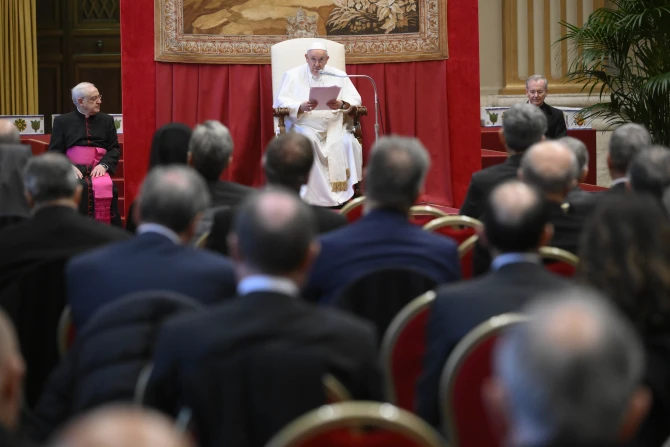
Pope Francis addressed the Vatican’s recent legal disputes in a speech to members of the city state’s tribunals for the opening of its 94th judicial year.

The Vatican is in the midst of a trial to prosecute 10 people, including Cardinal Angelo Becciu, on charges related to the institution’s finances. The trial, which began in July 2021, is expected to conclude before the end of the year.

The trial centers on the Secretariat of State’s purchase of a London building, a controversial investment that lost the Vatican hundreds of thousands of euros. It also marks the first time a cardinal has been tried by a Vatican court of lay judges.

In January, a Vatican court also held a preliminary hearing for a lawsuit by former Vatican auditor Libero Milone, who claims he was wrongly forced out of his job in 2017.

The Vatican City State tribunals “play a valuable role for the benefit of the Holy See when it comes to settling disputes of a civil or criminal nature,” Pope Francis said, emphasizing the importance of justice for promoting peace.

He added that in recent years, legal disputes and trials at the Vatican have increased, as has the seriousness of the conduct behind the legal processes, especially in the management of Vatican assets and finances.

The pope also spoke about the virtue of justice.

Justice “is not just the fruit of a set of rules to be applied with technical expertise, but it is the virtue whereby we give each person his due, which is indispensable for the proper functioning of every sphere of common life and for everyone to lead a peaceful life,” he said.

“Any commitment to peace implies and requires a commitment to justice,” he said. “Peace without justice is not true peace; it has no solid foundation or possibility for the future.”

Francis said the virtue of justice has to be cultivated through personal conversion and exercised with the other cardinal virtues of prudence, fortitude, and temperance.

He also urged the Vatican magistrates to exercise an attitude of mercy and compassion toward the accused.

The test of being on trial, the pope said, “is sometimes necessary, when it comes to ascertaining conduct that tarnishes the face of the Church and arouses scandal in the community of the faithful.”

“Mercy and justice are not alternatives but walk together, proceeding in balance toward the same end, for mercy is not the suspension of justice but its fulfillment,” he said.

What have the Jesuits done about Rupnik? A timeline

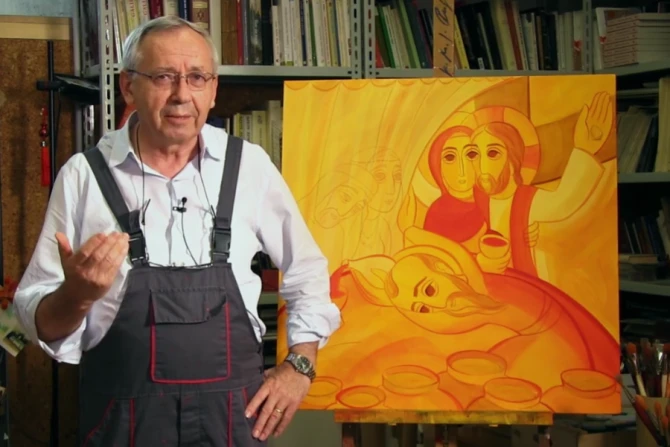
 Fr. Marko Ivan Rupnik, S.J., with the official image of the 10th World Meeting of Families in Rome.

The Society of Jesus said Feb. 21 it had received 15 credible accusations of abuse against Father Marko Rupnik and would be taking steps to begin an internal procedure against the Jesuit priest and artist.

The process could result in disciplinary actions up to and including the 68-year-old Rupnik’s expulsion from the Jesuit order.

In the Feb. 21 declaration, Rupnik’s superior, Father Johan Verschueren, said, “I feel it is my duty to deal seriously with this case and others like it that have arisen and are arising, out of respect for, and in protection of, truth and justice for all parties involved.”

To other restrictions on the priest’s public ministry, Verschueren added a ban on public artistic endeavors.

But the Jesuit order has admitted to knowing of abuse accusations against Rupnik for years, not only since alleged victims went public in early December 2022.

Here’s a timeline of known facts about what the Jesuits knew and when they knew it in the Father Rupnik case, and what actions the order has taken so far.

2018

October: Jesuit Father Juan Antonio Guerrero Alves, Rupnik’s superior, receives allegations of sexual misconduct on the part of Rupnik, and an allegation that Rupnik gave absolution in confession to an accomplice in a sin against the Sixth Commandment. A preliminary investigation is set up.

2019

May: The 2018 allegations are deemed credible; a file is sent to the Vatican’s Congregation for the Doctrine of the Faith (CDF).

June: Precautionary restrictions are imposed on Rupnik by his superior, Father Guerrero. What the specific restrictions were is currently unknown.

July: The CDF asks Father Arturo Sosa, the Jesuits’ superior general, to set up a penal administrative process for the Rupnik accusations. Sosa appoints a delegate and two assessors who are not part of the order.

2020

January: The delegate and assessors assembled by Sosa unanimously find that Rupnik did commit the canonical crime of absolution of an accomplice. The order knows that Rupnik had incurred an automatic excommunication for that crime.

May: The CDF also formally declares the excommunicable act (the absolution of an accomplice in a sin against the Sixth Commandment) happened and that Rupnik is in an excommunicated status. The excommunication is lifted by CDF decree later the same month. Rupnik ceases to be director of the art and theological center he founded in Rome, the Centro Aletti, and administrative restrictions are imposed for three years.

October: Bishop Daniele Libanori, SJ, an auxiliary bishop of Rome, is appointed extraordinary commissioner of the Loyola Community following a canonical visit that identified governance problems in the religious institute. 

2021

Libanori, in conversations with current and former members of the Loyola Community in early 2021, uncovers allegations of abuse against Rupnik, who had split from the institute in 1993 after co-founding the community with current head Sister Ivanka Hosta in the late 1980s. Libanori, according to the Associated Press, urges the women to file their complaints with the Vatican.

June: The CDF contacts the Jesuit general curia about allegations concerning Rupnik and some members of the Loyola Community.

July: Sosa asks Father Johan Verschueren, who succeeded Guerrero in January 2020 as Rupnik’s superior, to set up a preliminary investigation into the allegations with a person outside the Jesuits.

2022

January: An investigation concludes that there was enough evidence for a case; the results are sent to the CDF with a recommendation for a penal process. Pope Francis has a meeting with Rupnik at the Vatican on Jan. 3.

February: Verschueren imposes new, unspecified restrictions on Rupnik’s ministry.

October: The CDF (now called the Dicastery for the Doctrine of the Faith) says the statute of limitations has expired on the alleged criminal acts and there can be no trial. Rupnik’s ministry continues to be under restrictions.

December: Sometime during this month, Verschueren imposes new restrictions on Rupnik. On Dec. 18, the Jesuits publish a statement asking anyone who has suffered abuse to contact them to lodge a new complaint or to further discuss any complaints that were already made. The statement also includes a basic timeline of when the Jesuits learned of accusations against Rupnik and what actions were taken.

On Dec. 17, Verschueren tells the National Catholic Register that Rupnik’s early restrictions were to “avoid private, in-depth spiritual contacts with persons, forbidden to confess women, and to give spiritual direction to women specifically in the context of Centro Aletti. In 2020, these restrictions were widened geographically to include anywhere.” In further comments to the Register on Dec. 20, Verchueren says Rupnik had been able to continue certain public activities while under restrictions because “a few exceptions” were made for him. “The local superior had the right to allow exceptions,” Verschueren said, and “could judge whether they were opportune or not.” He added: “I admit that this did not work well. We made these rules ‘absolute’ after complaints reached my ears.”

2023

January: In statements to ACI Prensa, CNA’s Spanish-language news partner, Verschueren says he asked Rupnik to not leave Lazio, the Italian region where Rome is located, during ongoing preliminary investigations. 

February: The Society of Jesus says it will open a new internal procedure on Rupnik after receiving 15 abuse accusations with a “very high” degree of credibility.

A more detailed timeline of the developments in the Rupnik case, including notes on his public activities while under restrictions, can be read here.

Pope Francis: The devil uses ‘three widespread and dangerous temptations’ to divide us

 Pope Francis greets the crowd at his Sunday Angelus address on Jan. 29, 2023.

On the first Sunday of Lent, Pope Francis warned of three “widespread and dangerous temptations” that the devil uses to separate us from God and divide us from each other.

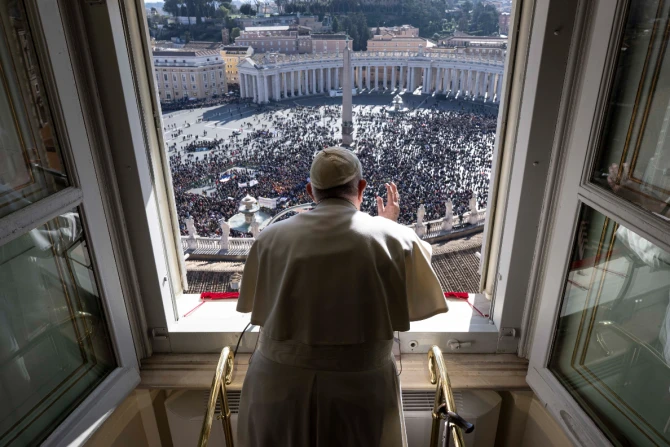
In his Angelus address on Feb. 26, the pope said that the devil uses three “powerful poisons” to attack and divide Christian communities: attachment to material things, mistrust, and the thirst for power.

“[These] are three widespread and dangerous temptations that the devil uses to divide us from the Father and to make us no longer feel like brothers and sisters among ourselves, to lead us to solitude and desperation. This is what he wanted to do to Jesus and what he wants to do to us, to lead us to despair,” Francis said.

The pope pointed to the Gospel of Matthew to offer advice for how to overcome the three types of temptations, as Jesus did when he was tempted by the devil after 40 days of fasting in the desert.

“Jesus defeats the temptations. But how does he conquer them? By avoiding discussion with the devil and responding with the Word of God,” he said.

Pope Francis explained that Jesus resisted the devil “by opposing him in faith with the Divine Word.”

To counteract the temptations of attachment to material things, mistrust, and the thirst for power, Jesus quotes three phrases from Scripture that speak of freedom from goods, trust, and service to God.

“In this way, Jesus teaches us to defend unity with God and among ourselves from the attacks of the divider,” he said.

The pope encouraged people to turn to the Word of God in their spiritual struggles and in times of temptation.

“If I have a vice or a recurring temptation, why not obtain help by seeking out a verse of the Word of God that responds to that vice?” he said. “Then, when temptation comes, I recite it, I pray it, trusting in the grace of Christ.”

“May Mary, who welcomed the Word of God and with her humility defeated the pride of the divider, accompany us in the spiritual struggle of Lent,” he said.

After Pope Francis prayed the Angelus in Latin with the crowd gathered in St. Peter’s Square, he asked people to pray for the Holy Land, Burkina Faso, Ukraine, Syria, and Turkey.

“Dear brothers and sisters, Painful news is still coming from the Holy Land, where so many people have been killed, even children,” the pope said.

“How to stop this spiral of violence? I renew my call for dialogue to prevail over hatred and revenge, and I pray to God for the Palestinians and Israelis to find the path of fraternity and peace with the help of the international community.”

The pope also said that he was pained to hear on Sunday morning of a migrant boat shipwreck on the coast of southern Italy. At least 43 people died in the shipwreck on Feb. 26 near Steccato di Cutro in Calabria. Eighty people survived, according to Reuters, and the coast guard is still searching for survivors.

“This morning I learned with sorrow of the shipwreck that occurred on the Calabrian coast near Crotone. Already forty dead have been recovered, including many children. I pray for each of them, for the missing, and for the other surviving migrants,” the pope said.

“I thank those who have brought relief and those who are giving shelter. May Our Lady support these brothers and sisters of ours.”

Pope Francis approves miracle to pave way to beatification of Elisabetta Martinez

 Da Papa Francesco ok a proclamazione di Elisabetta Martinez beata

Pope Francis has approved a miracle to advance the cause of canonization of Venerable Servant of God Elisabetta Martinez, an Italian nun and founder of the Congregation of the Daughters of Santa Maria di Leuca.

The miracle involved the healing of an unborn baby girl in Rimini, Italy.

Ultrasound imagery in 2017 revealed to the child’s mother that her baby was suffering from several severe life-limiting and potentially life-ending conditions.

These conditions included thrombosis, complete calcific occlusion of the left fetal umbilical artery, extensive placental infarction, and severe intrauterine fetal growth retardation associated with brain sparing condition.

A family friend informed the Daughters of Santa Maria di Leuca, whose various congregations began praying novenas for a miraculous healing through the intercession of their founder Elisabetta Martinez.

In January 2018 new ultrasound imagery shocked doctors by revealing regular quantities of amniotic fluid and regular fetal flowmetry, both major improvements to the baby’s condition. Yet, the baby girl was still found to be suffering from thrombosis of an umbilical artery and fetal growth retardation.

On March 19, 2018, the baby girl was born completely healthy.

A Feb. 23 decree by Pope Francis authorized the advancement of Martinez’s canonization cause based on the baby girl’s miraculous healing.

The Vatican’s Dicastery for the Causes of Saints will now advance Martinez to the status of “blessed,” one step away from being declared a saint in the Catholic Church.

A new religious order

Martinez was born on March 25, 1905, in Galatina, Italy.

In 1930, at the age of 25, Martinez made her first profession of religious vows to the Congregation of Our Lady of Charity of the Good Shepherd. She was given the name Sister Maria Lucia.

She was sent to minister to young women in the central Italian town of Chieti. However, while in Chieti she suffered from a serious lung infection and was forced to leave the order and return to her family.

During this difficult period of her life, Martinez is said to have been inspired by the Blessed Virgin Mary to establish a new religious order dedicated to the education of children, the formation of adolescents, and the assistance of single mothers.

She received approval from the local bishop of Ugento, Monsignor Giuseppe Ruotolo, and in 1943 the Daughters of Santa Maria di Leuca received formal papal approval.  

The daughters ministered to those suffering during World War II, giving special care to the poor.

Despite her continued illness and frail condition, Martinez worked diligently to spread the congregation’s good work throughout Italy and even to Switzerland, Belgium, and the United States.

Martinez had a great dedication to adoring Christ in the Blessed Sacrament of the Eucharist, which gave her the strength to abandon herself to God’s hands and trust in Divine Providence, according to the Dicastery of the Causes of Saints’ website.

“She lived in the presence of God, and this was reflected in everything she did,” says the dicastery’s website. “Heroic hope took the form of the ability to wait, without complaining and without breaking down, trusting in the Lord’s timing to complete his projects.”

Martinez died in Rome on Feb. 8, 1991. She was declared a venerable servant of God by Pope Francis on Oct. 13, 2021.

With the approval of the miracle attributed to her intercession, Martinez can now be advanced to the level of beatification, one step away from sainthood.

Pope Francis also recognized the heroic virtues of five other individuals today: Italian Franciscan friar and priest Giuseppe di Sant’Elpidio (1885–1974), Brazilian priest Aloisio Sebastiao Boeing (1913–2006), Italian nun Margherita Lussana (1852–1935), Spanish lay faithful Francisca Ana Maria Alcover Morell (1912–1954), and Italian mother Albertina Violin Zirondoli (1901–1972). These individuals’ causes for canonization will now advance to the level of venerable servant of God.

'Witnesses telling their stories, while they're still alive, is very powerful'

 Sean Ross Abbey - The Irish Times

STOLEN, A DOCUMENTARY set to premiere in Dublin next week, opens with an interview with Michael Donovan, who was a gardener at Sean Ross Abbey from 1988 to 1991.

A mother and baby home operated at the site in Roscrea in county Tipperary from 1931 to 1969. 

Records show that 1,090 children born in or admitted to Sean Ross died in infancy or early childhood.

In the opening scenes of Stolen, Donovan recalls how small bones were found at the site in the 1980s.

“The nuns had sent down orders for the plot to be cleaned up and the tractor was brought in. We brought the tractor in from here, reversed it up to the corner, they dropped down the plough and turned over the sod and I noticed lots of small bones.

“10 inches, 12 inches, deep – that was shallow enough – but I did notice lots of small, small bones.

“This is a small enough plot and there are 1,090 babies still missing, and we don’t believe they’re all in this angels’ plot, we believe that they’re probably next door, beside this plot itself,” Donovan said.

“There’s lots of unanswered questions and we’d like to get answers to them,” he added.

The burial place of more than 1,000 babies who died in Sean Ross is unknown, as is the burial place of over 850 babies who died at Bessborough mother and baby institution. However, there are currently no plans to excavate either site.

Instead, the Government’s focus to date has been largely on Tuam – the site of another former mother and baby institution where it’s believed around 800 babies and young children could be buried.

Work on the excavation process at Tuam is set to finally begin in the coming months.

Tuam

It was Catherine Corless’ research that uncovered the situation in Tuam, led to a Commission of Investigation being established and, indeed, inspired Margo Harkin to make Stolen.

The director is a founding member of Derry Film & Video and is known for her drama Hush-a-Bye Baby and the documentary Bloody Sunday: A Derry Diary.

Speaking to The Journal about Stolen, Harkin said Corless is “amazing”, adding: “She just stuck it out and has persisted, and she’s been proven right.”

Harkin met Corless and decided to make a documentary that explores the stories of people who passed through mother and baby institutions.

“At that stage, I didn’t even know how many people were affected by this issue. And I’ve since discovered there are thousands and thousands of people.

“Practically anybody you might speak to will begin to tell you a story about somebody they know who either had been adopted or had been in a mother and baby home.

“So it is an issue that affects so many people. I’m a filmmaker, so I thought this is my way to make a contribution to allow people the chance to express their views, to tell us their stories.

There’s nothing approaching the power of witnesses, while they’re still alive, being given the right to tell their story first-hand. So it’s that idea of trying to get it on record so that it’s there forever and always but, at the same time, you know you’re only scratching the surface.

Harkin believes sites other than Tuam should also be excavated given the fact so many children’s remains are unaccounted for.

“I’m not entirely sure why they have said they’re going to concentrate on Tuam, maybe it’s because it’s the site they know most about at the minute. I’m not sure if the door is totally closed on [excavating] other sites, I would hope not.

“Because I think it’s not going to go away, there are people still alive who want to know where their families are buried. So, they should just take the bull by the horns and be clear with people about what it is they’re going to do.

“I know the [Burials Act] specifically refers to Tuam and that took a long fight. We’ve waited a long time to hear that it’s finally going to happen. And I know they’re appointing somebody to oversee the setting up of it, but it’s very slow and dragging on. I’m sure people are incredibly frustrated.”

The Commission of Investigation focused on 14 mother and baby homes and four county homes, a fraction of the overall number of institutions that operated in Ireland in the 20th century. Around 9,000 children died in these particular institutions, the inquiry found. 

Harkin believes there could well be other institutions that did not keep burial records.

“God knows what’s happened in [these institutions]. There could be similar evidence to come out about a lack of burial records in those places as well. There’s a lot to be answered yet,” she said.

Family separation

Tens of thousands of women and girls who became pregnant outside marriage were sent to mother and baby homes, usually to give birth in secret.

Their children were generally adopted – at times without their consent, fostered, or sent to an industrial school.

Maria Arbuckle’s son Paul was adopted in 1982. She was allowed to feed Paul when he was a newborn in St Patrick’s mother and baby home in Dublin, but was told not to bond with him.

“I remember having to go up at feeding times to feed him, but we weren’t allowed to bond with them, you had to go in, do the job and go back out again. If you were even seen bent over the baby you were told, ‘No, he’s not yours, no bonding’,” she says in Stolen.

Arbuckle’s story also features in the Redacted Lives podcast.

Paul, who now goes by a different name, is ineligible for redress as he spent less than six months in St Patrick’s institution.

Redress

Stolen speaks to several survivors, relatives and experts to explore how the mother and baby home system operated and the ongoing impact it has on so many people’s lives today.

One of those people is Michael O’Flaherty who was born in the Tuam institution in 1948 before being boarded out, a precursor to fostering. He said his foster mother was kind but was regularly beaten up by his foster father.

Recalling this time, O’Flaherty said: “I don’t know how I survived.”

He was removed from this particular house by social services, before being sent to a farm where he was forced to work almost every day and rarely allowed to go to school.

“There has to be a better life than this,” he recalled thinking at the time.

Harkin said the fact that people like O’Flaherty are excluded from the Government’s planned redress scheme seems “almost criminal”.

“I feel it’s a complete dereliction of duty that they’re left out, it doesn’t make any sense to me. I very much agree with the families. I think it’s nonsense, really. The conditions they’ve come up with for eligibility don’t make sense.

“I know that people are really, really unhappy with it. And the whole thing that you have to have been in a home for six months just seems so arbitrary.”

The controversial redress scheme passed through the Dáil on Wednesday after a number of heated debates on the issue.

Around 34,000 people will be eligible to apply for redress under the scheme, which is estimated to cost around €800 million. However, around 24,000 survivors are excluded from the scheme.

It doesn’t include people who spent less than six months in an institution as a child.

The scheme also does not specifically cater to people who were boarded out as children; people who were subjected to vaccine trials; and people who experienced racism or other discrimination in the system.

There have been repeated calls, nationally and internationally, for the scheme to be extended.

‘Swept under the carpet’

Many experts have predicted that the Government will face future legal challenges from people who are excluded from the scheme.

Harkin agrees, telling us: “If the Government thinks they’re going to get away with it and wipe it all under the carpet, they’ll soon find out [that they won't].”

The filmmaker also said it’s essential that the religious orders who ran many of the institutions pay towards the scheme.

The Government is currently in talks with orders in a bid to get them to contribute. However, Children’s Minister Roderic O’Gorman previously told The Journal he does not have the power to compel orders to pay.

Harkin said it’s clear that religious orders have assets and they should contribute. 

“They should play their part. I think that negotiating with them to kind of make it as amenable as possible to the Church is just a complete avoidance of justice, as far as I’m concerned,” she said.

“It may have been a shared responsibility with the State and others at the time, but they have the larger part of responsibility. They doled out the cruelty, they doled out the separation, they doled out the disruption.

“They ruined people’s lives, they absolutely did so they should absolutely pay, they should be made to pay,” Harkin stated.

The filmmaker hopes that Stolen will join the growing number of documentaries, podcasts and books seeking to make the public aware of the reality of life in mother and baby homes, and the ongoing impact of family separation and people’s struggles to get access to their records.

“The stories are fascinating and things I’d never heard before or exposed. And that’s what you need to do, you need to go right to the source and let people themselves tell their story,” Harkin said.

“It’s all very important and I just do hope that people will pay attention, that people will feel a level of anger about it.

“Sometimes they just don’t have the information because the biggest aspect of all of this has been the whole climate of silence that surrounded it, and acceptance – people thinking, ‘it’s just the way things were’.

“It is the way things were, but it’s not the way it should be. We need to make changes, we need to acknowledge what happened and we need to support those people who’ve suffered,” she added.

Stolen is a co-production between Harkin’s company Besom Productions (based in Derry) and Wildfire Films (based in Dublin). Martha O’Neill is the producer and Rory Lorton is the associate producer. The documentary will premiere at the Light House Cinema as part of the Dublin International Film Festival at 6pm on Thursday, 2 March. Ticket information here.