Saturday, April 15, 2017

EUROPE : Spanish priest cleared of abuse; Pope Francis had backed accuser

http://www.archidiocesisgranada.es/images/logo.jpgA Catholic priest in the Archdiocese of Granada, Spain, has been cleared of sex-abuse charges, in a case that saw Pope Francis intervene on behalf of the priest’s accuser.

David Ramirez Castillo — originally identified only as “Daniel” — had written to Pope Francis in 2014, complaining that he and other young men had been molested by Father Roman Martinez and other priests when they were teenagers. 

The Pontiff responded by calling Ramirez Castillo to express his sympathy and apologize for the abuse, and demanding a full inquiry by the Granada archdiocese into the allegations about a sex-abuse ring. 

Ten priests were suspended from ministry during the investigation.

But now a secular court in Spain has determined that the accusations were unfounded. 

The court ruled that testimony against Father Martinez was “completely implausible,” and that several details of the complaint by Ramirez Castillo had been proven false.

VATICAN : Pope to visit Pius VI’s birthplace and Bologna

Image result for Pope Pius VIThe Holy See Press Office has announced that Pope Francis will visit Cesena, the birthplace of Pope Pius VI (1717-1799), on October 1 to commemorate the 300th anniversary of his birth.

Cesena, now of city of 97,000, is located in the north-central Italian region of Emilia-Romagna. Pius VI, who reigned from 1775 to 1799, was taken prisoner by Napoleon’s troops and died in France.

Later on October 1, the Pope will travel from Cesena to Bologna for an archdiocesan Eucharistic congress. 

In Bologna, he will celebrate Mass, lead the recitation of the Angelus, eat with the poor, and address youth, priests, and university representatives.

ITALY : Faithful storm out of Mass in Italy after priest criticizes Pope Francis

Image result for Montesilvano Catholic ChurchA priest is being asked to take a break from his parish in the small Italian town of Montesilvano after some in his congregation reportedly stormed out of Mass when he openly criticized Pope Francis on Palm Sunday.
 
Media reports claimed the congregation shouted “Shame, shame!” at Fr. Edward Pushparaj when he said Pope Francis had only been “bad” for the Catholic Church.

Palm Sunday commemorates the arrival of Jesus in Jerusalem and is a solemn occasion on the Christian calendar that marks the start of Holy Week and the run-up to Easter Sunday.

But the episode has forced the local bishop, Archbishop Tommaso Valentinetti of the Archdiocese of Pescara-Penne, to intervene; he has pledged to meet the disgruntled parishioners from St. Anthony of Padua parish.

In an article published on the archdiocesan website, Valentinetti suggested that Pushparaj, an assistant pastor at the church who is also known as Don Edward, may have overstepped the mark during his preaching.

“Preaching is one of the main activities in the ministry of a priest,” Valentinetti said. “It is a service linked to meditation on the Word of the day, the liturgy, and certainly cannot relate to personal judgments, especially when they are not in communion with the pope.”

In his homily Pushparaj, who is from India, reportedly referred to the pope’s dialogue with other faiths and in particular his decision to wash the feet of a Muslim woman at a detention center outside Rome on Holy Thursday in 2013, Francis’s first as pope.

“In four years Pope Francis has only been bad for the church,” the priest reportedly said.

According to Italian media reports, Pushparaj’s parishioners have been complaining about the priest for some weeks and claim he has criticized the pope’s exhortation on the family, Amoris Laetitia, or “The Joy of Love.”

Francis has often come under withering criticism from conservative Catholics over his efforts to set the church on a more pastoral path that is less focused on rules and older rites and traditions.

The archbishop said he hoped Pushparaj was just weary and in need of a rest.

“I think it’s fair to ask the priest to take some time to rest and release him, temporarily, from his pastoral duties,” Valentinetti said in the article on the archdiocesan site.

Valentinetti could not be reached for comment.

EUROPE : Shortage of altar boys in Germany’s Catholic Church

Image result for altar boysGrey-haired altar boys, while not yet common, are an increasingly frequent sight at masses served in Germany’s many Catholic churches, according to figures for 2015 compiled by the church.


Around 2 per cent of the servers no longer fit into the “classical” age group of 9 to 19 years, Alexander Bothe, who reports on servers to the German Catholic Bishops’ Conference, said on Thursday.

Priests were turning to adults, many of them already engaged in church work, to fill the gaps when no boys or youth were available, said Jody Anthony, who until recently worked for the diocese of Limburg to the north-west of Frankfurt.

“For that reason, you could say that there are more these days,” Anthony said.

Konrad Haschke, a 60-year-old Frankfurt resident who has returned to serving at mass after a long interval, is content with the trend.

“I felt 50 years younger immediately,” he said.

SCOTLAND : Catholic Church-run homes to be focus of child abuse inquiry

The second phase of the Scottish child abuse inquiry will investigate children’s homes run by the Catholic Church.

The inquiry is examining historical allegations of the abuse of children in care and has been taking statements from witnesses since last spring.

Officials said the first part of the second phase starting in autumn will focus on homes run by the Daughters of Charity of St Vincent de Paul, such as Smyllum Park in Lanark, Bellevue House in Rutherglen, St Joseph’s Hospital in Rosewell, St Vincent’s School for the Deaf/Blind in Glasgow and Roseangle Orphanage (St Vincent’s) in Dundee.

In early 2018, the inquiry will examine homes run by Sisters of Nazareth, investigating Nazareth House sites in Aberdeen, Cardonald, Kilmarnock and Lasswade.

A statement released on behalf of the inquiry said: “Evidence given at hearings will supplement written statements taken from witnesses in advance and documents which have been recovered by the inquiry team during the course of investigations.

“The inquiry will continue to take statements from survivors in private sessions and from a range of other witnesses, and urges anyone with information or experiences of establishments run by the Daughters of Charity of St Vincent de Paul or the Sisters of Nazareth to contact the witness support team as soon as possible.”

The first sessions of the inquiry will start on 31 May and will hear evidence from faith-based organisations, residential and foster care providers, expert witnesses, the Scottish Government and survivor groups.

They will take place at Rosebery House in Edinburgh and are expected to last about seven weeks.

They will hear evidence of the history and governance of large care providers of residential and foster care to children in Scotland and faith-based organisations, and whether there is any retrospective acknowledgement of abuse.

There will be evidence from Quarriers, Barnardo’s and Aberlour Child Care Trust.

The Church of Scotland/CrossReach, the Bishops’ Conference, the Good Shepherd Sisters and the Benedictines are among those who will give evidence.

CHILE : Nun sues Catholic Church for damages after rape

Image result for Archdiocese of SantiagoA nun in Chile is suing the religious order she belonged to after its members pressured her to leave her convent over her pregnancy.

The nun became pregnant after she was raped by a man carrying out repairs at the convent.

She alleges that, when her fellow sisters found out about her pregnancy, they pressured her to leave the convent and the Church.

Her lawyer says the sisters blamed her for having been raped. 

She is suing the Archbishopric of Santiago and the Order of St Clare.

The Auxiliary Bishop of Santiago, Rt Rev Jorge Concha, said that the nun had left the convent "voluntarily" and the Archbishopric had only found out about the rape and subsequent events on 27 March.

'Fear and shame'

The nun told Chilean TV that she had joined the order in 2002 when she was 20 years old. 

She said she lived inside a convent in the capital Santiago, with very little contact with the outside world.

But in 2012, a group of men was allowed into the convent to carry out some repairs. They lived and slept in the convent for the duration of the renovations and the nun was assigned to provide them with food. 

One of them raped her, a fact she kept secret from her fellow sisters "out of fear and shame, because a sense of shame came over me and didn't let me express myself," she told 24 Horas.

Three months on, the sisters found out that she was pregnant.

"[I got] zero support, they told me I was to blame, that I did it on purpose," the nun told Chilean TV.

"I told them I was innocent, but my fellow sisters were very cruel to me."

She alleges that they pressured her to leave the convent and the Church.

"They wanted me to hand over my habit, but I wasn't going to do that," she said. 

While she did eventually leave the convent she says she refused to sign any papers saying she would leave the Church. 

She says she sought shelter with a friend and after giving birth, put her child up for adoption.

'Abandoned by my only family'

In 2015, her rapist was found guilty and sentenced to five years in jail. 

Her lawyer says it is time for the  "to own up to its responsibility" in the case. 

"She is a nun living in a convent who was raped and instead of being protected she was blamed for what happened," her lawyer Camila Maturana said. 

"In a convent, where nuns are kept separate from worldly life, men shouldn't stay overnight," Ms Maturana said.

"All religious institutions in a diocese fall under the aegis of a bishop, in this case it's the Archbishop of Santiago," she added, to explain the decision to sue the Archbishopric as well as the Order of St Clare. 

The nun said she felt "abandoned by my only family and my Church, which I have always defended like a lioness". 

Bishop Concha said the Archbishopric had been unaware of the nun's plight until 27 March.

IRL : Glenstal monk urges church to change attitude on sexual ethic

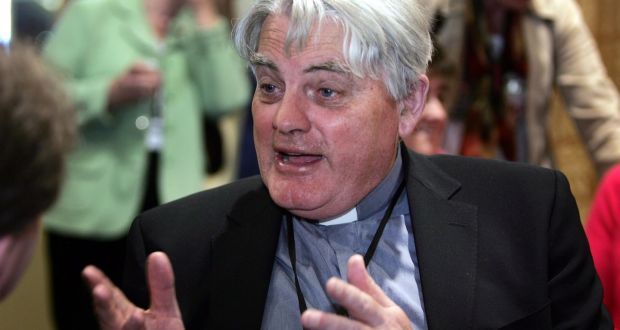
Fr Mark Patrick Hederman:  “It is surely time to take a more comprehensive approach to the ethics of sexual behaviour.” Photograph: Eric Luke The Catholic Church’s “stifling teachings on sex” need to be dramatically modernised, a Benedictine monk has said. 

Fr Mark Patrick Hederman, the former abbot of Glenstal in Limerick, said the church also needs to address its subjugation of women and open a national discussion on sex, celibacy and ethics.

He said the progressive attitude shown by the nation in the marriage equality referendum have not been reflected in all parts of society.

“Now that we have legislated for gay marriage and accepted the fact that sexuality does happen for reasons other than procreation; now that we also recognise that some of the most heinous sexual crimes have been perpetrated within the ‘sanctity’ of marriage; it is surely time to take a more comprehensive approach to the ethics of sexual behaviour,” he said.

“Every or any sexual activity can be good or evil, and the act itself right through to the moment of orgasm is always somewhere on a spectrum between selfish egotism and altruistic communion.”
Fr Hederman (72), a former headmaster in Glenstal Abbey, said that for centuries sex in Ireland was only talked about in the context of “the natural law of God and confined to religious discourse”.

Reality check

However, he believes the time has come to have a greater conversation and for the church to have “a reality check” on its ideals.

In relation to a person’s emotional or sexual life, he said in the past it was as if the church felt such a life did not exist.

“It was presumed that it arrived fully fledged in the marriage bed, the only location where its practice was permitted. Even the most basic courses on love-making teach that a man has to train himself to prevent orgasm occurring prematurely before it can be shared with his partner.

“This does not come naturally. On the contrary, the natural orgasm and ejection of sperm for a man is unencumbered and immediate. That is the biological way, the optimum performance in terms of procreation and reproduction of the species.

“Lovers have to learn, discipline themselves, and gain a control which will help them to be sexual in a way that makes them sensitively reciprocal. Otherwise sexuality is the tool of selfish individuality and autistic monologue,” he writes.

Rejected lifestyles

Fr Hederman is a prolific author and his latest book, The Opal and the Pearl, is published this week and calls for a more modernised attitude from the church on sex. The book takes its title from a letter from James Joyce to Nora Barnacle in 1909.

In it, he writes that Catholics who wish to remain “conservative and old-fashioned”, should avoid being “sectarian and supportive of values and lifestyles which have been rejected by the majority of 21st-century families.

“Otherwise we are categorised as out-of-date leftovers from a previous era, such as the Amish communities in America and Canada.”

Fr Hederman said that while he believes in celibacy and the condition of Christian chastity, “I don’t believe that everyone who wants to devote their life to God should be required to be celibate.”

AUS: Catholic Church must reform confession, abuse survivor says

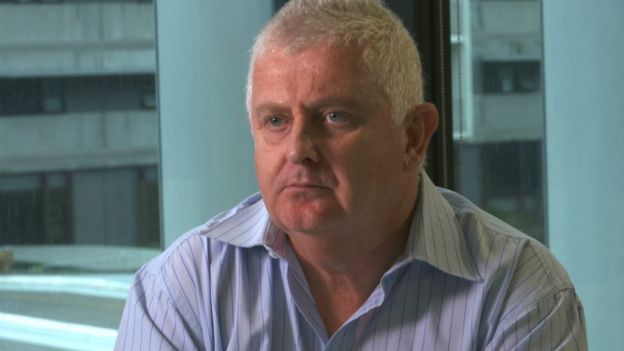
Mr Gogarty pictured as an adultAn Australian child abuse survivor has called on the Catholic Church to reform its laws on confession to ensure crimes are reported to police. 

Peter Gogarty said perpetrators knew anything disclosed in confession would not be revealed to authorities. 

He told the BBC it was effectively a "get-out-of-jail-free card".

It follows the final public hearings in an Australian inquiry, which has heard evidence of abusers confessing knowing their actions would not be divulged. 

The issue of mandatory reporting has split Australia's Catholic Church, with archbishops differing on whether information given by a child victim during confession should be relayed to police. 

"What they are doing is saying we are more prepared to protect an offender than we are to take care of this child," said Mr Gogarty, who was 12 when he was abused by a priest in New South Wales. 

"If the royal commission [inquiry] has shown us one thing, it is that a paedophile does not stop until they die or are physically incapable of molesting any more."

Criticism of response

The inquiry, established in 2013, gathered evidence from 4,440 people who said they were victims of abuse at Catholic institutions in Australia.

Mr Gogarty said the church had been slow to respond to the claims.

"The church in Australia has treated this like a nasty public relations disaster," he told the BBC.
"I don't think they understand the depth of the disaster they have created and the work they need to do to fix it."

Francis Sullivan, head of the church's Truth, Justice and Healing Council, said the institution had recognised its "shameful" role in enabling and covering up abuse in the past.

He admitted that evidence at the inquiry had "corroded the credibility of the church", and said it had already paid hundreds of millions of dollars in compensation to victims.

Confession 'sacrosanct'

However, Mr Sullivan said confession should not be altered to make priests report abuse to the police. 

"I think it would be a tragedy if the privileged communication in the confessional is abolished," he said. 

"The Catholic Church says that when it involves the seal of confession then that information is sacrosanct - that the priest is bound by that."

Mr Sullivan said he favoured a system where a perpetrator confessing abuse was advised to report the crime themselves. 

"I think its incumbent on the priest to say to the person - if you are sincere about this, if you want to absolved - then going to the authorities is part of the exercise," he said. 

Mandatory reporting of abuse has been one of the key issues under consideration by the royal commission, which has heard allegations of abuse at more than 4,000 public organisations in Australia. 

The commissioners are due to submit their final report and recommendations in December.