Thursday, December 26, 2013

The USA's religious landscape

From even the briefest overview of almost any selection of news media, television programs, books, films, or other cultural output, you quickly notice that the USA appears to be much more religious than either the UK or the average EU state.

But is it religious in the way we often imagine? The Washington Post recently published six maps based on the 2010 US Religion Census: Religious Congregations & Membership Study (RCMS). The results turn up some unexpected details.

1. You can't put a Mormon down

Despite being a relatively small religion in terms of its dominance of counties, being the largest single religion in only 115 out of the total 3,144 counties in the US, there isn't another group that seems to be quite as active.

Maps displaying the number of congregations per 10,000 people put Utah and other Mormon areas surrounding it in a fairly middle of the road shade of brown.

But maps displaying religious participation levels, determined by number of adherents divided by total population, put the homeland of the Church of Latter Day Saints deep into passionately devoted red.

This confirms what some recent studies have suggested, that Mormonism is the fastest growing single religion in the USA. 

2. The Bible Belt has belted up
 
Although the South East of the USA might be what everyone thinks of as the Christian spiritual heartland of America, the statistics paint a somewhat different picture. 

While states like Arkansas, Louisiana, Oklahoma, Tennessee, Georgia, the Carolinas, and Missouri are still definitely dominated by the Southern Baptist Convention, they are recording lower levels of participation than among Mormons.

The map showing adherents divided by population might show occasional flakes of dark red in the Bible belt, but the brightest burning heat outside of Utah is to be found in a band stretching from western Texas, through western Oklahoma, up through Nebraska, Iowa, south Western Minnesota and the Dakotas.

It's also interesting to note that many, but not all, of these regions correlate with areas in the top 40-60% and 60-80% percentiles for religious diversity.

In June 2013 the Nashville City Paper reported that the Southern Baptist Convention had experienced decline for the sixth straight year in a row. 

Although they dominate the traditional Bible Belt region in terms of adherents, the stats suggest the denomination faces challenges in activating its membership.
 
(Source: 2010 U.S. Religion Census: Religious Congregations & Membership Study)

3. Islam takes the number 2 spot in 22 states

Islam is the largest non-Christian religion in 22 out of the 50 US states. Notably, many of these states are also ones held strongly by the Southern Baptist Convention. 

An arc of states with a significant Muslim population sweeps round from Texas, through Florida, avoiding South Carolina (the only state where the Baha'i faith comes 2nd to Christianity), reaching up to Virginia before turning back west around the coast of Lake Michigan and ending up as far west as Wyoming.

This increasing rise in Christian heartlands might soon perk up the attention of many Southern Baptists. Currently, the South East is not marked highly for religious diversity, but if their levels of participation don't increase, that may soon change.

4. Hinduism turns up in the oddest places

When it comes to the other non-Christian religions, most is much as you would expect. Judaism has not strayed far from its American ancestral heartlands, which is hardly surprising given that relatively few denominations actively pursue the acquisition of new followers through evangelism. 

Most of New England as well as New York, Minnesota, Missouri and Tennessee all show Jews to be the largest non-Christian group there.

Buddhism has spread from its many oddly (some might say paradoxically) wealthier adherents in California and out into Alaska, New Mexico, and as far East as Kansas and Oklahoma.
(Source: 2010 U.S. Religion Census: Religious Congregations & Membership Study)
 
The one common thing about all these groups mentioned so far is that there is a largely contagious movement. 

Although Minnesota is directly adjacent to no other Jewish dominated state, it is only separated from two of its fellow brethren by Iowa.

Hinduism however bucks this trend. 

The only two states where Hinduism is the largest non-Christian religion are Delaware and Arizona.

Contiguous blocks of states with a single religion make sense. Ideas often move geographically, just as certain strands of Buddhism, Zoroastrianism, Islam, and Christianity moved along the silk road of central Asia in the dark ages and medieval period.

Yet in an age of mass air travel, where you can span the planet in a matter of hours rather than days, all that is thrown out the window. 

This is especially true for religions that don't believe in what we in the west would consider conventional ideas of evangelism, transmission is often achieved by other means, in the case of Hinduism producing some unexpected results.

5. Catholics love the melting pot, but don't want to stir too much

Despite America's historical mythos of the heroic British Puritans desperately fleeing the oppression of the quasi-Catholic Anglican Church, Catholics are fairly ubiquitous in America. 

From the upper North East of Maine, to the depths of South Western California, Catholicism is the largest single denomination in counties all across the US. 

And where it seen, three other things are noted: a low level of religious participation, with smaller percentages of the total population of a given county identifying as religious, smaller numbers of congregations overall, and higher levels of religious diversity.

This is most pronounced in the western states, with places like Oregon, Washington State, California, western Montana and eastern Wyoming all coming in as very Catholic dominated, with pale beige when it comes to congregation numbers, and hazy pink in participation scores. 

Catholics it seems are very much a part of the US, but they apparently like to keep quiet about it.

Christmas becoming less Christian in the USA

http://d.christiantoday.com/en/full/9928/people-look-on-from-office-windows-as-the-rockefeller-center.jpg?w=380&h=240&l=50&t=40Most Americans are happy to celebrate Christmas but only half are interested in the religious aspect of the season, new research suggests.

While three quarters of Americans believe Jesus was born of a virgin, and 92% celebrate Christmas in some fashion, only 51% see Christmas as an exclusively religious holiday.

Only 11% of people suggested that the religious reflection and church experience was something they looked forward to about Christmas.

It seems that to most, Christmas is a mostly social holiday now, with 69% of people saying that the aspect of the holiday they most looked forward to was getting together with friends and family.

These are the results from a survey of 2,001 adults across all 50 states for Pew Research's Religion and Public Life Project.

Pew also found that just under a third (32%) regard it as a cultural event, while 9% say it's a blend of the two.

Factoring age into the equation, while two thirds of over 65s see Christmas as religious that number drops to 55% among 50 to 64-year-olds. It drops lower still to 50% in the 30 to 49 set, before plummeting down to 39% among 18-29-year-olds.

The same kind of picture is seen on matters of church attendance. Sixty per cent of over 65s said they will be visiting church on Christmas day, but they'll be joined by only 55% of 50 to 64-year-olds, 57% of 30 to 49-year-olds, and 46% of 18 to 29-year-olds.

Overall, 54% of those surveyed plan to attend church on December 25 this year, but religious observance at Christmas appears to have dropped, as 69% said they went as a child.

When researchers asked respondents to compare and contrast how they celebrated the season in their childhood to how they will be celebrating now, most are still planning to meet up with family (91% in their childhood compared to 86% today), give presents (89% to 86%), and put up Christmas trees (92% compared to 79%).

The image of rosie-cheeked Christmas carollers may be a popular one at this time of year, but the survey suggests that in reality it is an unpopular festive pastime. 

While only 36% of people say it was something they did in their younger days, that figure is now even lower with only 16% of people doing it as adults.

A third said Christmas was too materialistic, while 22% complained that the whole exercise was too expensive, and 10% said shops were far too crowded and busy this time of year.

Belief in the Virgin Mary is more uniform across the age groups, with each age group believing in her at 76%, apart from 18 to 29-year-olds (66%).

Unsurprisingly, those who believe in the Virgin birth are also far more likely to view Christmas as a religious holiday. 

Ninety-one per cent of those who said they believed in the Virgin birth said they see Christmas as something specifically Christian.

However, it appears that the diminishing Christian significance of Christmas hasn't ruffled too many feathers. 

Only 6% of people asked said that the thing they liked the least about the Christmas period was the increasing removal of Christ and Christianity more generally from the festivities.

Govt’s focus is on business interests chides SJI

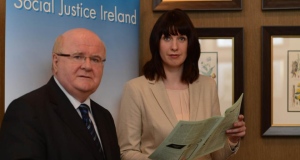
Social Justice IrelandSocial Justice Ireland has reacted negatively to the Government’s Medium-Term Economic Strategy describing it as a “lop-sided” strategy which fails to provide a sustainable policy framework.
 
In a statement, Director of Social Justice Ireland, Dr Seán Healy, accused the strategy of failing to provide an acceptable guiding vision.

He said the strategy, which was launched was “disappointing”.

The Marist priest accused the Government of being focused “almost exclusively on business and business interests.”

“Social Justice Ireland believes its guiding vision should envisage an Ireland where everyone would have what they require to live life with dignity and to fulfil their full potential.”

This, he suggested, would include sufficient income, access to services they need and active inclusion in a genuinely participatory, democratic and sustainable society.

In her response to the strategy, Michelle Murphy, Research and Policy Analyst with Social Justice Ireland, commented, “At its core the Strategy fails to recognise the essentially complementary nature of economic and social development – two sides of the one reality.”

She said economic development “is essential” to provide the resources necessary for social development.

Social development, in turn, is essential because there can be no lasting economic development of any substance without the provision of social services and infrastructure.

“All one has to do is reflect on the importance of a good education system for the development of a hi-tech, hi-spec, smart economy,” Michelle Murphy said.

The independent think tank and justice advocacy group welcomed:

· The fact that Government has produced a Strategy.

· The commitment to have a Comprehensive Review of Expenditure before Budget 2015.

· The recognition that spatial policy development must support the delivery of efficient public transport.

However, Social Justice Ireland expressed disappointment that:

· The Strategy foresees more than 190,000 people unemployed in 2020 compared to 101,000 in 2007.The Live Register numbers will be substantially higher than that.

· Full employment is defined as “approximately 5 to 6 per cent”. This is a very worrying re-definition of full employment.

· The OECD recommendation on introducing a universal basic pension scheme is ignored.

Dr Healy said it was untrue to claim, as the Strategy does, that “social cohesion has remained strong” and that “the fiscal adjustment has been achieved as fairly as possible”. 

“The crisis of recent years has produced a fractured society, a weak economy, persistently high unemployment and emigration,” he said.

He continued, “Recent studies have shown that the poorest ten per cent of the population lost more than 18% of real disposable income compared to 11% loss among the richest 10% since the crash of 2008. The situation would be worse if cuts in services and increased charges are included in calculations.”

According to SJI, Government budgets in those years saw the richest 10% take the biggest hit but the poorest take the second biggest hit.

The gap between low and middle-income Ireland on the one hand and the rich on the other hand has widened dramatically since the crash.

This is a major challenge to social cohesion SJI said and added that the new strategy proposes nothing to rectify this situation.

“Ireland badly needs a guiding vision and a viable policy framework that would secure both solidarity and sustainable recovery in the decade ahead. This Medium Term Economic Strategy 2020 provides neither,” Dr Healy warned.

Historic Catholic seminary could become Durham University college

Durham Times: Professor Chris Higgins and Bishop Terence DraineyTALKS have begun which could see a historic former Catholic seminary reborn as a university college. 

Bosses from Durham University and the Roman Catholic Church are in negotiations over the future of Ushaw College, a 200-year-old priests’ training school which counts among its alumni Cardinal Nicholas Wiseman, Bishop Hugh Lindsay and comedians Johnny Vegas and Alfie Joey. 

The seminary, at Ushaw Moor, near Durham, closed in July 2011, amid falling rolls and worsening finances. 

But days before the doors closed plans were announced to turn the Grade I and II-listed buildings into an extension of Durham University’s world-leading Centre for Catholic Studies, under the new name of The International Centre for Advanced Catholic Studies. 

Today (Wednesday, December 18), the University and Church announced they were in talks which could see most of the college occupied and managed by the University, while still owned and overseen by the Church. 

They also signed a so-called Heads of Terms agreement, cementing the partnership. 

Professor Chris Higgins, vice-chancellor of Durham University, said: “The signing of the Heads of Terms marks a significant step in exploring the potential opportunities for this historically important site.
“We look forward to working with the Ushaw trustees and with the many communities that have an interest in supporting the future of the college to ensure that its collections are preserved intact in Durham and are made more widely available to the community as well as to educators and researchers from the University and around the world.” 

Bishop Terence Drainey, Bishop of Middlesbrough and acting chair of the college’s trustees, said: “We are delighted that the work and efforts of the joint steering group for the Ushaw project have resulted in a proposal that could allow the heritage of Ushaw College, its collections and library, as well as its educational traditions, to continue and to secure a future for this very important estate within the Catholic community.” 

Prof Paul Murray, dean and director of the University’s Centre for Catholic Studies, said the collaboration held real promise for the region, the national and international Catholic community and the international scholarly community and urged supporters to come forward to get involved.

In Francis' First Year, A 'Radical Pope' Seeks To Save His Church

Pope Francis began his papacy in March. In his first year as pope, columnist James Carroll says, Francis has put unprecedented focus on "the dilemma of the vast majority of human beings who simply don't have enough to live decently.""Who am I to judge?" With those five words, Pope Francis "stepped away from the disapproving tone, the explicit moralizing typical of popes and bishops," writes columnist James Carroll. 

Francis made in July, in response to a reporter's question about the status of gay priests in the Church. 

In an article about Francis in The New Yorker, Carroll describes the pope as having "unilaterally declared a kind of truce in the culture wars that have divided the Vatican and much of the world."


Interview Highlights
 

On the significance of "Who am I to judge?"

[The Pope said] "Who am I to judge?" in response to a question about gay members of the Catholic priesthood in an airplane on his way back from World Youth Day in Brazil last summer. He was asked about gay priests and was, "Who am I to judge?" A resounding repudiation of a basic assumption of Catholic life, which is: The pope is there to judge.

"Who am I to judge?" You're the pope! That's who you are! It was an astonishing stepping away from the judgmental, authoritarian, imperative-tone-of-voice way in which authority has been exercised by popes — with one exception — going back a couple of hundred years. 

The exception, of course, is John XXIII, who was pope only from 1958 to 1963. 

But apart from John XXIII, popes have exercised authority by command.

On the lifestyle Francis has chosen during his first year as pope

Pope Francis ... in that wonderful phrase "Who am I to judge?" is exercising authority by invitation, by words of welcome and by inviting people to imitate the way he lives and the way he behaves. So, his choices of lifestyle — the fact that he doesn't live in the apostolic palace, the traditional residence of popes. He lives in a small, two-room apartment, effectively in the hostel in which the Vatican welcomes visitors. He has turned away from the regalia, the Renaissance style of the papacy. He declines to wear the traditional red slip-ons and wears his old, somewhat worn black shoes.

All of this has touched the imaginations of Catholics and many other people, clearly, and the thing that is moving about it is he initiates change at this level without attacking anybody. 

He has not named antagonists, he has not criticized other bishops who live like princes. He is basically making changes with a spirit of humility and welcome to other people, and that has touched people very, very deeply, I would say.


On communion as a "barrier"

Communion has been treated as food for those who are not hungry: food for the well-fed, food for the well-behaved. Popes and bishops have used the sacrament of the Eucharist, the mass, as a kind of boundary marker. You're in if you obey all the rules, and you're out if you don't. If you're not a Catholic, if you're a Protestant not in communion with the papacy, if you're a divorced and remarried Catholic, if you're using birth control, if you've committed any of the long list of sins that have been emphasized over the years, don't go to communion. ...

The word excommunication refers to being outside of communion. Pope Francis speaks in a very different way. He said, quite explicitly, the Church is not a toll house; we're not interested in having a barrier here that has to be raised only for those who are worthy. No, communion is for people who are hungry. ... It's for those who are not whole so that they can become whole.

On the tendency to oversimplify "conservative" and "liberal" Catholics

There's a cultural divide between the developing world and what we call "the West," or northern countries, but we shouldn't be too categorical when we say that, for example, Catholics of Africa or Latin America or Asia are conservative as opposed to the liberal or more secular Catholics of Europe or North America. I think that's really oversimple. Basic matters of human life are quite alike.


There are plenty of gay people throughout the developing world. If they're put upon and made to feel judged and at risk — and we know in some countries they're gravely at risk ... their problem isn't going to go away just because it's ordered to go away. So if the church broadly changes its stance on gay people, looks at gay people as Pope Francis invited us to do, the way God would — what does God see? — that will have an effect on other matters of sexuality.

On the church's stance on contraceptives

Nobody has been more vigorous in wishing for a change in the Church's position on contraception, namely the use of condoms, than leaders of the church in Africa, where AIDS has been such a savage killer of men and women. The AIDS crisis alone in Africa alone has been made worse, far worse, by those Catholics who have insisted on the immorality of condom use. You can bet that there are vast numbers of Catholics in Africa who would welcome a change in the church's position on that.

On Francis' commitment to the poor

According to the Times and other places, [he] has replaced some very conservative senior figures in the curia with more moderate figures. His intervention seems to be the occasion for the resignation of the German bishop who was living a very lavish lifestyle, spending millions of dollars on his place of residence and the way he lived and so forth. ...

He has made it clear that he's going to measure his behavior as pope and his preaching and teaching as pope against the real effect on the lives of the poorest of the poor.


On the way the pope has handled the authority crisis in the church

The authority structure of the Catholic Church has been crumbling around all of us Catholics for a solid decade and a half. I'm thinking, of course, about the priestly sex abuse scandal. 

I'm thinking of, in Rome, the way the Vatican itself has been exposed as complicit in crimes of money laundering, perhaps in collusion with criminal elements; the way in which the authority structure of the church itself has been in radical collapse in relationship to some basic teachings like contraception, divorce and remarriage and so on. ...

So when this man became pope, he looked around and saw, in an image of his own, something he warned of, a that was shaken and maybe in a state of collapse. So it's not only that his conservative, traditional assertions of Catholic positions on hot-button issues has been in some way left behind; it's also that he has been, as I see it, responding to the actuality of the life of the church.

After all, thousands and thousands of Catholic priests, we know now, around the world have been abusing children in the most grotesque of ways in violation of trust and of the meaning of the Gospel that is impossible to articulate fully and appropriately. 

We know that almost all of the bishops of the world supported them instead of the children. 

This has led to a catastrophic moral situation for Roman Catholicism.

This pope has responded to it, in my view. 

That's the most important element of his "radical" character is that he's responding to a crisis that preceded him in papacy.

Religious discrimination suit filed against Iowa diocese

The former CFO of an Iowa diocesan school system has alleged in a religious-discrimination lawsuit that the Diocese of Sioux City terminated his position because he is not Catholic, the Sioux City Journal reported. 

“We are familiar with [David] Newbrough's lawsuit and allegations, and we will vigorously defend ourselves in future proceedings,” the diocese’s communications director said in response.

2 churches in Vienna vandalized

http://2.bp.blogspot.com/-Xkl6FYGflVo/UbyYPXMU0sI/AAAAAAAAHY4/GAPjA5w91qo/s640/photo-dl.jpgTwo churches in Vienna have been vandalized in recent weeks, according to the Observatory on Intolerance and Discrimination against Christians, which documents anti-Christian incidents in Europe. 

Political slogans were spray painted on the 19th-century neo-Gothic Votive Church. 

At another parish, “candle holders were stolen and a cross was vandalized by destroying the corpus,” the Observatory stated.

Nigeria: 100 homes destroyed in Christian village

Members of the boko haram sectMembers of the Islamist terrorist organization Boko Haram attacked a Christian village of Arboko on December 14, according to a report in The Punch, one of Nigeria’s leading newspapers. 

At least four people were killed and 100 homes were burned down in the attack. 

Arboko is located in Borno State, a northeastern Nigerian state that has been a center of Boko Haram activity.

Priest invents confession tool for the deaf

A Philippine priest serving in the United States has invented a device to make it easier for the deaf to go to confession, the Philippine bishops’ news service reported. 

The device, according CBCP News, “consists of two laptop computers running on special software and connected exclusively for penitent and priest to type on and send their messages to each other … Priests who are not skilled in sign language will be able to communicate with deaf people using the chat function through a secured setup of two connected computers with American Sign Language (ASL) instructions and videos.” 

Father Romuald Zantua’s device is awaiting the approval of the Holy See.

Ecumenical interest sparked by Pope Francis' exhortation

http://www.chuacuuthe.com/images2013/131202011.jpgWhy is Pope Francis’ recently published Apostolic Exhortation, Evangelii Gaudium, or The Joy of the Gospel, causing such interest and excitement far beyond the confines of the Catholic church? What new possibilities does it offer to those engaged in the search for full, visible Christian unity? And can it really usher in a new era of ecumenical springtime, half a century on from the innovations of the Second Vatican Council?

Philippa Hitchen put these questions to theologian and author Gerard Mannion, who currently holds the Amaturo Chair in Catholic Studies at Georgetown University. He’s also the founder of a group known as the Ecclesiological Investigations International Research Network, which promotes scholarship and dialogue across the broad spectrum of Christian traditions. Mannion begins by sharing his enthusiasm for the innovative qualities of this ground-breaking papal document.

“Each pope has their own distinctive style, going right back through the centuries, […] and this is a very distinctive and engaging style. And that’s one of the reasons everybody’s talking about this document – not just theologians, not even just Catholics, and not even just people of a religious persuasion. There have been other popes who’ve sought to stamp their own particular shape and form on their teaching style, […] but with Francis it’s even more personal. He uses the first person, which is innovative. One of the other things is, this document is full of humour: he uses humour to good effect, to make serious points, and also to disarm polarisation, not just within the Church, but within the world as well. And it’s impassioned! And the other personal dimension is he lays bare his own soul in it as well, he talks about his own moments of pessimism, […] so he shares his own journey with the people he’s trying to speak to in this document.

He draws upon not just his predecessors, he also draws upon teaching documents from various bishops’ conferences around the world, and that’s very significant as well. He also will allude to particular saints and the examples of their life, the lives of the poor, popular piety and the lessons it has for us – he even quotes Plato in one part! […] This document is a radical document, it’s not in any sense slavishly following the interpretation, the agenda, of any of his predecessors. In fact in many ways you could say it’s turning around the emphasis from many previous documents and teachings to one that’s more engaged, one that’s more praxis-oriented, and one that’s more centred upon compassion at the heart of the Gospel. […] And that’s why people are reading a papal document who normally wouldn’t even bother to read a news story about a new papal document.

In many ways, actually, there are certain dimensions to this document which are more truly conservative, in the sense that he’s getting back to the basics of the Gospel. […] If you like, there is a dimension of continuity here, but it’s continuity that picks up really important things that the Church has been trying to grapple with for a long time, and it picks them up in a constructive way.

The ecumenical and interfaith agenda within this document is enormously important and enormously positive. There are certain sections that directly address this, but in many respects it’s addressed through all the sections: […] it’s when he talks about inculturation, it’s when he talks about respect for the other, it’s when he talks about the things what unites people, rather than divide them.”

Russians hope for Orthodox Church in Goa

With more than 500 Russians having made Goa their home, the community is now hoping to set up a Russian Orthodox Church in the state.

M. Mzareulov, senior Russian counsellor in Mumbai, admitted to the need of a church for the long-staying Russians. 


He, however, said that it was not "in the government's hands" due to the doctrine of 'separation of church and state' in Russia.

"The church is not part of the state and they have to take their own decisions. We (Russia) cannot do any kind of pressure... The construction can take place in Goa if they (ecclesiastical authorities) decide and the local authorities allow," he told IANS.

He was speaking to the media after inaugurating a Russian Information Centre in the beach village of Candolim, 20 km from Panaji, some days back.

If set up, the church could be the second such parish to be set up in India after the one in New Delhi.

In November, a priest of the Russian Orthodox Church visited the state and besides celebrating Mass, also baptized a couple of children.

The Russian authorities also said they were exploring the possibility of starting a Russian school here for kids.

"We hope the new government under the Bharatiya Janata Party will promote the project," Mzareulov said.

Besides those who are staying here for long, as many as 10,000 Russians spend six months in the state as part of a long holiday.

The state also receives over 90,000 short term tourists annually during the season here, which coincides with severe winter in Russia.

Lá Fhéile Stiofán - St Stephens Day

Stephen's name means "crown," and he was the first disciple of Jesus to receive the martyr's crown.
 
Stephen was a deacon in the early Christian Church. The apostles had found that they needed helpers to look after the care of the widows and the poor.

So they ordained seven deacons, and Stephen is the most famous of these.

God worked many miracles through St. Stephen and he spoke with such wisdom and grace that many of his hearers became followers of Jesus. 

The enemies of the Church of Jesus were furious to see how successful Stephen's preaching was. At last, they laid a plot for him. 

They could not answer his wise argument, so they got men to lie about him, saying that he had spoken sinfully against God. 

St. Stephen faced that great assembly of enemies without fear. In fact, the Holy Bible says that his face looked like the face of an angel.

The saint spoke about Jesus, showing that He is the Savior, God had promised to send. He scolded his enemies for not having believed in Jesus. At that, they rose up in great anger and shouted at him. 


But Stephen looked up to Heaven and said that he saw the heavens opening and Jesus standing at the right hand of God.

His hearers plugged their ears and refused to listen to another word. They dragged St. Stephen outside the city of Jerusalem and stoned him to death. The saint prayed, "Lord Jesus, receive my spirit!" 


Then he fell to his knees and begged God not to punish his enemies for killing him.

After such an expression of love, the holy martyr went to his heavenly reward.


St. Stephen's Day in Ireland


St. Stephen's Day honours the first Christian martyr, stoned to death shortly after the Crucifixion. St. Stephen's Day is a national holiday in Ireland, but the celebrations have little connection to the Saint.

In Ireland, St. Stephen's Day is the day for "Hunting the Wren" or "Going on the Wren."


Originally, groups of small boys would hunt for a wren, and then chase the bird until they either caught it or it died from exhaustion. 

The dead bird was tied to the top of a pole or holly bush, which was decorated with ribbons or colored paper. 

Early in the morning of St. Stephen's Day, the wren was carried from house to house by the boys, who wore straw masks or blackened their faces with burnt cork, and dressed in old clothes (often women's dresses.) At each house, the boys sing the Wren Boys' song.

There are many versions and variations of this song, including the following:

The wren, the wren, the king of all birds,
On St. Stephen's Day was caught in the furze,
Although he is little, his family is great,
I pray you, good landlady, give us a treat.
My box would speak, if it had but a tongue,

And two or three shillings, would do it not wrong,
Sing holly, sing ivy--sing ivy, sing holly,

A drop just to drink, it would drown melancholy.
And if you draw it of the best,
I hope in heaven your soul will rest;

But if you draw it of the small,
It won't agree with these wren boys at all.

Sometimes those who gave money were given a feather from the wren for good luck.

The money collected by the Wren Boys was used to hold a dance for the whole village.

There are different legends about the origin of this custom. One is that St. Stephen, hiding from his enemies in a bush, was betrayed by a chattering wren. The wren, like St. Stephen, should be hunted down and stoned to death. 

Another legend holds that during the Viking raids of the 700's, Irish soldiers were betrayed by a wren as they were sneaking up on a Viking camp in the dead of night. 

A wren began to eat breadcrumbs left on the head of a drum, and the rat-a-tat-tat of its beak woke the drummer, who sounded the alarm and woke the camp, leading to the defeat of the Irish soldiers and the continuing persecution of the wren.

The pursuit and capture of the wren is also related to the pagan custom of sacrificing a sacred symbol at year's end. In contrast to the legends of the wren as betrayer, the wren has also been revered in Ireland as the "king of the birds."

An Irish folktale tells of a contest held among birds to see which could fly the highest and should be accorded this title.

The eagle soared higher than any other bird, but lost the contest when a clever wren, who had been hiding on the back of the eagle, flew off the eagle and soared higher in the sky.

The custom of going on the wren fell into disfavor around the turn of the century, and died out completely in most parts of Ireland, but has been revived throughout much of the country. 
 
Wrens are no longer killed-- an artificial wren may be used, or a real wren may be carried about in a cage.

The "Wren Boys" now include girls, and adults often accompany the young people.

Folk costumes and traditional music and dancing are often part of going on the wren, and the money collected is often used for community or school projects.

A Christmastime Prayer

Joy to the world our Saviour comes
Not in power, not in might but in in the tenderness of love
He comes as the promise of life hidden in a mother’s womb
This is the time we believe once more that perfect love casts out fear
That generosity transforms scarcity into abundance
That righteousness overcomes oppression with justice
This is the time we are assured
That God’s light has come into the world
And the darkness will never overcome it.

Wednesday, December 25, 2013

Urbi Et Orbi - Christmas 2013


Christmas Greetings 2013 from Pope Francis

https://scontent-a-fra.xx.fbcdn.net/hphotos-ash3/1535697_10152124844862147_1392268247_n.jpg

A Christmastime Prayer

Joy to the world our Saviour comes
Not in power, not in might but in in the tenderness of love
He comes as the promise of life hidden in a mother’s womb
This is the time we believe once more that perfect love casts out fear
That generosity transforms scarcity into abundance
That righteousness overcomes oppression with justice
This is the time we are assured
That God’s light has come into the world
And the darkness will never overcome it.

Tuesday, December 24, 2013

Christmas Message from Monsignor Nicholas O’Mahony

Photograph of Fr  Nicholas O'Mahony IMG_8220 

Christmas Message
From Monsignor Nicholas O’Mahony,
Waterford and Lismore Diocesan Administrator

Wherever you are, I hope you experience Christmas.  The celebration of Christmas is about a God who not only tells us that he loves us, but gives himself into our hands as he first reached out in love and trust to Mary and Joseph, and was content to be with them resting in their arms.

My wish for you is that you and your loved ones are blessed this Christmas, and may the Christ whom we celebrate at Christmas find a home in your heart.

For the past few years, since the beginning of the recession, many people have lived in the shadow of fear.  This has certainly been the case in the many homes hit by unemployment.  

The strain that this imposes has undoubtedly been hard to bear.

Many families have seen sons and daughters leave our shores.  This was brought home to me recently when I saw a young man with two hurleys attached to his luggage in the departure area of an airport.  What a loss to the community he was leaving behind.  

While modern communications can allow these emigrants to maintain some link with home, it is surely every parent’s wish to be with their family at this time and to see their grandchildren grow up in their midst.

There are vacant places in other homes too because of death and sickness.  We are particularly mindful of those who are bereaved at this time.

As Christians we are invited to live with hope despite our   fears.  This hope was made manifest this year with the election of Pope Francis, the first Pope from the American continent.  Pope Francis says in his recent letter The Joy of the Gospel, ‘Mary was able to turn a stable into a home for Jesus, with poor swaddling clothes and an abundance of love. 

She is the friend who is ever concerned that wine is not lacking in our lives and at the foot of the cross, at the supreme hour of the new creation, Christ led us to Mary.  He led us to her because he did not want us to journey without a mother’.

I hope this year when we visit the crib in our churches that his inspiring words and actions will help us to renew our belief in the healing and hope that is the gift of Christ.

I would like to end my few words by paying tribute to Bishop Lee who was Bishop of Waterford and Lismore for the past 20 years, up to his retirement due to ill health at the beginning of October.  

Bishop Lee ministered tirelessly during that time and I am sure you will join with me in wishing him a return to health and many happy years of retirement in our midst.

Christmas Message of Archbishop Michael Neary

Christmas – a time for just children?

We associate Christmas with homecoming, as we return to our roots by sea, air, road and rail. Some say “it is a time for children” and in a sense they are right, after all isn’t the child in the crib at the very centre of Christmas. But isn’t there something of a child within each one of us though we are adults.

Christmas – Past and Present

Tonight we focus in two directions. Firstly, on that Christmas night over 2,000 years ago and over 2,000 miles away. Bethlehem was five miles south of Jerusalem, the religious capital of the time. The country was occupied by foreign powers. People were vulnerable, they had experienced war, famine and exile. While they had read of the promises of the Prophet Isaiah who had announced that there would be light, the promises of God were painfully slow in being realised. But on this first Christmas night the most significant intervention of all time occurred with the birth of a vulnerable baby in a stable because there was no room for Mary and Joseph in the inn. 

Christmas today

All of that is history, but it has enormous and earth shattering implications for us today. That is why when we look to the first Christmas we must also look in another direction – to our world today.

God Present in Our World Today 

Are we any different from the people around Bethlehem? We may not be ruled by a foreign power, yet our people have tasted poverty, famine and exile in different forms over the years. Our world has had its share of darkness. The 3rd Millennium which began with such hope and joy soon experienced darkness, conflict, evil, exploitation and tension, personal interests were allowed to dominate with no concern for the common good of others.  

This Christmas story tells of the Saviour of the World, Christ the Lord being born, as a helpless baby in a Bethlehem stable, to poor and unimportant people like Mary and Joseph. 

This plan of God illustrates that Jesus came to share the lot of people who were humble and poor.  

This stirs up great hope in all of us, showing that Jesus has taken upon himself the limitations of our human lives. It means that God will always be present in our world and especially in circumstances that are humble and unfavourable in our lives. 

 God is always with us, Emmanuel, always sharing our lives and accompanying us on our journey.

Jesus Christ – A light in the Darkness

The Christmas story underlines the fact that Jesus Christ, the Word of God shines in our darkness; he wants to make his home with us. The question is how do we respond. God will not force himself upon anyone. We are reminded that he came to his own people, but they did not receive him. Where do we stand? The light still shines in our darkness, whether that darkness be broken relationships, serious illness, the death of a dear one. 

Homecoming

I referred to the homecoming, which is always associated with Christmas as we endeavour to return to our roots with family and friends. Will there be a homecoming for God this Christmas? He wants to come and be with us. It is up to each one of us to decide whether God will find a home in our hearts this Christmas, or will we be like the inn-keepers declaring that there is no room.

Blessing and Christmas Greeting

May this Christmas be filled with the light of love-giving and love received, reflecting in our lives the love of God who has entered our story in the birth of his son Jesus Christ. A very happy Christmas to all and every grace and blessing for the new year, 2014!

Diocese of Raphoe - Christmas Message 2013

 http://www.raphoediocese.ie/templates/raphoediocese_v2/images/header.jpg

Christmas 2013 – “All are within the embrace of God’s family”

data:image/jpeg;base64,/9j/4AAQSkZJRgABAQAAAQABAAD/2wCEAAkGBhQSDxQUERQUFBUWFhgaGRgYFBgZGRgYHRkYFxceIBkZHCYhGxomHxkeKy8jIygsMiwsFh4yNTAqNiYrLikBCQoKDgwOGg8PGiwfHiQvKikqKSksLC8sLCwpKSwpLCktKSktLCwsKSwsKSksLCksLCwsKSwpLCwsKSwsKSwsLP/AABEIAIYAkAMBIgACEQEDEQH/xAAcAAEAAgMBAQEAAAAAAAAAAAAABgcCBAUBAwj/xAA/EAACAQMDAQYEAwUGBQUAAAABAgMABBEFEiExBgcTIkFRFDJhcSNCgVJikaGxMzRzorLRCEOC4fAVJVNjcv/EABgBAQADAQAAAAAAAAAAAAAAAAABAgME/8QAJREAAgICAQMDBQAAAAAAAAAAAAECEQMSITFRYRMiQQQUMnGB/9oADAMBAAIRAxEAPwC8aUpQClKUApSvDQA18bq7SNGeRgqKMsxOAAKi3eL2ja3t8W8yJcZBCkbmZQeQAAcZ92wOvIqrZu3N2+3410eNdzBCyIGbH4ZYBSWCtzjp5RWcsiiZTyqP7LDvu9iINiGGSQA/MxEYP2BBP8QK6vZ3t/BdOI8NFIeivjDe+1hwT9ODVFN2hj9ZIs//ALY/z21nD2gXIKSxhgQVIcghhypG5fQ1zLLkvlcHFHPl25XB+ms16Kouw7y9TUgs0UoPHmUEc/m3Jjp9qunSr5ZoUdXVwVHmUgqTjzdPrmuqM1Lod0MkZ9DcpSlXNBSlKAUpSgFKUoBXma9qPdvL6WHTp5IG2uoHIGSAWAYj2wCefTFAd0TDOMjPtnn+FZE1UMMenmBXWzv2Xad10odWOed+S4JyScccZxWVr2ovJ2a30y4a6XYr73jVZYV4G3czBWbHrjrj3JqmxTcmHafsDHdyeKJGilIAJADKwHTKnByPcEVWmt93chvY7ZGhll2M5ZS6FIxx5uDt3ZwOa7VzoErxlo7W8jm5f4m5u8BD+Y4Rv4DA5PsK6/Y3W7e1sIp5tzT3O5nb5pJMMQGJOCUAAA9/rWUlC9nx5M/SjOV1yVxrndb8KAZYxk9FSfcxGMk7cZwPU1vWfc5K8XiQLHhlyrfEZyCORgA9Rx+tTjtLPH8Wk8MiyeNE2RwduxNynI5AYdQR/tW92Z1e3s7BJJJdzTnxCq4JVmGSoRegA69K5YZW8soviK+bOl/TJQTTd9iKdi+7/wCKtkkE0cadGRE3OjDhgdxAVs59DVo9ntEjtIBFFkjO4ljksx6nP6elV32usfFvoPgTgXcRkkUTNFHcbT7qf7THU+mRwc1lHpl3GwOn2t7bScZEkySW5CnoQzev0I56ZB464xjHlI5YY4426Rau6sUmB6EH7HNVEvalLlsX8s7yCQj4K3QoFZPKdz7suDkfmHU0nuoLee1+CgubO4aVEKSIxSVGP4gPLBiM5z14PStdjXcuAV7WK1lVi4pSlAKUpQHhqO94N+sOl3Tv08Jl6Z5byLxx6kfapEagne/cOtgu1CymZNx3AYweBjq2T6D2qJOkVk6Vnz7JdiNPuLC3m8HfviXO5pBlvzHbuwDkH/w1v9qdK0uFY2u/CtucI6sYW45wGTBx/sPatDufvXezdWTCJI2GLYLMfMRsx5QARz656VG/+JL+62n+K/8AoqI8oiPKs3xc6Q2BPqzzxgn8OS68hycjIVQTg/X0rT13WrBJfEs7q0ZWjEZjaQAIFXau04+X3H0+tUj2f0OS7nWKMcnkseiKOrE+gFXBfd0lhHBbtukfAbxQMq7LyrOBjI2NztPUA+2Kzy4Y5Y6y6GsJOD2RoapdWaFAL21k3JISY0A2tsIAJ5zkk4PHTpzWxa6taxRxzJd2TuyjdFxG6ZHTdnkjoeP05qq+0ugvZXUkEhBKnKsOjoRlHH0Iwf4+1Zdl+zkl7OI4+BwXc5wi5Azx1OeAPUkVzv6DE7T6G33Ey8dNu9INsI7u9tpH3tICkhURM4GRGQcgDA59xnFZfFaQ3EusSypjGxrvA65z5FBPPoTXE1fulsEWIpI+0xYY8hkLcJMR6qrdV64Oeg4pzWtJktbiSCYYeNip9voR7gjkfQ12RgopJHO+XbP1kOxtjJAifDxGPAZcDHpwdw5OQffnNQvtRYWWnahpvhoyM87FuXfycKOrcYZhgD7+nNiaD/c4P8GP/QtU53nX8v8A6k4aPG1EUYbIIJyjbsDYSNxwcfKfaom6VpGWR6q0i8kFZVr2DsYkLqVYqMqSDg45GRwfuK2KuailKUApSlAeE1A4tQj1HWDGrK0Wn+Yrn+0nbK5x6rHgjPu31qcXMu1WbBOAThRknHOAB1P0qk+7zViurnEchaXxBIoXDklyd0gPQL156c49qpKVNIznKml3JrcajHYa2qFwsd+g8vPlmQhUP0Dg4+4HtUY/4kP7raf4z/6K1u9bUMampKuDGieG7IQMhtzGM+vJHI9RTv8ALky6fYuUdC0jHa4w4ynqBnBPt9aRlbaJjK20aPc3oKS2Usm3hS5lJ53lVzEmP2R8xHr5fTrM4tPaUwBM70sldR1BbxTkEeuRkc9c/Wq77mtdkg+KtjsQSAE+JvGw7WVjgD2x+oFTfQtcKTf2sIMMfgqXJCyLuLZyMkc++OGq5cgXe1bxm3t3Awys6ISRkwnzBDnklGyPsw6ZFSDuw0JG0h5go2qshbPJeblVJ9lRTkD3bPpUF70daN5qBZI9gQKh25IMhySenBJPT6e+alPdJrriyubNiiKWJzJvBTcoU8AHnI4GOoNCaJ/NYGSR2UbmhtrY7ecMjI4kXHrkZ/hVTd71sha2kGS+xkLEjLxqR4TH1LAEqT+5VmaD2kZXeTfErBEi2vkbljztYFc8nPqfsKpbvE1f4q/llSPw0zsAGduQPNzjqTk49M0IP05Z6rHb6XFPMdsaW8bMfpsX+Z6frXB7FaYl3p8s02JGv2d3+i8oifTaP6muT261IpodrGVYrJHb7nxmPAVSVf1Geo9DgjPFb3dzqZTSGKwzHwi5RRH8ykkjwycBwOen2qm3uozcvdqdHu87Qh0ls2cPNZsYmYfnRTtR/wCWD7FfrUxzVK91Oof+5NhXYyI/iOqEgkvkFzjjkHk45b61dS0jK0Tjlsj2lKVcuKUrw0Bz9f1Vba1lmbpGjH7nHlH6nA/WoHDohsLayvtn4qf3vjDMk2N5Y/8A1nH2Gele99blreCLeyAyM5Knk7F4GPXls/8ATXT1jVvG7PvJkbpLdVPmztZtqZz785qmysyclbXY0rrSRqk97JnKRx/D27AAjxR53dW9w3Gf3jz1qId7uqtPo+m3HRhKQ/riVUKsD9dyGpT3ZaiItImTIJtzLgkgbvKJB9sFsZ59KrK5tw+kXcIfd4bx3K7m5LHySBffKnJ9fKahSVryIzVryRK37TkSyySRpI0m455Xa7ZyRtPI5+U8Zrbh7e3DGMXDGeOMYSNsKF42jBQArgAdPaoyRW5pGnePPHECFLsF3McAe5P0q2kaaN9mTDsLpN7fTOLRVRQ6SMxXKq0ZJjGSeef41hq+j3NhDJJPFG5kkkjLAsDDJkkhlHB3DzKDkdcetWz2a074JI/DGyMQzyICuGIRD+I37zk5wc4AUVq3mnieExXXyzxIJGOT5WAMMoJPLRv1J6g+3FNIjdlPjt/cO4a7Y3IVCqhjtK5weGQAjkD/ALVxptYdoWi4CGTxMAfmClBz7YPSvhqFk0MrxP8ANGzK33UlT/Svpo9gZriOIfndV+wJAJ+gA/pU6q7Gzqj9KTRfEDSrJhlfBS4mHGNkaKqKynqrOw6/s/fGvBrLWEN5ZrlpY5R8KvALJcH8Lbn5gjbs+wUdPTg9nr1T2iMivwxeBV3eXw1TahBzyPKD7Zavr2suw/aGCTPFu0KbRjz7iSTkevm4HPyelZ7rqczyJq/4d6HRF0y4091xtcG3nfGNzuA0bsc9Sy4zn1HJ4qwhVad895uhhtw+zfIzEqeRsAKgj2JbOf3anHZi9MtlbyEklokJJOSTtAOT75qyaui8Wr1OrSlKuaCvDXtKAjvabsVb3ozIgEgACyAeZQGBIHPqMj/qNe3fZCy+F8B4kWBW3lclRn9otnn9TUgNcnVYQJonk80QO0g/KrEjY5Hrzkc9NwPHOYoikQCXQI7WONY7WSfxtyFgBulCgyMzI5+TA8sfBcrnIIWpL2e7HWfgynwUDSeIrgr5ow4AZFz0UL09cH71u6NpF14My306yu8paNkAHhLxsA8o8wIz619NMvs3RRsB2Q7wOhaMhd6/Rg2PoY8HkUpCkflztZ2Ulsr6S1YEkN5Dj+0Rj+GR9/65FePpE9jNHJNGRskXdgg4PDFDg+Vivofev0j3kd3qanbjaRHcR5MUnt7q2Odp/keR65oNLBreS6stRLW7SBWDuC48RWyGyPmVgSNw96rOTjyjSKT6l26/2kgkZWXf4RgmjL7CqgyL5BlsD3+2K1tZ1u3XTQ8h8Oe3h+VkOHIHydMMCf1HWquh7wUhVYJt13EigAI5iTfk8jcpJ69eAfasb3tYuoJ4c9y0EYfJWUNI2z2V0UZJA53AdBRzpXRCjyRe70O5kje5kQkcM543AN8rFByEPocYqwu4PscZrlr2Vfw4QVjyOGlYYP32qT+rj2riaB2UuNZv5mg3xWrPh5DkKsYwEUD8zYUYX0+lfo7RtGitLdIIF2RxrgD+pJ9WJ5JqYuVXIOvghevdl4IJJJba08UxiNmVNieGRuYFGb5WIwWIBICLgebIxsuxVpcSQyTQ+GZEL7DuUSswDqeGwkqZbcg67sjjGJDpSm4TP/KZ2dz/APKxPlQfuKAMn1IA/arGGS4L3fx6RG2VgYCnzsuW4I3E7/l2njkmp1Rnquxn2h7DW13guirIu0BwOdin5TyNwIyOfRjiuvpekxW8QigQRoM4UdBk5PWs9KidYVEhy+OcnJGeQCfUgYGfXGa28UomldilKVJIpSlAK+c8IdSrDIYEEe4PBr6UoCP3PiqngeIUJICSYBZ0HLICeBPgYBPX5uoOMNAh3x4MSxeCxVCvpnlwCeSRnDtyGYMft19UsxJC6EZypx9COVI+oOK4dxemaGSLDlHt1zInmeMyq45Tq2MZ45ww49aA6djrscnAkR8fmQ5Xjj9P5j6189f7NW1/DsuY0lX0P5lPurjlT9q5965ks1CKoK7ArxsSsYHzMNuGQBQeMZ6CsYteQ7S8TQHy7z9fBE0i+UhsqOCSOoxigKc7d9zBtHU2sviI/iELJgMoRd58w4bj6CpV2H7ibYRxz3jtOWUMIx5IxkZwfzN/L9amepJbXOPEkuDsTK7QG4lVgQCEbexVTxk4ArZvJVhgtlilPhyvHGsjN5EQoWU+UKCTtAG71YdelZrfZ30+CzqvJ3IIooVWNFSNQPKigDgeyitG81ZRJskOxcKWyQDhiVXJJ/MRjAyffFat5dPCNsGZmJOSUDY4BVCYgMbucMehxng1oPprCUGd1mkIKFMbmeNsrKu0cJGwWNgDgKwb0NaFTHR72aQoA21YDh2DBU2ZYjcoXaW2DaUBHhsPY137dTO6yHIiU5jUjBc+khz6D8o+uT6Y1LBRO4DDbGqK3hdfxC7r5z+YjZ0PGTnkgESACgAFe0pQClKUApSlAKUpQHhrQ0jSxBHt3FjkkseD7KMDoFUAD6CuhSgNK50mN23YKv8AtoxRv4rjP65rVl0iQ/8AMV8dPEiUkdM+ZNvt7V168xQEA1edYbkQfDRMxj3AqXjHl3eHjB67mIJ6+c9Qa7GgXr3tmrCOGOMjbsZC48hwQBkAqCOPtXz7e6LJNFG8APjI+0EDPlfyN+gyDn0xn0qQaTpywQRwp8sahR9cev3PX9a5oep6stvx4o0euqrqa8ejHaFaR9v7MYES/wCTzf5q3LWwSNdsahR9PX7+5+9bFK6TM51npvhzyuG8smzC4+Ujdu59iTn75ro0xSgFKUoBSlKAUpSgFKUoBSlKAUpSgFBSlAKUpQClKUApSlAKUpQH/9k=Bishop Michael Smith celebrated the Mass of the Lord’s Nativity in the Cathedral of Christ the King, Mullingar.  

The Bishop welcomed all to the Mass, especially those who had travelled home to spend time with their families and friends. 

In his homily, Bishop Smith reflected on the nativity accounts in the Gospels of Matthew and Luke.  In particular, he pointed to the genealogy of Jesus according to the two Evangelists.  “While Matthew traces the origin of Jesus back to Abraham, our father in faith, Luke attributes the lineage of Adam to the infant in the manger.

“These two passages of Scripture set out the direct involvement of the Lord in human history, in the lives of all who bear the image and likeness of God.  That relationship with God finds its fullest expression in Jesus Christ.  He is God-with-us, God who walks with us.  

Not alone is he the God of Abraham, Isaac and Jacob, He is the God of each of us, lived out in our personal relationships with Jesus Christ.

“The genealogies of Jesus include saints and sinners, reminding us that all come within the ambit of God, within the embrace of God’s family.  God never abandons us even if we drift off course, even if we exclude or give little place to God in our lives.  There is always space for us within the heart and love of God.  The only ones that close the door are us.”