Saturday, June 30, 2012

Former priest admits sexual assault and attempted rape

A FORMER priest has admitted the attempted rape of a young girl and the sexual assault of her brother in west Cork more than 30 years ago.

John Calnan (73), of the Presbytery, Paul Street, Cork, pleaded guilty to the attempted rape of the girl between January 1st, 1980, and April 30th, 1980, in west Cork. She was aged seven at the time.

Calnan also admitted three counts of sexually assaulting the girl between October 25th, 1976, and October 24th, 1979.

He further admitted one count of sexual assault on the girl’s brother between August 10th, 1975, and October 9th, 1979. The victim was aged between nine and 12 at the time.

The female victim told her mother, who in turn went to a member of the clergy about it. Shortly afterwards, Calnan was moved to another parish.

Alice Fawsitt SC, prosecuting, told Mr Justice Paul Carney that the accused “admitted to paedophile tendencies” towards the girl and that there was “a grooming process”. 

The incident was first reported to gardaí in west Cork in May 2010.

The Central Criminal Court heard that the girl’s parents were heavily involved in the church at the time and she would run errands, including delivering envelopes, to the priest’s house.

She and her siblings also used to play in the priest’s yard.

Det Garda Maurice Shanley told the court the accused would visit the girl’s family home and “would regularly have one of the kids on his knee”. 

The court heard that the girl’s brother also made an allegation against Calnan.

The judge said he would impose sentence on Calnan next Monday.

Friday, June 29, 2012

Vatican blames lack of priests on secularism, abuse, parents

The sexual abuse scandal has tarnished the image of the priest and contributed to a crisis of priestly vocations in the Roman Catholic Church, the Vatican said Monday (June 25), while also faulting a widespread "secularized mentality" and parents' ambition for their children, which leaves "little space to the possibility of a call to a special vocation."

The "Pastoral Guidelines for Fostering Vocations to Priestly Ministry" were prepared over the last seven years by the Vatican's Congregation for Catholic Education.

The document says candidates to the priesthood shouldn't be accepted if they show "signs of being profoundly fragile personalities," and says future priests should learn the "importance" of their future commitments, "in particular with regard to celibacy."

The guidelines acknowledge that "in many places the choice of celibacy is questioned" and say that such "erroneous opinions within the church" are responsible for a "lack of appreciation" for those who make the choice to remain celibate.

In fact, Western culture, with its "indifference to the Christian faith," is "unable to understand the value of vocations to a special consecration."

Data presented by the congregation's undersecretary, the Rev. Angelo Vincenzo Zani, show that priestly vocations over the last 10 years fell sharply in Europe. They remained stable in North and South America and rose significantly in Asia and Africa, though still not enough to offset the rapid growth in Catholics' numbers worldwide.

Rowan Williams: Church Needs To Confront Its 'Shame And Disgust' Over Homosexuality

dr rowan williamsThe Church is in a "tangle" and Christians need to tackle their feelings of shame, disgust and embarrassment over homosexuality, the Archbishop of Canterbury has said.

Dr Rowan Williams made the comments at an event for teenagers on how Christianity is viewed by non-religious people called "Help, my friends think I'm mad" at Lambeth palace.

According to the Daily Telegraph, Williams said the Church was wrestling with the issue gay marriage, in a tacit admission of homophobia in Anglicism.

"Same with same-sex marriage, where once more we're used to being alongside people who are gay; many of our friends may be – indeed we may be – wrestling with that issue ourselves, and the church is scratching its head and trying to work out where it is on all that, and what to think about it.

"What's frustrating is that we still have Christian people whose feelings about it are so strong, and sometimes so embarrassed and ashamed and disgusted, that that just sends out a message of unwelcome, of lack of understanding, of lack of patience.

"So whatever we think about it, we need, as a church, to be tackling what we feel about it."

The Archbishop’s intervention came shortly after the Church of England submitted its formal response to the government’s consultation on gay marriage, saying it could lead to it being forced out of its role of conducting weddings on behalf of the state.

The Church of England said several "major elements" of the proposals had not been thought through properly and were not legally "sound."

Several senior religious figures have spoken out against introducing gay marriage across all faiths, including the Chief Rabbi Jonathan Sacks and the Roman Catholic leader Archbishop of Westminster Vincent Nichols.

Responding to the Archbishop of Westminster in March Terry Sanderson, head of the National Secular Society, told The Huffington Post UK the law on gay marriage was "nothing to do with the Church" and "homophobia" was driving some religious leaders’ comments.

"I don't think there's any doubt that for all their double talk about it being about religious freedom homophobia does lie at the heart of it. If you see the sort of language the pope uses about gay people it's not just a kind of 'we stick by our biblical morals' it's a kind of 'we are repulsed by this'.

"I think it's very sinister really that these men are using these kind of language. The Catholic Church is shrinking in Britain but in other nations where there's already a culture of homophobia, it gives a kind of permission to be brutal towards gay people,” he said. 


Matthew Todd, editor of Attitude Magazine and Stonewall journalist of the year, hit back at the Christian Church which he said "should be begging forgiveness from society because of the LGBT people whose lives it has diminished over the millennia." 

During the event for Christian teenagers Dr Williams, who is set to step down as the Archbishop of Canterbury later in 2012, also said he was “very committed” to introducing female bishops.

Russian Orthodox official seeking alliances with China's excommunicated Catholic bishops?

The chief ecumenical officer of the Russian Orthodox Church has met with a leading figure in the Chinese Catholic Patriotic Association, in a gesture that suggests the Moscow patriarchate is seeking an alliance with China’s government-backed “official” Church.

Metropolitan Hilarion, who heads the External Relations department for the Moscow patriarchate, met with Bishop Ma Yinglin of Kunming, who is the vice-president of the Patriotic Association and president of the bishops’ conference recognized by the government. 

The Vatican does not recognize the Chinese bishops’ conference, and has ordered Catholics not to cooperate with the Patriotic Association. Bishop Ma Yinglin, like several other members of the “official” bishops’ conference, has incurred excommunication by his involvement in episcopal ordinations unauthorized by the Holy See. 

Father Bernardo Cervellera of the AsiaNews service notes that the Russian Orthodox Church is anxious to obtain Chinese recognition for the few Orthodox communities in China. 

That ambition may provide the motivation for a bid by Moscow to strengthen ties with the “official” Catholic Church.

Pope accepts Argentine bishop's resignation over sex scandal

The Vatican has accepted the resignation of an Argentine bishop who was caught cavorting with a woman on a beach, in the latest of a string of sex scandals to hit the Catholic Church.

Bishop Fernando Bargallo, 57, was forced to hand in his resignation after photographs emerged this month showing him frolicking and embracing a blonde, bikini-clad woman at a luxury resort in Mexico.

Bargallo, who led the diocese of Merlo-Moreno outside Buenos Aires since May 1997, has reportedly admitted to having "amorous ties" with the woman he is seen embracing in the water, thought to be a divorced restaurant owner.

He had initially claimed she was just a longtime friend.

The news broke as the Vatican ousted the founder of an Italian misson for "serious immoral behaviour," after it emerged he had sex with female missionaries during a posting in South America.

Luigi Prandin, who founded the Villaregia Missionary Community, was ousted along with co-founder, Maria Luigia Corona, who knew of the liaisons but covered it up because she feared a scandal.

The scandals have raised fresh calls for priests to be allowed to marry.

Pope Benedict XVI has vigorously denied claims that abstention may have contributed to sex abuse scandals, insisting repeatedly that celibacy is central to the priesthood.

In April, he issued a rare condemnation of errant priests, slamming in particular an "appeal to religious disobedience" launched by a group of Austrian clerics in 2011, which argued for an end to priestly celibacy.

'No one exempt' in information Bill

LEGISLATION TO make it mandatory to report abuse of children or vulnerable adults will apply to all persons, organisations and sectors of society, Minister for Justice Alan Shatter has told the Dáil.

There had been a lot of media comment that the legislation would have an effect on the “seal of confession” or sacerdotal privilege, he said. One report suggested the entire clergy of the Catholic Church were exempt.

“Another states the clergy is bound by the Bill and I am persecuting the church,” Mr Shatter added. 

“This Bill applies to all persons, to all organisations and to all sectors of society. No one is exempt from prosecution.”

He said a person “may claim any defence they so wish, but it will be a matter for a court to determine in the circumstances of a particular case, the extent to which that defence does or does not exist.”

Mr Shatter introduced the Criminal Justice (Withholding of Information on Offences Against Children and Vulnerable Persons) Bill, which closes a loophole in the law. 

Under existing legislation it is an offence to withhold information in relation to a serious criminal offence but the Offences Against the State (Amendment) Act 1998 specifically excludes sexual offences. The new legislation amends that.

Mr Shatter said it was clear from publications such as the Ryan, Murphy and Cloyne reports that if those who had knowledge in the past of sexual offences committed against children had informed the Garda, “many children who subsequently became the victims of abuse may have been protected from clerical sexual predators”.

There had been a number of equally serious cases of vulnerable adults in institutional care being subject to serious sexual and physical abuse but he had to be mindful that most abuse took place in the person’s own home.

“We are not just concerned with issues of sexual abuse by persons in authority, be they in the Catholic Church or in any other religious group or institutional setting.”

It was important to produce legislation “that affords protection from abuse to children or vulnerable persons in any scenario or in any location”.

Penalties vary from fines and up to 12 months in prison to sentences of five or more years for serious offences such as assault causing harm; causing serious harm; cruelty to a child; child abduction and manslaughter. Ten years would apply “in the most serious cases such as the withholding of information concerning the murder of a child”.

The Bill would not be retrospective because it would potentially criminalise individuals who had in good faith decided it was not appropriate to report the case at the time, but “who would not be able to show that their decision meets the revised standard now required in this Bill”.

Does the Church Need More Excommunications?

Excommunication is the most severe penalty the Catholic Church can impose upon its members, but it is sometimes necessary as a matter of simple justice.
Writing in the National Catholic Register, Father Brian Mullady makes the point well. Acknowledging that many regard excommunication as a “strange holdover from the medieval Church,” he explains why it remains as valid as ever, and can actually serve as an act of mercy: “Its intent is always to restore the offenders to truth and communion.” 

Dr. Edward Peters, canon lawyer and author of Excommunication and the Catholic Church, concurs, while correcting common misunderstandings people have about the measure. 

For example, many believe excommunication expels a Catholic from the Church and condemns that person to hell—it does neither (only God can determine a person’s ultimate fate)—but it does deprive Catholics of certain rights, and urgently calls them to reform their lives.

Of course, excommunication can be misused, and has been. Joan of Arc was famously excommunicated in the fifteenth century for political reasons, but the Church later repudiated that condemnation, and declared her a saint. 

More recently, Mary MacKillop (1842-1909), an extraordinary Australian nun who dedicated her life to the poor, was excommunicated by her bishop (for alleged insubordination), but was soon reinstated, and completely exonerated. In 2010, Pope Benedict canonized her.

Precisely because the penalty of excommunication is so weighty, it needs to be applied with great prudence and care—“only after all other efforts to correct a person have failed,” as Father Mullady writes–and even then, its results can be unpredictable.

Surveying the history of excommunication, one finds both successes and failures. In the early Church, St. Ambrose used the threat of excommunication to successfully compel Emperor Theodosius I to repent for his crimes against the people of Thessalonica. 

Similarly, in the eleventh century, Pope Gregory VII excommunicated King Henry IV for his anti-papal activities, eventually leading to the King’s famous act of penance and reception of absolution at Canossa. 

In more recent times, Popes and bishops have publicly excommunicated (or confirmed the automatic excommunication of) modernist theologians, those who engage in schismatic acts, racial segregationists, and Catholics involved with abortions. 

Some of these Catholics eventually reconciled with the Church, thankfully, proving the value of excommunication.

“On the other hand,” writes Father Mullady, “the excommunication of Martin Luther, Henry VIII and Elizabeth I had little effect personally or on their followers. The use of this as a weapon created sympathy for the offender and often led to a more solid backing of dissent.” 

Similar risks remain today.

Still, because certain prominent and influential Catholics continue to “obstinately persist in manifest grave sin” (Canon 915), many Catholics believe the penalty should be invoked more frequently. They have a case. Even if excommunication does not lead to the immediate reform of the individual involved, it can serve as a teaching moment for others. 

As Father Mullady notes: “Excommunication can serve as a clear statement to the faithful of the serious nature of our moral doctrine . . . For dissenters deeply involved in the public forum, failure on the part of Church authorities to provide some needed corrective is tantamount to carte blanche to the faithful to believe whatever they want. The impression is given that the truths of our religion are a smorgasbord from which one can pick and chose.”

Catholic prelates also have an obligation to do what is right for their own spiritual welfare. Just as the Lord appointed Ezekiel a “watchman for the House of Israel,” and held him accountable, so too are bishops guardians of the faithful, and accountable to God. 

St. Ambrose put it this way: “When a priest does not talk to a sinner, then the sinner will die in his sin, and the priest will be guilty because he failed to correct him.”

Catholic prelates who have the courage to protect the faith should be prepared for the consequences, however. 

Strong disciplinary measures are often met with equally fierce resistance. 

After the aforementioned Pope Gregory VII thought he had reconciled King Henry IV, Henry soon went back to his old ways, and incurred a second excommunication. 

The king then sent his armies into Rome, forcing the pontiff to flee. Gregory VII, widely regarded as among the best popes ever, was later declared a saint. 

He died in Salerno, with the memorable words: “I have loved justice, and hated iniquity, therefore I die in exile.”

Conviction of Lynn puts Catholic hierarchy on notice

MORE THAN 10 painful years after the clerical sexual abuse scandal broke open wide with the child molestation conviction of a Boston priest, a U.S. Catholic church official who protected predator priests has finally been held accountable.

By doing nothing when he knew about pedophile priests while he was secretary of clergy for the Archdiocese of Philadelphia, the Rev. Monsignor William Lynn allowed the abuse to continue.

That was basically the message sent by a Philadelphia jury last Friday when, after a 10-week trial, they found Lynn guilty of one felony count of endangering the welfare of children.

The 61-year-old monsignor served as secretary of clergy from 1992 to 2004, mostly under former Philadelphia Cardinal Anthony Bevilacqua.

During the trial, jurors learned that Lynn had assembled a “secret file” of known or suspected pedophile priests that, in 1994, Bevliacqua — a canon and a civil attorney — ordered to be shredded. Prosecutors got to see the list after a copy of it was found this year in an archdiocesan safe.

It helped confirm what many had claimed — that church officials knew of abusive priests, but allowed them to stay in circulation, even reassigning some to parishes where they had continued access to children. 

The premise for church officials keeping abusive priests closeted, presumably, was to help the church save face and money from potential lawsuits.

But what must have been hardest for jurors to hear was the wrenching testimony of more than 12 adults who said they were sexually abused by priests in the Archdiocese of Philadelphia when they were children or adolescents.

ONE OF THEM was the victim of former Haverford resident Edward Avery, a priest who was defrocked in 2006 because church officials found allegations of sexual abuse against him credible. 

He was to be Lynn’s co-defendant but he pleaded guilty to abusing an altar boy in 1999 just four days before the trial started March 26. He is serving two and a half to five years in prison.

Nevertheless, Avery’s guilty plea helped bring to justice Lynn who, as evidence in the trial showed, was aware of Avery’s pedophilia. The jury was deadlocked over a verdict for Lynn’s other co-defendant, the Rev. James Brennan, who is now out of active ministry. He was accused of sexually assaulting a 14-year-old boy during a leave of absence from his ministry in 1996.

Lynn’s attorney, Thomas Bergstrom, maintained that Lynn was just following orders when he didn’t turn the known or suspected pedophile priests over to civil authorities and that he is a scapegoat for all the cases of unchecked clerical sexual abuse. There is a measure of truth to that assertion.

As a grand jury investigation launched by former Philadelphia District Attorney Lynne Abraham revealed in 2005, 63 priests in the archdiocese allegedly abused children as far back as the 1940s. 

None could be prosecuted because of the expired statute of limitations which, in 2006, was expanded to age 50 for victims. 

That means priests abused children in the archdiocese without consequence under the watch of cardinals John Krol and John O’Hara and Archbishop Dennis Dougherty.

Needless to say, Philadelphia is not the only diocese in the United States and the rest of the world where abusive priests were allowed to fester.

Judge orders Catholic cleric to remain in jail for now

Monsignor William Lynn was found guilty Friday of one count of child endangerment.The highest-ranking Catholic church cleric charged and convicted in the landmark child sexual abuse trial will remain in jail for the time being, a Philadelphia judge ordered Tuesday.
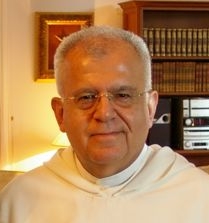
Monsignor William Lynn was found guilty Friday of one count of child endangerment, the first time a U.S. church leader has been convicted of such a charge.

The trial marked the first time U.S. prosecutors have charged not just the priests who allegedly committed abuses but also church leaders for failing to stop them. Lynn is the highest-ranking cleric accused of imperiling children by helping cover up sexual abuse.

He was found not guilty on a second count of endangerment and on a charge of conspiring to protect a priest accused of abuse.

Lynn's defense team argued during the trial that their client repeatedly told higher-ups about the alleged abuse and, under strict orders from the late Cardinal Anthony Bevilacqua, had no authority to remove priests from the ministry.

On Monday, Lynn's defense attorneys filed a motion requesting that their client be released on house arrest pending his scheduled August 13 sentencing. He could face three-and-a-half to seven years in prison for his conviction on the third-degree felony.

"With every fiber in my body, (fleeing) is a non-issue," said Jeffrey Lindy, one of Lynn's lawyers.

Following Friday's verdict, Lindy criticized the decision not to let his client remain free on bond prior to sentencing, calling it "an unspeakable miscarriage of justice (for) a 61-year-old man with no prior record and long-established ties to the community."

Assistant District Attorney Patrick Blessington vehemently opposed house arrest.

"It's absurd," Blessington said. "It would truly be an injustice to indulge these people after what they've done."

The hearing to discuss the motion for house arrest took place before a packed courtroom Tuesday. Lynn arrived dressed in all black and without his clerical collar. He wore full clerical garb during the 50 days of the trial and 13 days of jury deliberations.

In addition to his two lead counselors, several of Lynn's family members filled the rows in the gallery. Also in attendance was Rita DeCarolis, the mother of Lynn's deceased sister's husband, who agreed to allow Lynn to stay in her home if he were granted house arrest, at which point one of Lynn's sisters began to weep.

DeCarolis, who lives alone, was briefly called to the witness stand to confirm her understanding of house arrest and to prove her residency to the judge.

"I'm free," she told the court, regarding her availability to house the monsignor.

At the conclusion of Tuesday's hearing, Philadelphia Court of Common Pleas Judge Teresa Sarmina delayed her decision on whether Lynn should be placed under house arrest rather than jailed until his sentencing.

Sarmina allowed prosecutors a week to consult legal analysts and Rev. Thomas Doyle -- who was sworn in as an expert witness on Catholicism and its canon law during the trial -- to determine what, if any, steps are to be taken in the event Lynn fled to the Vatican, where there is no extradition.

She also instructed the defense to consult with their client to ensure he was aware of the consequences, should he flee.

"Get the hell out of here, he's not going to the Vatican," another one of Lynn's attorneys, Thomas Bergstrom, told reporters outside of the courthouse, adding that his client is incredibly strong considering the circumstances. "That's ridiculous."

Although Sarmina did not grant the defense motion for release on house arrest pending sentencing, she did initiate the procedure for receiving an electronic monitoring device.

The average wait time for such a device is three to four weeks.

If granted and Lynn were to violate the conditions of house arrest, the judge could sentence him immediately as well as impose the maximum sentence of seven years in prison.

"The risk of flight is going up because he now has something to lose," Assistant District Attorney Mark Cipolletti told reporters outside the courthouse. 

"This case is unprecedented and on a lot of fronts, it's a case of first impressions."

Lynn surrendered his passport and his bail was increased to $100,000 pending the house arrest judgment.

All parties are due back in court July 5.

Queen praised for Catholic church visit

RELIGION: THE FIRST visit by Queen Elizabeth to a Catholic church in Northern Ireland yesterday has been praised by the local parish priest, Very Rev Canon Peter O’Reilly, who said it was an example to all in Northern Ireland.

After attending a ceremony in the Church of Ireland’s St Macartin’s Cathedral in Enniskillen, Co Fermanagh, Queen Elizabeth went to the nearby St Michael’s Parish Church for a meeting with community leaders from both sides of the religious divide.

Speaking to reporters afterwards, Canon O’Reilly stressed the significance of “the Queen coming out of St Macartin’s Cathedral and walking up the street and across into St Michael’s”.

He added: “It’s a bit like what Jesus said in the Gospel, ‘I have set you an example for you to copy’.”

Canon O’Reilly said he had presented the Queen, in a “special introduction”, to Cardinal Seán Brady, who was among the attendance.

Among the groups represented were local schools, businesses, tourism, farmers, scouts and guides, charities, public services and sport, including the local Gaelic Athletic Association.

President of the Enniskillen Rotary Club, Colin Beattie, said: “I was amazed at how relaxed the whole thing was.”

James Lunny and Robert Fitzpatrick, of St Michael’s Choir, which performed at the event, said: “It’s a great honour for our choir to receive this kind of recognition.”

Fr Brian D’Arcy, a native of Co Fermanagh, said the “wonderful” events of the day, in both the Protestant and Catholic churches, were “a long way” from the bombing of November 1987 in which 11 people were killed.

Pope names US archbishop to new post to aid talks with traditionalists

In an effort to aid reconciliation attempts with traditionalist Catholics, Pope Benedict XVI has named U.S. Archbishop J. Augustine Di Noia to fill a newly created post of vice president of the Pontifical Commission "Ecclesia Dei."

"The appointment of a high-ranking prelate to this position is a sign of the Holy Father's pastoral solicitude for traditionalist Catholics in communion with the Holy See and his strong desire for the reconciliation of those traditionalist communities not in union with the See of Peter," the Vatican said in a written statement June 26.

The statement, released by the Congregation for the Doctrine of the Faith, which oversees "Ecclesia Dei," said the New York-born Dominican is a respected theologian who has devoted much time and attention to the doctrinal issues under review in current talks with the breakaway traditionalist Society of St. Pius X, led by Bishop Bernard Fellay. The society rejects some of the teachings of Vatican II as well as the modernizing reforms, especially to the liturgy, that followed in its wake.

Archbishop Di Noia said June 26 the Vatican needed to help people who have strong objections to the council see "that these disagreements don't have to be dividing or keep us from the same Communion table."

"It is possible to have theological disagreements while remaining in communion with the see of Peter," he said.

"Part of what we're saying is that when you read the documents (of Vatican II), you can't read them from the point of view of some liberal bishops who may have been participants (at the council), you have to read them at face value," Archbishop Di Noia told CNS. "Given that the Holy Spirit is guiding the church, the documents cannot be in discontinuity with tradition."

The doctrinal office said the archbishop's experience as secretary of the Congregation for Divine Worship and the Sacraments since 2009 "will facilitate the development of certain desired liturgical provisions" in the celebration of the 1962 Roman Missal, commonly known as the Tridentine rite.

Archbishop Di Noia, who said his reassignment from the worship congregation after only three years had left him "flabbergasted," will be replaced in that job by Bishop Arthur Roche of Leeds, England, the Vatican announced.

The doctrinal congregation also emphasized that Archbishop Di Noia enjoys "broad respect" in the Jewish community, which "will help in addressing some issues that have arisen in the area of Catholic-Jewish relations as the journey toward reconciliation of the traditionalist communities has progressed."

In addition to the highly publicized position of Bishop Richard Williamson, a traditionalist bishop who denies the Holocaust, public statements by Bishop Fellay, the society's superior general, leave in doubt whether the society as a whole accepts the entirety of "Nostra Aetate," the Vatican II document stating that the Jewish people cannot be blamed for the death of Jesus Christ.

"Ecclesia Dei" oversees the pastoral care of Catholics who have a special devotion to the older Latin liturgy. Pope Benedict placed the commission under the doctrinal congregation in 2009 to better address the doctrinal issues emerging from talks between the Vatican and the Society of St. Pius X.

U.S. Cardinal William J. Levada remains president of the commission and Msgr. Guido Pozzo continues as the commission's secretary.

The archbishop's appointment is significant as it dedicates additional expertise and manpower to the questions still under consideration by the Society of St. Pius X.

Jesuit Father Federico Lombardi, Vatican spokesman, told journalists that the new position is a sign of "the importance and delicate nature of the kind of difficulties" with which the commission is dealing and should not be seen as an indication of how things are proceeding with the society.

Questions under examination when talks began in 2009 included the concept of tradition; the post-Vatican II Roman Missal; the interpretation of Vatican II in continuity with Catholic doctrinal tradition; the themes of the unity of the church and the Catholic principles of ecumenism; the relationship between Christianity and non-Christian religions; and religious freedom.

At a high-level meeting at the Vatican June 13, Vatican officials presented Bishop Fellay with a draft document proposing a personal prelature as the most appropriate instrument for any future canonical recognition of the society, in the event doctrinal differences are resolved. Vatican officials also gave Bishop Fellay their evaluation of the society's latest statement on those doctrinal differences.

Following the meeting, the society said that unresolved "doctrinal difficulties" with Vatican II and the church's subsequent liturgical reform could lead to a "new phase of discussions" over possible reconciliation with Rome.

The talks have focused on the wording of a "doctrinal preamble" outlining what the Vatican has said are "some doctrinal principles and criteria for the interpretation of Catholic doctrine necessary to guarantee fidelity" to the formal teaching of the church.

In a June 25 letter to SSPX bishops and priests published on the Internet, the society's secretary general, Father Christian Thouvenot, wrote that Bishop Fellay considered the Vatican's latest version of the preamble to be "clearly unacceptable."

Archbishop Di Noia said his task will be to help resolve the impasse over the terms of an agreement.

"The theological dialogue has gone on for three years but now (the pope) is hoping to find the language or the modality for a reconciliation," Archbishop Di Noia told CNS. "We're at the stage of finessing, to help them find a formula which respects their own theological integrity."

"It seems to everyone that (a reconciliation) is close, but now it needs a kind of push," he said.

When Archbishop Di Noia was undersecretary of the doctrinal congregation, he was involved with the pope's establishment in 2009 of the personal ordinariates, special structures for former Anglicans who want to be in full communion with the Catholic Church while preserving aspects of their Anglican spiritual and liturgical heritage.

"It's possible that (Pope Benedict) had that experience in view" when selecting him for his latest job, the archbishop said.

Blessed John Paul II named then-Father Di Noia to the No. 3 spot at the doctrinal congregation in 2002, when it was headed by then-Cardinal Joseph Ratzinger. 

The archbishop has worked extensively with Pope Benedict, especially as a member of the International Theological Commission when the current pope was its president.

SSPX rejects Vatican's latest offer

The SSPX traditionalist Catholic group on Monday slammed as "clearly unacceptable" a Vatican doctrinal document that was supposed to lay the foundation for the group's reconciliation with Rome, reports NCR Online.

The move comes after three years of complex negotiations between the Vatican and the Society of St Pius X and was revealed just as Pope Benedict XVI appointed a high-profile American archbishop to a key post to oversee relations with traditionalists.

A letter by Fr Christian Thouvenot, secretary general of the SSPX, to SSPX bishops and regional leaders was leaked on the Internet on Tuesday. Thouvenot later confirmed its authenticity.

The letter says the SSPX superior general, Bishop Bernard Fellay, told the head of the Vatican doctrinal office, American Cardinal William Levada, that "he couldn't sign" the Vatican's doctrinal offer during a meeting on June 13.

Benedict has actively sought reconciliation with the group since his election to the papacy in 2005. In 2009, he lifted the excommunication of the four SSPX bishops and started doctrinal talks in the hope of healing a decades-old rift within the Catholic church.

The negotiations led to a Vatican proposal that was delivered to Fellay in September. The "Doctrinal Preamble" was aimed at overcoming the doctrinal differences between the Vatican and the group, which rejects the modernizing reforms of the Second Vatican Council (1962-1965), including church acceptance of ecumenism and religious freedom, and its rejection of anti-Semitism.

In his letter, Thouvenot writes that Fellay proposed his own version of the Preamble last April which, "according to several agreeing sources," seemed to "satisfy the Supreme Pontiff." 

But he added that cardinals in Levada's Congregation for the Doctrine of the Faith "amended" the text and it "now reintroduces, substantially, the propositions of September 2011."

During his June 13 meeting with Levada, Fellay "immediately informed him that he could not sign this new document," which he deemed "clearly unacceptable." 

The SSPX will hold its general assembly in early July to discuss the issue.

Queen's historic visit to Irish Catholic church

For the first time, the Queen has stepped inside a Roman Catholic church on the island of Ireland in what is being seen as a hugely symbolic moment, reports Sky News.

It came as she visited the town of Enniskillen - the scene of one of the worst atrocities of The Troubles - during a two-day Diamond Jubilee tour of Northern Ireland.

Her Majesty was cheered as she waved to the crowds outside St Michael's Church and then those inside clapped as she entered the building.

Earlier in the day, the Queen attended a thanksgiving service at an Anglican cathedral in the town, on the eve of her historic handshake with Deputy First Minister and alleged former IRA commander Martin McGuinness.

Eleven people died in the IRA bombing of the war memorial on Remembrance Sunday 1987.

After the thanksgiving service, the Queen was thought to have met the families of some of the victims.

Her arrival in the province was delayed by almost an hour after bad weather forced the royal flight to divert from Enniskillen to Aldergrove Airport, near Belfast. Hundreds of people lined the streets of Enniskillen to greet the Queen and the Duke of Edinburgh as they made their way to the cathedral in a chauffeur-driven car.

A trumpet fanfare marked their arrival in St Macartan's Cathedral through its west door, where they were welcomed by the Dean of Clogher, the Very Reverend Kenneth Hall.

Peruvian bishops oppose bill to decriminalise under-age sex

The Peruvian Episcopal Conference has criticised a bill that proposes to decriminalise sex between minors in Peru saying that it would increase, "libertinism and promiscuity."

In a statement, Mgr Salvador Pineiro Garcia Calderon, Archbishop of Ayacucho and president of the Episcopal Conference, emphasises the responsibility of parents in the sex education of children and adolescents, and urges the Peruvian authorities, "to have a responsible attitude before the rights of adolescents."

He said the Church has asked to stop this bill because it would lead to, "early initiation of sexual activity in children.” 

“It will increase non-responsible fatherhood and abortion," creating, "new situations of injustice, exploitation and youth abuse, as well as the loss of values required in the formation of responsible men and women."

The bill, recently approved by the Parliamentary Committee for Women and Families, will have to be presented for vote at the Congress Assembly.  

The measure modifies a provision of the Penal Code, which provides for penalties of up to 30 years in prison for sex between minors of 18 years of age.

The sister who had no intention of becoming a sister

http://mcdp.org/images/banner.jpgSister Arlene Vasquez, MCDP (Missionary Catechists of Divine Providence) had no intention of becoming a sister.

It’s not that the thought of becoming a sister hadn’t occurred to her. It had. 

And she decided it wasn’t for her. 

But that doesn’t mean she didn’t have a deep personal faith.

After attending Catholic school in San Antonio run by the Congregation of Divine Providence, and having been reared by two deeply devout parents, Arlene chose to become a lay associate, which is a bit like being a sister, with one large exception – you don’t profess vows.

“I remember thinking, this I can do,” she said. 

“A non-vowed member is fine. I was one of those who had a long litany as to why religious life is not pertinent in today’s society. “Fortunately,” she said, “God has a sense of humor.”
 
Arlene was living with her sister, also a lay associate, in a home “too large for us” when they were asked if they would open their house to sisters living in community. Before long, two MCDP sisters moved into the home.

Pretty soon, Arlene said, “All those misconceptions about the Religious life, all those barriers we put up were slowly done away with. We were rubbing shoulders with them. I learned that the way I was living and they were living wasn’t much different. As a young adult, if you’re ministering to teens, there are certain life choices; there are things you won’t do. You can’t preach one thing and do another.”

“I discovered the gift of community, being able to share life’s joys and some of the sorrows, the jarriness of life.”

As it turned out, she said, “The two sisters who moved in with us were both former formation and vocation directors. Needless to say, I started some serious discernment. I was 26.”

She took her not-so-final-vows as a Missionary Sister of Divine Providence in May, 2006.

“In our community we don’t take perpetual vows,” she explained, “we take triennial vows. What it means is that every third year we will profess vows again. I find it very moving. Almost a third of our congregation takes vows every year.”

After San Antonio, Sister Arlene was assigned to Rio Grande City in the Brownsville Diocese. Just before arriving in Kansas a year and a half ago, she completed a year-long sabbatical. She serves at St. Anthony Parish in Liberal as the Director of Religious Education. It’s the first time she has served in a parish without a school. Yet, she still fulfills her greatest joy,
“sharing the faith with the next generation, and helping parents grow in their faith and be able to share that with their children and empower their children. That’s my greatest joy. Also journeying with young people as they discover more about their faith.”

Girls will occasionally ask her about her role as a sister, in particular about her vows.

“Poverty, chastity and obedience; sometimes they want to know what that means. Poverty, I tell them, means everything is held in common. Yet, I have what I need to be able to live. Obedience is trying to say that we live by discernment, by the leadership needs or congregational needs. We ask what it is that God is ultimately calling us to do.”

“Chastity means that I won’t have my own family. But it frees me to love in a different way.”

And of course there are challenges. When she first joined her congregation, they hadn’t suffered a death in 25 years.

“Since committing to the community, we’ve had 10 deaths. A few have left. It’s a challenge. It causes you to reflect on your own story: What brought me to religious life? What sustains me in religious life? I freely chose this life based on a call by God.”

To girls or women who may be discerning a religious vocation she offered this advice:
“Ask questions. Get in contact with other women religious. See how they live life. When you make the choice, find that one congregation that fits for you.”

“It doesn’t mean we have all the answers. As you discern, you’ll discover opportunities extended to you. You may think this is not the right place or vocation for you, but you will always walk away enriched by the experience or the opportunity extended to you to better know yourself, your faith, your career – including a life as a professed woman religious.”

“It’s a risky job, I hope they’ll listen to me,” says Vatican’s new media adviser

Journalist Greg Burke
Last 10 June, U.S. journalist Greg Burke decided he was going to turn his life around. 

He accepted the offer of a position as media adviser to the Vatican Secretary of State. 

This is a new role and was conceived in light of the Vatileak scandal, the crisis triggered by the leak of confidential documents belonging to Benedict XVI.

Burke said this was a “high risk” job.

The 52 year old Opus Dei member officially started his new role on Monday 2 July. 

Up until now he has been working as a correspondent for Fox News, following a stint at Time magazine. 

He has been living in Rome for over two decades and is well aware of the difficulties that exist within the Vatican. 

Burke is also aware of the fact that no one can snap their fingers and change the world of the Roman Curia just like that. No one. Not even the Pope.
 
But like any journalist, he is also well aware that the Holy See is going through a terrible moment in terms of its image. It is being tormented by news leaks, poison pen letter writers and by a series of obvious internal management errors which have received negative attention in the press. 

In an interview, Burke explained how he imagines his contribution, which he refers to as his “grain of sand”, to the vital change of course in apostolic communication.

How come you accepted the Vatican media adviser post? This definitely marks a point of no return.
 
“As a friend of mine told me: “This is just one of those choices which involve you placing yourself in God’s hands. I certainly thought about it a lot. At first my response was going to be “no”, because I feared it would be too great a responsibility and also because up until a week ago when I was made the offer, I had a wonderful job which I liked, was good at and gave me a future. My new job will be a “high risk” one, so to say, and is a huge change for me personally, even though it still involves working in the communication world. In the end I accepted: it is a risk, but it is worth running that risk…” 

It is a big challenge…
 
“Yes, it is a challenge but we need to come out of our comfort zones now and again…”
 
What will your new job really be like in practice?
 
 “When the Vatican explained to me what my role would be, the position which immediately sprung to mind was the White House Communications Director. In this case, the spokesman does all the public appearances and then there is another figure who works behind the scenes to come up with the strategies: how to formulate a given message, how to get it across, when and where. This is a long term position because when communication is centred exclusively around reactions, everything becomes a lot more difficult. Of course I am not expecting to walk in and change everything, I am quite well acquainted with the Vatican, I am not a mega expert but I know it well enough to know that no one turns up and changes everything, not even the Pope. The person in this position should be thought of as a young layman, not a bishop or a cardinal. I will have no power but I will have an office in the Secretariat of State and access to the decision-makers. I will try to contribute what I can with my professional experience; communicating what journalists are looking for, what they expect and what the reaction to a given statement will be…”

Why do you think you were chosen? 
 
“Two main reasons: I have been living here for over twenty years and have a good deal of experience. I cannot say I am a practicing Catholic because then people will say I was chosen for being a member of the Opus Dei. I can assure you that neither Time magazine nor Fox News took me on because I was a member of the Opus Dei. I also think the Holy See was looking for someone who spoke English : Americans cannot resolve every single problem but they have a different and more international outlook.”
 
Will they listen to you?
 
“I hope they will at least a little. I believe we can take small steps in the right direction; I will be very glad if we manage to.”

Scrutinize loans to developing nations, Vatican delegate urges UN

Loans to impoverished countries can aggravate those nations’ problems, the Vatican’s representatives warned a UN meeting on human rights. 

Archbishop Silvano Tomasi, the Vatican’s permanent observer at UN offices in Geneva, said that it is important to recognize the influence of political corruption in some loan arrangements. 

In such cases, he said, the funds are not used to ease poverty, and might even increase economic inequalities, enriching government officials but not providing benefits to society. 

Loan service also adds to the burden on developing nations, he observed.

“Unjust, and especially exploitative, economic transactions are invalid and must be made just,” the archbishop said. He added that unfair loan agreements should be ended promptly, even if they have been duly ratified by all the parties legally involved. 

Archbishop Tomasi called for transparency in loan agreements involving developing nations, saying that agreements concluded in secrecy increase the opportunities for corruption and exploitation.

Vatican fund for Ondoy victims diverted too

Even Rome’s intention was not honored.

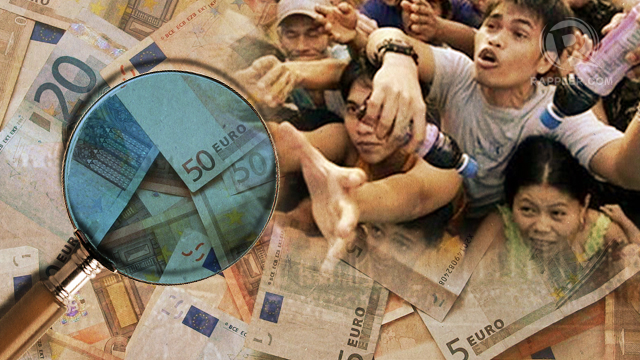
A huge donation from the Vatican in the aftermath of typhoon Ondoy in 2009 failed to reach the intended beneficiaries, financial records from the diocese of Parañaque showed.

According to a ledger report, the Vatican’s Pontifical Council Cor Unum for Human and Christian Development gave a donation of P697,500 a few days after Ondoy struck.

The figure was about 10,000 euro, with the euro-peso exchange at that time pegged at one euro equivalent to P70.

The money was coursed through the “Apostolic Nuncia,” the ledger report – a copy of which was obtained by Rappler – showed.

But an analysis of the remittances to the typhoon victims revealed that only about 16% or P263,236.50 out of the total P1,631,473.05 donations has been disbursed.

The Cor Unum foundation was established in 1971 by Pope Paul VI. 

In the Vatican website, Cor Unum’s mission represents “the care of the Catholic Church for the needy, thereby encouraging human fellowship and making manifest the charity of Christ.”

Among its objectives is to “assist the Pope and be his instrument for carrying out special initiatives in the field of humanitarian actions when disaster occurs, or in the field of integral human promotion.”

Big donors

Members of the Parañaque clergy and lay leaders have accused Bishop Jesse Mercado of diverting millions of pesos in donations for disaster victims. 

Rappler first reported on this last June 18.

They want Rome to investigate the alleged misappropriation, which, they say, violates Church law on donations. 


Based on the ledger we obtained, among the big donors to Ondoy victims are as follows:
  • Parishioners of the Presentation of the Child Jesus Parish, P123,037.95
  • Greenbelt Sto. Nino de Paz Foundation Inc, P100,000
  • Couples for Christ, P100,000
  • Okinawa International School, P70,500
  • Stigmatine Italian Friends, P64,595
  • Order of Malta, P50,000
  • Bukas Loob sa Diyos Covenant Community, P50,000
Denying the allegations, Mercado said “all donations are properly receipted and promptly turned over to their intended beneficiaries.”

He added, “In urgent cases, e.g. (typhoons Ondoy and Sendong), the diocese even advanced the amounts even before the second collections were mandated.”

This is because “some parishes remit too late,” and the late donations are added to the calamity fund.

The prelate was, however, telling only part of the story.

Over a million unremitted

For donations on Ondoy, the ledger report showed that as of Dec 31, 2010, or more than a year since the typhoon dumped a month’s equivalent of rains and submerged many parts of Metro Manila, a balance of P1,368.236.55 of donations remained unremitted.

The balance, which included the donations from the Vatican’s Cor Unum, was “reclassified” to the Caritas account.


This means the remaining donations for Ondoy were transferred to the Caritas account, which contains among others, Palm Sunday/Alay Kapwa donations, Philippine Charity Sweepstakes Organization donations, and other donations from various sources.

It is from the Caritas account that scholarships, other ministries, and remittances to the Catholic Bishops’ Conference of the Philippines social arm, NASSA, are sourced. 

The Caritas account, in turn, is deposited in a Bank of the Philippine Islands special account.

As for victims of typhoon Sendong, Mercado ordered the immediate release of money for the dioceses of Dumaguete (P100,00), Iligan (P200,000), and Cagayan de Oro (P200,000) last December 20, even before the donations poured in. The advances totaled half a million pesos.

But the diocese also quickly recovered its advanced remittances, as donations reached P2.212 million in less than a month.

On Jan 19, 2012, the Parañaque diocese released an additional P900,000 each for Cagayan de Oro and Iligan typhoon victims anew, raising total releases to P2.3 million.

Still, the donations for Sendong victims continued pouring in. The number of those who died after all reached more than 900, much more than the 300 or so killed by Ondoy.

The ledger report, as of May 2012, showed that the diocese received an additional P1.099 million from January 19 to February 23, none of which was released to the Sendong victims.

The non-release of funds, partly or wholly, for the intended beneficiaries, was among the issues raised against Mercado by some priests who complained to the Nuncio. Where did the money go?

One fund-raising where no single centavo was released to the beneficiaries was for the victims of the Muntinlupa fire in May 2010, where 800 homes were razed and 8,000 were left homeless.

Four parishes – Holy Eucharist Parish, Ascension of Our Lord Parish, Mary Help of Christians National Shrine, and Presentation of the Child Jesus Parish – remitted a total of P129,201.25 in donations.

The ledger report as of May 2012 belies Mercado’s claim that “donations are regularly remitted to the intended beneficiaries.” 

In his prepared statement to the media, Mercado said late donations were “added to the calamity fund.”

What he did not mention, however, is that the unremitted funds were deposited in a BPI special account which yields higher interest earnings for the diocese.

While the money is locked up in the bank, priests had complained that funding for the diocese’s social programs are not being released.

“The bishop will often say to priests and lay that there are no funds available,” the priests said. 

On the contrary, the diocese's balance sheet showed it had P91.5 million in its BPI special deposit account.

Belgian money

Priests and lay leaders have been demanding financial transparency from Mercado, after some parishioners started questioning where their generous donations went.

When priests asked for a financial report, they were given the runaround and were not provided with copies.

Without admitting that he has withheld releasing any financial reports to his priests, Mercado said his priests should realize there is a process that must be observed for such.

Replying to the allegations, Mercado gave assurances “a detailed report is being prepared. All expenses are studied, reviewed and properly document in the spirit of stewardship, transparency and accountability.”

But disgruntled priests and lay leaders said this is not the first time that Mercado engaged in doublespeak.

They cited the case of the money that was left in trust by the Belgian missionary Congregatio Immaculati Cordis Mariae (CICM) or the Congregation of the Immaculate Heart of Mary to the Archdiocese of Manila (RCAM) prior to their exit from the Parañaque diocese.

Eventually, the money was supposed to be turned over to the St. Andrew Cathedral parish, but was it?

St Andrew's School

The CICM founded the St. Andrew's School but in 1994, the Belgian Fathers turned over administration of the school to the secular clergy. They also left a trust fund to the St Andrew Cathedral Parish, which as of 2009, stood at $291,422.28

The Cathedral’s former parish administrator found out about the money while doing an accounting of the parish’s finances.

At the time, the cathedral was undergoing renovation and like manna from heaven, the parish administrator thought that money could finance the construction work. The money was estimated at P13.679 million, as the exchange rate at that time stood at $1-P46.

Armed with the information, lay leaders wrote Mercado inquiring about the status of the money and asked him to release it “in keeping with the intention of the donors, namely to use the funds for Church construction and for the catechetical and the social development programs of the Cathedral Parish.”

In his reply dated April 23, 2010, Mercado replied, “We are still in the process of verifying with RCAM the remaining balance of the said trust fund.”

Mercado added, “Pending result of said verification, RCAM is not in a position to release any amount at the moment.”

In other words, Mercado told them, the money was still under the custody of RCAM.

What Mercado did not know was that the former parish administrator had already confirmed that the money had already been transferred to the Parañaque diocese. 

The lay leaders sought a meeting to clarify the matter. In the meeting were Mercado and his executive secretary, Annie Cruz.

Priests say it is actually Cruz who exercises control over the diocese’s finances, and not the diocese’s treasurer or oeconomus.

Initially, Cruz was evasive about the status of the money. 

But the lay leaders had had enough. 

The parish’s finance council head, Adelia Lopez, informed the bishop and Cruz they knew that the money had already been turned over by the RCAM to the diocese as early as May 2009.

Caught by surprise with this revelation, Cruz, the bishop’s executive secretary, was finally forced to admit that the money was, in fact, with the diocese.

Faced with the facts, Mercado released a total P8 million in 2010, but the balance, up to this time, has not been released. Going by 2009 exchange rates, this would be at least P5.7 million.

The former parish administrator told Rappler that were it not for an investigation conducted, “the trust fund would have remained a secret.” 

In fact, the deliberate attempt to hide the Belgian money was among the complaints raised against Mercado before the Nuncio.