Sunday, July 31, 2011

What does the Papal Nuncio's recall mean?

The Vatican's recall of its special envoy to Ireland has been described as almost unprecedented over the past century. 

Experts say only anti-religious tumult has previously sparked a similar move, for example the return to Rome of the ambassador to China following that country's forced conversion to communism.

Archbishop Giuseppe Leanza's departure from Dublin may not be a flight from violent persecution but it is a response to the most significant political pressure on the Catholic church since the formation of the state.

Last week, following the publication of a scathing report into the church's handling of child abuse cases, the Irish prime minister (taoiseach) turned on the Vatican and its role in what had happened.

'A big deal'

Enda Kenny accused Rome of "elitism, dysfunction, disconnection and narcissism" - the kind of language never previously used by a political leader in predominantly Catholic Ireland.

Mr Kenny has since emphasised the positive response he has received to his speech, telling an audience at the weekend that many members of the clergy had been in touch to give him their support.
The Vatican's response on Monday is, according to Michael Kelly from the Irish Catholic 
newspaper, "a big deal".

"People just do not speak to the Vatican in that fashion. It is simply not used to people talking about it like that so it will have wanted to be seen to act in a decisive fashion in response," he said.

However, he cautioned against seeing the move as a "diplomatic fit of pique", pointing to remarks made by Vatican press spokesperson Father Ciro Benedettini.

Fr Benedettini said that the Papal Nuncio's recall showed the Vatican wanted "serious and effective collaboration with the (Irish) government".

Snub

That statement, Michael Kelly said, suggests the Vatican is interested in constructive dialogue with the Irish government rather than a political head-to-head.

"The Vatican realises it is not in a position to deliver any kind of diplomatic snub. It wants to respond to what the Cloyne report said and in order to do that effectively it needs to liaise with the Papal Nuncio," he said.

The Irish Times religious affairs correspondent Patsy McGarry believes the situation is more complicated.

He pointed to the latter part of Fr Benedettini's statement which said that the Vatican's move "did not exclude some degree of surprise and disappointment at certain excessive reactions".

Evidence, he said, that the Vatican's position remains a mixture of contrition and determination to speak out when it believes it has legitimate points to make.

"This is very similar to the reaction of Federico Lombardi (a Vatican spokesperson) following the taoiseach's comments last week," he said.

Fr Lombardi was sent into bat by the Vatican following Mr Kenny's remarks and spoke of the need for the "necessary objectivity" in the "ongoing debate".

Gravity

For Michael Kelly, the latter half of Fr Benedettini's statement is merely a bid for restraint amid calls for more stringent government action against the Vatican. 

Commentators say the current row leaves a question mark over whether the Pope will be able to visit Ireland in the near future

"Charlie Flanagan, the leader of the Fine Gael parliamentary party, called for the expulsion of the Papal Nuncio and I think Fr Benedettini's remarks have to be seen in the light of that.

"If we remember back to last year when Irish passports were found to have been used by Israeli and Russian secret agents, the Irish government only acted to expel some junior diplomats, despite the seriousness of the situation.

"The expulsion of a diplomat is not a decision taken lightly and I don't think that the gravity of this situation merits it."

One thing agreed upon by both Michael Kelly and Patsy McGarry was that, given the strained relations, a much speculated upon papal visit to Ireland is unlikely to happen in the near future.

'Wholly penitent'

"I would put it at less than 20%. It was never more than speculation but there would need to be a major healing between the Irish government and the Vatican," Patsy McGarry said.

"The Pope has gone to other places like Australia and expressed his sorrow for what has happened but I think this would need to be another level above that - the image of a wholly penitent church."

Michael Kelly said that was an unlikely scenario.

"I don't think the Vatican would want to put the Pope into a situation like that. There is a feeling there that a lot of this pre-dates the current papacy and it would be unfair to Pope Benedict," he said.

"I think there is a chance of the Pope going to Northern Ireland and making a brief visit to the Irish Republic but anything beyond that - no more than 5%."
 

Is Ireland divorcing from the Catholic Church? (Contribution)

Our Irish parents and grandparents would find astonishing the acidly anti-clerical views expressed in the Republic of Ireland today.

The land that once called itself a foremost Catholic nation and most loyal ally of the Holy Father is awash with sentiments that seem to veer between Ulster Paisleyism and the Spanish republicanism of the 1930s.

One newspaper published a photograph of the Pope in full regalia, with “Persona Non Grata” superimposed on his image.

The airwaves are full of bitter remarks supporting Taoiseach Enda Kenny’s attack on the “disgraceful” Vatican, and recommending every anti-church measure from the dissolution of the monasteries to the expulsion of the Papal Nuncio and the severing of all links with the Holy See.

(The recall of the Papal Nuncio this week marks the lowest point of relations between Ireland and Rome.)

One correspondent wrote that it was his ardent hope that the Catholic Church would follow the example of the News of the World, and hold a “last Mass” before shutting down.

The Taoiseach, meanwhile, has been met with standing ovations for his salvo against the Vatican for failing to respond with sufficient concern to the clerical sex abuse scandals as described in the Cloyne report.

His justice minister, Alan Shatter, is introducing a highly controversial Bill which will compel Irish priests to disclose the secrets of the confessional where paedophilia is mentioned: failure to do so could result in a five-year prison sentence.

This is decidedly not the Catholic Ireland in which I grew up, where politicians were falling over themselves to kiss bishops’ rings, and where one of Enda Kenny’s party predecessors as Taoiseach declared that he was a Catholic first and an Irishman second.

However, the breach with the Church has been a long time coming, and for the majority of Irish citizens it is welcome.

There was too much deference to the authority of the Church within the state, even if it was, for historical reasons, sometimes understandable.

There was a long memory of the “Saggart Aroon” – the “Darling Priest” who had stood by the people in dark Penal Days and who became, especially after the break with the Crown, a kind of native nobility. 

In my family, my mother was inordinately proud of an uncle who was a canon in Co Galway, with a stable of hunters and a splendid wine cellar.

Didn’t it show he was just as good as the gentry!

But all power becomes, eventually, overweening, and the clergy’s power grew too great. This new fierce mood of Irish anti-clericalism is all part of the reaction.

Although some details of Kenny’s speech have been challenged – the state itself failed to implement guidelines about child protection, and there will be a conflict over the seal of the confessional – his oration is a remarkable example of a political leader expressing the collective mood: that the laws of the Irish Republic stand above canon law.

And that the Irish prime minister does not take dictation from the Holy See.

The Vatican is not best pleased with this development, and sent a cool response about its “surprise and disappointment”.

But the Vatican is a bit like the British Empire: it has diplomatic relations with 179 states. It takes time to get around to all of them, however individually compelling.

There are now calls to remove the Catholic Church from every element of Irish public life, and this is supported by a growing secularist movement. Contrary to supposition, though, state and Church in Ireland are already separate: the constitution, although it mentions God, makes no mention of the Catholic Church, specifically affirms that there may be no religious 
discrimination, and rules that no religion may be endowed by the state.

However, there is a difference between state and culture: the state construes laws, but the culture draws on history, memory, family, folklore. 

Despite constitutional separation of Church and state, there remain religious traditions, such as the broadcast of the Angelus on national radio, the prayers that open Dail sittings, and the existence – even dominance – of faith-based schools, which secularists seek to abolish.

Such sweeping changes could occur in what was once Catholic Ireland: the state could become as secularist as France, with all allusion to the Almighty officially excised. 

Yet even in France, the holy days continue, with Pentecost and Ascension and All Saints, and Lourdes attracting millions.

The Church in Ireland will never be what it was, but the faith, at grassroots level, will not disappear. 

The people will climb the holy mountain of St Patrick, and come in their thousands to the shrine of Our Lady at Knock, and beggar themselves to provide children with first communion regalia; and when there is a tragedy in a small town, the church and parish priest will still be at the centre of the community, offering age-old comforts, not of the Vatican, but of the faith.
 
Mary Kenny is the author of 'Goodbye to Catholic Ireland’ (New Island Books)

Saturday, July 30, 2011

Litany Of The Most Precious Blood

Lord, have mercy.
Lord, have mercy

Christ, have mercy
Christ, have mercy

Lord, have mercy.
Lord, have mercy

Christ, hear us
Christ, hear us

Christ, graciously hear us.
Christ, graciously hear us

God the Father of Heaven,
have mercy on us

God the Son, Redeemer of the world,
have mercy on us

God, the Holy Spirit,
have mercy on us

Holy Trinity, One God,
have mercy on us 

Blood of Christ, only-begotten Son of the eternal Father,
save us
Blood of Christ, Incarnate Word or God,
save us
Blood of Christ, of the New and Eternal Testament,
save us
Blood of Christ, falling upon the earth in Agony,
save us
Blood of Christ, shed profusely in the Scourging,
save us
Blood of Christ, flowing forth in the Crowning with Thorns,
save us
Blood of Christ, poured out on the Cross,
save us
Blood of Christ, price of our salvation,
save us
Blood of Christ, without which there is no forgiveness,
save us
Blood of Christ, Eucharistic drink and refreshment of souls,
save us
Blood of Christ, stream of mercy,
save us
Blood of Christ, victor over demons,
save us
Blood of Christ, courage of Martyrs,
save us
Blood of Christ, strength of Confessors,
save us
Blood of Christ, bringing forth Virgins,
save us
Blood of Christ, help of those in peril,
save us
Blood of Christ, relief of the burdened,
save us
Blood of Christ, solace in sorrow,
save us
Blood of Christ, hope of the penitent,
save us
Blood of Christ, consolation of the dying,
save us
Blood of Christ, peace and tenderness of hearts,
save us
Blood of Christ, pledge of eternal life,
save us
Blood of Christ, freeing souls from purgatory,
save us
Blood of Christ, most worthy of all glory and honor,
save us
 
Lamb of God, who taketh away the sins of the world,
spare us, O Lord

Lamb of God, who taketh away the sins of the world,
graciously hear us, O Lord

Lamb of God, who taketh away the sins of the world,
have mercy on us, O Lord
 
V. Thou hast redeemed us, O Lord, in Thy Blood.
R. And made us, for our God, a kingdom.

Almighty and eternal God,
Thou hast appointed Thine only-begotten Son
the Redeemer of the world and willed to be appeased by his blood.
Grant, we beg of Thee,
that we may worthily adore this price of our salvation
and through its power
be safeguarded from the evils of the present life
so that we may rejoice in its fruits forever in heaven.
Through the same Christ our Lord.

Amen.

Naomh An Lae - Saint Of The Day

peterchrysologus St Peter Chrysologus (d. 450) bishop of Ravenna

Peter was bishop of Ravenna (mid 5th century) when the Empress Galla Placidia living there. 

On hearing his homilies she is said to have given him the name Chrysologus "Golden-worded". 

His surviving 176 homilies show what an excellent preacher he was. 

A native of Imola

Peter was born at the city of Imola (30 miles west of Ravenna) and was ordained a deacon there by its bishop Cornelius. During a visit with his bishop to Rome, Pope Sixtus III appointed him bishop of Ravenna in 433.  

Chrysologus (= "Golden-worded")

As a preacher Peter was afraid of boring his audience and became famous for his short, inspiring homilies, 176 of which have survived. He spoke about the incarnation in simple and clear language. 

His homilies are an indication of how the liturgical year was celebrated and of his stances against the christological heresies at that time. 

The imperial princess Galla Placidia on hearing his first homily is said to have given him the name Chrysologus "Golden-worded" and she later became a patron of many of his projects.

Against paganism; for frequent communion

As bishop Peter was concerned with the survival of paganism. 

He preached especially against the annual carnival, saying: "He who delights in the devil cannot rejoice in Christ". 

But he urged his listeners to have confidence in the forgiveness offered through Christ. 

He was also an advocate of frequent communion.

A supporter to Pope St Leo I

When Leo I became pope in 440 Peter became an advisor to him and one of his staunchest supporters both in opposing the heresies of the time and in defending the primacy of the Church of Rome.

Friend of Germanus of Auxerre

When Germanus of Auxerre visited Ravenna to plead the cause of the rebellious Bretons with the emperor, Peter warmly received him and when he died there Peter presided at his funeral.

Death and influence

Peter died in 450 while on a visit to his native Imola. 

A contemporary portrait of him exists in the mosaics of the Church of San Giovanni Evangelista in Ravenna, where he is depicted among the members of the eastern and western imperial family, showing his extraordinary influence. 

A collection of his 176 homilies was made by Felix, Bishop of Ravenna (707-17). 

Peter was declared a doctor of the Church in 1729.

Prayer To Saint Matthew

 
O Glorious Saint Matthew, in your Gospel you portray Jesus as the longed-for Messiah who fulfilled the Prophets of the Old Covenant and as the new Lawgiver who founded a Church of the New Covenant. 
Obtain for us the grace to see Jesus living in his Church and to follow his teachings in our lives on earth so that we may live forever with him in heaven.
Amen.

Young pilgrims prepare for Clonmacnois 2011

Young people from across Ireland are preparing to gather for one of the biggest religious festivals of the summer, the Youth 2000 Summer Festival at Clonmacnois.

Now that the Oxegen music festival has ended, the gathering that has become known as 'Holy Oxegen' is in the final stages of preparation and awaiting the arrival of young pilgrims for the event between August 4-7.

Over the course of the weekend, young pilgrims flock to the famed monastic site and will take part in lively workshops, music sessions and have opportunities for reflection and prayer.

This year's guest speaker is Fr Bernard Murphy, of the Community of Franciscan Friars of the Renewal.

Speaking to the Irish Catholic this week, Patrick Muldoon, one of the organisers of the event, said the Clonmacnois festival stands now as one of the most positive events for young Catholics on the calendar.

''It's great to see the success of events like the Youth 2000 festival,'' he said, ''especially at this time for the Church.''

Celebrating faith

Adding that it is important for young people to be witnesses to their faith, he said: ''It's great to see them celebrating their faith at Clonmacnois.''

The importance of the Youth 2000 festival is also demonstrated by those, like Patrick, working to prepare the festival. 

Patrick pointed out that all were young people, and all volunteers who have worked year-long on fundraisers to make the event accessible to all.

Proof of the festival's appeal is also contained in the fact that, since the first festival in 2008, numbers attending have grown year-on-year, with 1,000 pilgrims present for the closing Mass in 2010.

One of the most important elements, Patrick says, will be the building of friendships between young Catholics from different parts of the island as they meet in a shared faith.

''We hope to again provide that sense of belonging,'' Patrick said, ''one that will leave them wanting more when they return to their home parishes.''

Visit www.youth2000.ie for more information on the Clonmacnois Summer Festival. Youth 2000 can be contacted at 01-6753690 or 085-8289231 or 0770-6736677 from Northern Ireland.
 

New film will portray priests in positive light

A new film by the creators of The Guard will portray priests in a positive light according to the Irish director.

Calvary, created by John Michael McDonagh, will feature a priest living in Easkey, Co. Sligo who is trying to do good work but the locals are against him.

''I was thinking what would crass filmmakers do now, after the Ryan Report and all that? They'd make a film about paedophile priests,'' Mr McDonagh said. 

He has said he aims to create a more balanced approach with Calvary.

Mr McDonagh's most-recent film, The Guard, is a black comedy starring Brendan Gleeson about Boyle, a corrupt garda who is living in a Galway town and is forced to do some work when an FBI agent (Don Cheadle) arrives to investigate a drug-smuggling ring.

Mr McDonagh created the good priest character in Calvary as a counter to Garda Boyle but plans to retain some of The Guard's black humour.

''It's quite difficult to write a good film about a good person. It's much easier to write about somebody who's going to say confrontational things all the time,'' he said.

''Everyone in the village is sort of against him, so he's a good man but the characters around him will be darker so instead of him propelling the narrative, it will be him responding to other people.''

Mr McDonagh said he chose Easkey as a setting so the film has a mythic feel.

''If it's done properly, it'll have a spiritual meaning to it. I'm not religious but I like films that try to elevate the human spirit,'' he said.

A production date for Calvary has not yet been confirmed but Mr Gleeson has signed up to portray the priest and it will have a budget of €6m-€7m.

Graphic Catechesis

A comic book entitled Habemus Papam!, chronicling the life of Pope Benedict XVI, will be distributed during the World Youth Day gathering in Madrid, Spain, Aug. 16-21. 

Manga Hero, based in San Rafael, Calif., is behind the content. Jonathan Lin created the exclusively, and unapologetically, Catholic comic book-publishing company in 2010. 

He uses an Asian twist on the more traditional superhero comic books with which Americans are familiar.
His decision to get involved with World Youth Day 2011 is an example of divine Providence at work.
“I have a friend who knew someone who worked at the World Youth Day headquarters, who then told me where to submit a proposal to World Youth Day 2011. They asked us to develop a plot that highlights the Pope’s message to young people from past WYDs he attended, as well as the theme for this year’s WYD. The organizing committee then approved the proposal, and, thus, Habemus Papam!was born. We’re printing 300,000 copies, half in English and half in Spanish.”

Manga is a publishing category for Japanese-style graphic novels, typically intended for adults and characterized by highly stylized art, utilizing bold, exaggerated drawings. 

The style came to the forefront in the mid-1980s and has only recently come to the United States.

Anime is the animated version of manga. Americans and Europeans might be familiar with manga and anime if they have children who are fans of Pokemon, Yu-gi-oh! and Dragon Ball Z. Baby boomers might remember Astro Boy and Speed Racer as early forms of manga.

The new comic about the Holy Father, written by Gabrielle Gniewek, a student at John Paul the Great University in San Diego, fits well into Manga Hero’s repertoire.

True to its name, the company develops stories about heroes and heroines who display virtues such as honor, sacrifice, courage, faith, wisdom and love. 

Manga Hero’s current publications include Paul: Tarsus to Redemption, written by Matthew Salisbury and Gniewek, and Judith: Captive to Conqueror, also written by Gniewek. 

Sean Lam illustrated both series. 

Future mangas will focus on the Cana wedding feast, Joshua, David and St. George, Pope John Paul II, Mother Teresa and St. Maximilian Kolbe.

Manga as a Tool

Lin believes that focusing on heroes and heroines of the Catholic faith is an ideal way to evangelize, especially in conjunction with this increasingly popular comic style.

In the last decade, manga has experienced explosive growth throughout the world. It is considered one of Japan’s most successful exports.

“I grew up watching anime, having been introduced to the medium by my cousins from Japan. We want to use manga as a tool to show the youth and the world that the Church is not afraid of modernity and evolving culture. It is not afraid to use, in this case, new and compelling forms of media to meet young people where they are,” explained Lin. 

“We hope manga becomes a fun platform for people to learn more about the Holy Father and realize that the Church is relevant, visible and active in modern culture. Manga represent an important opportunity to reach out to people with an attractive form that can transform society and inspire interest in the faith.”

Both John Paul II and Benedict XVI called for the use of new and different varieties of media to reach young people where they are in order to build a culture of love and dignity, and Lin’s company uses manga as one such medium.

Lin describes how his involvement with Catholic manga was intimately involved with his own spiritual journey.

“I was born and raised Catholic. However, after high school, I started drifting away from my faith, getting caught up with what the world wants ... and what the world thinks will make me happy — recognition, wealth, career, etc. However, after attending World Youth Day 2008 in Sydney, Australia, I realized that while those worldly things are good, focusing my life just on these things didn’t make me any happier. That’s when I started to take my faith more seriously."

“My spirituality is based on my ultimate purpose in life — to know, love and serve God. Following Jesus Christ is not meant to be easy, but there is a joy and peace that exists when living a life based on his teachings — to love one another as he loves us, to defend the life and dignity of every human being, to be a person for others.”

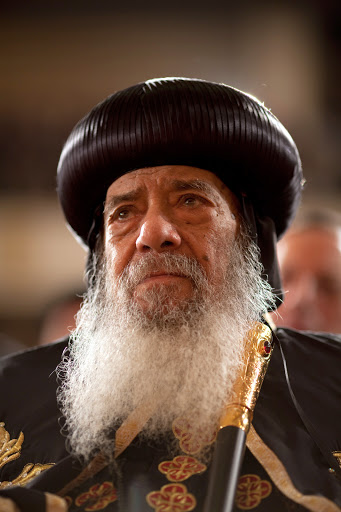
Pope Shenouda III considers divorce and second marriage proposals following protests

Pope Shenouda III, head of the Orthodox Church, is looking into the demands of the protests calling for the approval of divorce and second marriages that took place in front of the Clerical Council at Saint Mark’s Cathedral in Abbassiya last week, according to the Middle East News Agency, Egypt's offical news agency. 

Pope Shenouda III has met with council chief Bishop Paul, who saw Coptic groups demonstrating against him last week, demanding his removal.

The Pope has asked Bishop Paul and other council officials to calm demonstrators down, study their cases and explain why their requests had been denied.

Several Copts protested in the early weeks of July, demanding a civil marriage law that would allow them to divorce and remarry. 

Several protests followed, demanding that the church accept their requests regardless of civil marriage law considerations.

Mental health disorders, child sex abuse and the Roman Catholic Church (Contribution)

Enda Kenny, Irish Prime Minister, has accused the Roman Catholic Church of attempting to hinder a probe into allegations of child sex-abuse by priests.  

As a result the Vatican has recalled its ambassador to Ireland. 

The Irish government has called for a quick response from the Vatican over the church’s handling of allegations against 33 clerics of the sexual abuse of children.  

This is alleged to have taken place in the Cloyne diocese of southern Ireland between 1996 and 2009.

This, and many other similar news stories, is being circulated around the world, about alleged cases of child sex-abuse by Roman Catholic Priests.

A reader contacted Mental Healthy over the weekend with her own personal account of such abuse.  

She wishes to be known as Isabel Davies and in order to respect her wish to remain anonymous we will do so. 

Isabel read a piece of news in the Windsor Star, which recalls the alleged sexual abuse of two children by priests in the 1960s.  

The article includes comments from a psychologist who has worked with many victims of child abuse at the hands of priest.  

The psychologist says that ‘the lives which victims describe to therapists decades after the abuse follow a depressing pattern of failed relationships, chaotic living circumstances, substance abuse and mental health problems.’

Isabel says ‘I wept as I read the accounts of these two tragic abuse survivors.  I read their stories as if they were my own account.’

‘When I was still in primary school I was subjected to abuse over a sustained period of time.  I was at a Roman Catholic School at that time and there was a priest who held masses for the nuns who taught us.  He would occasionally come into school to give us religious instruction.’

‘I don’t know how old he was but as a child he seemed to be very old.  I lived on a farm with my family and Father P would come for walks at the weekend.  These walks always brought him past our farm and he would stop for refreshments.  He always took the opportunity to get me alone and then he would molest me.  He never raped me but he would sit next to me with a piece of cake in one hand whilst he fondled my private areas with the other.’

‘Sometimes this would happen with my mother just in the kitchen next door but I never called out.  I didn’t know what he was doing, I didn’t know what ‘sex’ was.  I just knew that I didn’t like what he was doing, I didn’t like it when he breathed faster and sweated.’

‘I thought that I was bad because I did not like what he was doing.  After all he was a priest, a man of God.’

‘I endured him for many months at least, it could have been for as long as a couple of years.  I was young and I have blocked it from my mind for too many years.’

Isabel has had mental health problems for the last 25 years.  

She has battled demons, survived two divorces and conquered addiction to prescribed medication but she never understood why her life had always felt like such a mess.  

Then she read this article and a light came on.

‘I turned my back on God for many years.  I considered myself to be sinful and weak.  Only if we speak out about these things can we come to terms with what happened and hopefully forgive ourselves for what we saw as being in some way our own fault.’

Being abused as a child can result in significant mental health problems. This is intensified if the abuser is in a position of power and influence, which is nearly always the case.  

The longer a victim goes without treatment the more deeply they can be damaged. 

We thank Isabel for opening up to us and have pointed her in the right direction to get the help that she needs. 

We wish her all the best on her road to recovery. 

Anglican, Catholic Bishops support Irish Travellers under threat of eviction

Bishop Thomas McMahon, Catholic Bishop of Brentwood, and  Bishop Laurie Green from the Anglican Diocese of Bradwell, paid a pastoral visit to the Dale Farm Travellers’ site near Basildon in Essex last week. 

The threat of eviction is hanging over half the site and the two Bishops were keen to talk to residents about their situation. While they were there, they prayed with the bereaved family of John Flynn, a leading campaigner in the battle to remain at the site, who died recently.

Prior to the visit, the two churchmen toured the local Crays Hill Primary School, which is attended by many of the Traveller children. The Bishops, who were very impressed by the commitment and enthusiasm of staff at the school, talked to some of the children and listened to them read.

“We are particularly concerned that breaking up this long-standing community and its way of life will be a serious trauma for the children, who have stability and support at the excellent Crays Hill Primary School,” said Bishop Thomas.

Bishop Laurie said: "It is certainly a privilege in our ministry to support the Traveller community and to work for more understanding on all sides. We really enjoyed the company of such lovely children and we will be keeping Crays Hill School, the children and their families very much in our prayers."

Bishop Thomas added: “Alongside the humanitarian concerns, we have to ask if an extremely expensive operation to evict the Travellers is a good use of public money in these straitened times.”

Bishop Thomas was accompanied by Sr Catherine Reilly and Fr Dan Mason from Wickford parish.

Bishop Thomas McMahon and Bishop Stephen Cottrell, Anglican Bishop of Chelmsford will be making a pastoral visit to the Travellers at Dale Farm on 30 August - the day before the council has said bailiffs will begin the £18million eviction. 

While the families bought the land - an old scrap metal site - more than ten years ago, the local council says it is designated as agricultural - not residential. 

They say they will bulldoze the chalets, caravans, shrines and flower beds,  if the families refuse to move them. 

The families are refusing to move, because they say they have nowhere to go.

For more information on Dale Farm visit their Facebook page: http://en-gb.facebook.com/people/Dale-Farm/100000205024856

Calls to probe Ulster’s child care home abuse

STORMONT is under pressure to set up two investigations into child sex abuse by Catholic priests – and possibly others – in Northern Ireland.

Jim Wells, who is to take over as health minister in two years, warns that Northern Ireland has been “sleeping” about the level of abuse which has taken place north of the border.

Some of the stories which survivors of abuse have taken to MLAs in an attempt to convince them of the horrific nature of their suffering show that the abuse has been “much worse than even what was happening in the Republic”, the DUP MLA has told the News Letter.

Mr Wells said that “if ten per cent of what we hear is true then we are in for gruesome hearings”.

If victims’ allegations prove to be correct, he said that “we have had a cesspit of abuse going on, sometimes in the leafy suburbs of Belfast”.

And, pointing to the urgency of the situation, he added: “Some of the priests are still alive.”

Unlike inquiries into Troubles-related events, there is understood to be a fairly broad political consensus about the need for Stormont to undertake an investigation into the scale and nature of abuse in Northern Ireland.

However, despite cross-party support, the process is taking a considerable time, something which politicians say is important to ensure that the terms of the inquiry are properly thought through.

Stormont has agreed to set up an inquiry into ‘institutional abuse’ — that is, abuse which occurred in institutions set up to care for orphaned or otherwise needy children in Northern Ireland.

In a statement released earlier this month, Peter Robinson and Martin McGuinness said that the executive had held “a wide ranging discussion on the report of the Interdepartmental Taskforce on Historical Institutional Abuse” but no decision would be taken on how to proceed until “early autumn”.

However, clerical abuse – that is, individual priests who abused children within parishes – is a more difficult issue to address. Unlike many of the children in institutions, most of those believed to have been abused within what were often small, tightly-knit communities have been more reluctant to speak up about abuse which in some cases they have attempted to forget.

There is a second, political, challenge to setting up an inquiry into clerical abuse at parish level: most of the Catholic dioceses straddle the border.

The SDLP’s Conall McDevitt, who has led the political campaign for wide-ranging inquiries into both institutional and clerical abuse, said that Stormont should agree to work with Dublin on an inquiry.

He argues that such a decision is a very obvious issue for the North-South Ministerial Council (NSMC) to take forward as it is a serious issue which must be addressed on both sides of the border. 

“You’d need to have a seamless process that crosses over and back and more or less is invisible to the border,” he said.

And he said that the issue has united unionists and nationalists as using the north-south body as it is the most straightforward way “to deal with something that is very obviously an all-island problem”.

Mr Wells said that he had “no problem at all” with the NSMC looking into what is “clearly a non-political” issue.

Ulster Unionist deputy leader John McCallister said that Northern Ireland’s inquiry now needed to have a broader remit, given what has been revealed in the Cloyne Report.

He said the fact that in the Republic sexual abuse was still being covered up by the Catholic Church three years ago means that the executive has a duty to ensure that children in Northern Ireland are protected.

He said: “It’s such a huge issue, I think it’s going to be difficult for the executive not to broaden that [institutional] inquiry out.”

Mr McCallister said that the Catholic church, not taxpayers, should fund the majority of the inquiry costs, and added: “I think there’s a huge moral imperative on the church to be frank and honest and open, and work with the inquiry.”

However, Michael Kelly, deputy editor of The Irish Catholic newspaper, has cautioned MLAs about the need to be sensitive to Catholic fears that they are being singled out.

“If this is an inquiry into institutional abuse in Catholic institutions in the north, I think that will be a very bad move because it will lend itself to the view among northern Catholics that they are being singled out,” he said.

“Other churches and indeed the state ran institutions, so I think an inquiry should cover all of those if there is to be any level of fairness.

“It was easier in the Republic where the overwhelming majority of the institutions were run by the church.”

Cardinal denies asking US government to intervene in Mexican politics

The Archdiocese of Guadalajara, Mexico has issued a statement denying claims that Cardinal Juan Sandoval Iniguez asked the U.S. government to reign in the former mayor of Mexico City, Andres Manuel Lopez Obrador.
 
In the July 21 statement, the archdiocese responded to the information released by WikiLeaks about a meeting the cardinal had with then U.S. Ambassador to the Holy See, Francis Rooney, in March of 2006.
 
The cable published by WikiLeaks is dated April 3, 2006, and claims that during a trip to Rome, Cardinal Sandoval called for help in stopping Lopez Obrador and left-wing leaders in Latin America.  It alleges that the cardinal asked Ambassador Rooney to convince President Bush to intervene. 
 
The archdiocese called the information “totally false.” It said that Cardinal Sandoval “has no interest in intervening or involving himself in the political affairs of the country.”
 
“Mr. Andres Manuel Lopez Obrador can vouch for this, from the many times in which he met with the cardinal, at his own request. There has always been a relationship of mutual respect between them,” the statement said. 
 
Cardinal Sandoval “values the work of the left, which is a necessary part of the political debate in the nation, even though there are some points on which he does not agree,” it continued.
 
The archdiocese confirmed that a meeting did indeed take place in 2006 between the cardinal and Ambassador Rooney, but that “the only issue discussed was a request that the U.S. representative support the construction of the Shrine of the Martyrs.”
 
“We wish to point out that the public leaking of this calumny by whoever the source was is intended to damage the already delicate political and social climate in our country,” the archdiocese said.
 
“We believe it is it very irresponsible to spread this kind of false information because of the damage it can do to our people’s spirits.”
 
“We have no doubt about the malicious intent of the person who spread this lie in order to harm Mexico, the Catholic Church and the individuals in question.”
 
The archdiocese concluded its statement urging “believers and non-believers alike to reflect on the information they receive, taking into account that the country is going through a time of political turmoil” in which rumor and deception threaten to take center stage in public life.

World Youth Day organizers say Michael Voris catechesis not approved

World Youth Day organizers said July 25 that the independent catechesis sessions offered by U.S.-based media producer Michael Voris during World Youth Day 2011 are not approved by the event. 

Voris responded with puzzlement that the announcement was made, stating that his organization has never represented itself as linked to the event.

“Participants in the World Youth Day 2011 Cultural Program must be recognized and endorsed by the bishops and episcopal conferences of their respective countries,” read a July 
25 statement from the event’s organizers.

There had been “some confusion” about Voris’ affiliation with World Youth Day, organizers said, further noting that “Real Catholic TV” and Michael Voris’ catechetical session “No Bull in Madrid” have not received endorsements from the group’s local bishop—Archbishop Allen Vigneron of Detroit—or  the U.S. bishops’ conference.

They are “not in any way recognized or approved” by the official event. 

The Pontifical Council for the Laity selects and invites only bishops from around the world to conduct catechesis sessions at World Youth Day, the statement explained.

Participating organizations in the World Youth Day 2011 Cultural Festival are selected because they “promote the authentic teaching and unity” of the Catholic Church and have received the required endorsements.

Voris questioned why the announcement about his event had been made.

“We never said we were part of the official World Youth Day. I guess I’m puzzled as to why the announcement was issued,” he said in a July 25 interview with CNA.

He described himself as “a Catholic in good standing” with a theology degree from the Angelicum in Rome.

“Nothing that we have ever said has been challenged with regard to Church teaching,” he said.

Voris’ videos are often strident in tone, criticizing leading political, cultural and Church figures. 
One recent video criticized the Knights of Columbus’ national leadership for alleged inaction towards politicians who are pro-abortion rights and support “gay marriage,” and for an excessive focus on financial concerns.

He has also praised the institution of Catholic monarchy as a “benevolent dictatorship” and criticized democracy, saying the vote should be limited to those who are faithful Catholics.

In April two of his speaking events in the Diocese of Scranton were canceled on the grounds that his statements “certainly can be interpreted as being insensitive to people of other faiths,” the diocese said, without specifying the statements involved.

“I understand that some people don’t like the style,” Voris said, observing that this criticism can apply to any person.

“We’re just faithful Catholics who want to add to the voice of the Church and amplify the voice of the Church.”

Voris wondered if there was “something else at work,” since he has not seen any signs of confusion about his organization’s lack of affiliation with World Youth Day.

The media producer added that he is willing to discuss his event with organizers.

The event in Madrid will address “hot-button topics” related to sex, Voris explained.

He said the “No Bull in Madrid” event is being held during World Youth Day because that is where there are large numbers of Catholic youth who are affected by today's over-sexed culture. 

Two late evening sessions will be held August 17 and 19 at the Melia Castilla Hotel and Convention Center.

He reported that a priest helping Real Catholic TV had contacted World Youth Day organizers several months ago to see how they could sign up to be a participant. 

The inquiry never advanced to the stage of seeking episcopal approval because there was no space for new groups.

Asked about his organization’s relationship to his local bishop, Archbishop Allen Vigneron of Detroit, Voris said he does not know what the relationship is because he has not been able to meet with him.

Voris said he has personally made six attempts to schedule a meeting with him. 

So far he has been unable to meet with the archbishop, which he blamed on interference from archdiocesan "bureaucracy."

In February 2011, Archdiocese of Detroit director of communications Ned McGrath said that the Real Catholic TV enterprise had yet to present itself or receive approval of its apostolate and programming from the archdiocese.

Rebel priest Peter Kennedy gives up on worshipping God

REBEL Brisbane priest Peter Kennedy has further distanced himself from the Catholic Church, saying he no longer believes in worshipping God or the power of prayer. 

He also has questioned why God would allow the terror attack to happen in Norway.

The priest who was directed to leave St Mary's Church in South Brisbane in 2009 for unorthodox practices, also revealed that he had doubts that Jesus existed.

His views were expressed in an interview with the ABC, and with The Courier-Mail yesterday when he questioned why God would allow tragic events to unfold, including the terror attacks in Norway.

"I do not believe in worshipping God. Whatever God is . . . that God does not need to be worshipped," he said. "To be asking God to intervene in our lives, why didn't he intervene in Norway the other day?"
Though he still leads his congregation in prayer, Father Kennedy said his own praying was more like "meditation".

"I think my way of prayer is to stand in wonder at the beauty of people and the wonder of life," he said.
Asked whether he still considered himself a Catholic, Fr Kennedy said he was, but not in the "literalist" sense.

"The reality is you are culturally a Catholic but so many of us disagree with the literalist understanding of Christianity the Catholic Church preaches," he said.

"I think we (the St Mary's Church-in-exile) are truly Catholic because we are truly inclusive. To put it simply, I think the institution of the Catholic Church is exclusive."

He also repeated his previous statements that there was "very little corroborating evidence" for the existence of Jesus.

Nearly two-and-a-half years after leaving the church where he had preached for 28 years, Fr Kennedy said the St Mary's Church-in-exile attracted more than 400 to the three weekend masses.

The congregation knew his views well, he said.

"We've lost about 20 per cent but we have gained people," he said. "They know how I feel. I am very honest with them."

Fr Kennedy told comedian Judith Lucy in the debut episode of her six-part series Judith Lucy's Spiritual Journey that for years he had not believed in the value of prayer.

Lucy visited the priest at a Sunday service where he now leads his congregation.

The 73-year-old Kennedy was asked whether he thought there was any point in praying.

Kennedy: No. For years I've never believed in the value of prayer in the sense of asking.

Lucy: But that does make up part of the service here?

Kennedy: Yes it does, because they like it. If I had my way we wouldn't have it.

The interview then cuts to a clip of Fr Kennedy leading his congregation in the Lord's Prayer.

"Let us pray," he starts.

Women called to the priesthood

Picture a Roman Catholic priest. 

He's male and celibate, right?

But a small group of women is trying to expand that definition of priesthood — a fundamental tenet of the Catholic Church — to include female and marriage.

They belong to an organization called Roman Catholic Womenpriests, an international group that ordains women as priests. And they include a local woman who feels herself drawn toward being a priest in the faith she loves.

"We're Roman Catholics, and it's our church," said Cindy Yoshitomi, 63, of Port Hueneme. 

"You can't get around that. We're starting this grass-roots movement. ... We're creating a space where these disillusioned Catholics can find community."

Roman Catholic Womenpriests, formed in 2002, has about 120 members worldwide. 

The organization started in Europe but has spread more rapidly in the United States, said spokeswoman Suzanne Avison Thiel, ordained by the group as a priest.

Members include a mix of young and old, single and married, Thiel said. Some are or have been nuns.

"We're trying to take back what was rightfully ours," Thiel said. "Traditionally, the early church shows that women were involved as priests and deacons."

Roman Catholic Womenpriests believes its ordinations are valid, because a male bishop ordained its first female bishop, and the line of ordinations descends from there.

But the Catholic Church disagrees.

First, priests are considered direct descendants of the apostles, who were men, so they also must be male, said Tod Tamberg, spokesman for the Archdiocese of Los Angeles. 

Second, for an ordination to be valid, it must be approved by Rome, and Rome does not approve the ordination of women, Tamberg said.

"It's not that the church doesn't want to admit women to ordination, but it is unable to because of scripture and tradition," he said.

Sharon Reiser, 34, agrees, saying women play important roles in the Catholic Church, but those roles don't include the priesthood.

"Holy orders are a sacrament, and the sacraments aren't things we make up," said Reiser, who lives in Ventura. "They're given by God. ... We can't change that."

Yet in a survey conducted in 2005, 61 percent of respondents agreed "it would be a good thing if celibate women were allowed to be priests." Just over half supported married women becoming priests. 

The survey was conducted by Catholic scholars and published in the book "American Catholics Today."

Yoshitomi grew up with a Catholic father and Mormon mother. She lived in a Jewish neighborhood and attended Greek and Italian weddings.

"I grew up with a great appreciation for other cultures. ... I was just a real spiritual kid," she said.

As an adult, she has been a campus minister at Occidental College and at UCLA, where she worked with gay and lesbian students during the AIDS epidemic and then the sexual abuse scandal.

Eventually, however, she could no longer reconcile her work with the church's teachings on homosexuality.

"You became fork-tongued," she said. "Because of the duplicity, I just couldn't do it anymore."

While she decides if the priesthood is her calling, Yoshitomi is active in the Catholic Church of the Beatitudes in Santa Barbara, where a female priest presides at Saturday night services.

"We're here, not to take people away from the church but to offer services for people who can no longer find a place within the Catholic Church," said Jeannette Love, a priest at the church.

In September, Yoshitomi will take a major step toward being a priest — being ordained as a deacon. 

Like others, she has considered the Episcopal Church, which does ordain women priests.

But she's Catholic, not Episcopalian.

"It's a culture that's being lost," Yoshitomi said.

"I'm saying people should stand up and take our rightful place in changing the church."