Wednesday, August 31, 2011

Parents stress over back to school allowance delays

Parents of 45,000 children have yet to receive back-to-school clothing and footwear allowance payment this week even as children are already starting school.  

It may take up to six weeks to clear the backlog of allowances of between €200 - €305 payable per child.  

Around 1,000 requests are arriving in welfare offices every day and this may not let up for some time yet.  

The huge increase in demand is due to the economic downturn and the rise in unemployment.

“This delay is increasing the likelihood of some parents having to go into arrears on other bills or resorting to money lenders in order to have all the school materials for their children,” said Barnardos chief executive Fergus Finlay.

The Society of St Vincent de Paul (SVP), who warned about the problem early in August, has suggested that schools should allow pupils to return to school without their uniforms because of the delay in processing payments. 

SVP welcomed automation of existing payment claims - 127,000 automated payments made since July - but the delay is in processing new applications. 

Some 200,000 parents have applied for the back-to-school clothing and footwear allowance so far.

While recognising that the Department has put additional resources in place to deal with the increased number of applications,  SVP is concerned for the many families whose applications will not be processed in time for the re-opening of schools.  

It is asking the Department to do everything possible to clear the backlog of applications and for payments to be channelled through the Community Welfare Officer Service for people who will not receive their payment in time.

SVP National President Mairead Bushnell said, “Back to school time is a very stressful period for all parents, but especially those parents who are reliant on State payments to assist with school uniforms and footwear and who also have to deal with the cost of school books.  Parents are really panicking over this delay.”

There has been some good news for cash strapped parents this week, as pupils will be able to pass on their schoolbooks to younger siblings from next year.  

A move by book publishers not to revise any edition of a book within four years of publication will potentially save tens of millions every year for families and students around the country according to the SVP. 

The charity ran a campaign and petition (signed by 8,800), which prompted the change by publishers who will introduce the policy next year (2012).  

The Irish Educational Publishers Association (IEPA) agreed a new code of practice that means pupils can pass on their books to younger siblings and parents can sell them on the second hand market. 

Publishers have also agreed to assist schools in operating schoolbook rental schemes and to work with the Department of Education and charities such as SVP to establish a schoolbook voucher scheme.

“We would like to thank Minister Quinn and the IEPA for listening to our campaign and committing to the essential and practical changes which will save millions of euro for families and SVP in supporting Back to School costs in the coming years,” said Audrey Deane, Social Justice & Policy, SVP.

The group estimates that there are over one million children, young people and adults in education in Ireland and the average costs of school books is €125 in primary and €238 a year in secondary.
 

Irish people donate €5.8 m to Trocaire's East African Appeal

Donations from the Irish people to Catholic aid agency Trócaire’s East Africa Emergency Appeal have topped the €5.8 million mark it has been confirmed this week.  

The appeal, which is tackling famine and extreme food shortages in Somalia, Kenya and Ethiopia, is targeting 450,000 people. 

Speaking this week Trócaire director Justin Kilcullen said, “450,000 people will be kept alive because of donations from the Irish public. Once again, Irish people have responded to a major emergency with generosity and empathy. I can assure them that every cent donated to this emergency appeal goes directly on life-saving supplies and restoring people's lives.”

Donations from the public have allowed Trócaire to up-scale food, water, health and livelihoods programmes in the region.  

Health clinics supported by Trócaire in Southern Somalia, one of which was visited last month by the former President of Ireland Mary Robinson, will be expanded over the coming days to treat 4,000 people each month.  

Coupled with this, Trócaire has also confirmed that a food and water voucher programme, which has given 15,000 Somali people access to food and water over recent weeks, will be also expanded over the coming days. 

A further 15,000 people are currently being registered, which will double the number of people benefiting from the scheme. 

The organisation, as well as responding to the current crisis, is also helping in the area of safe birth delivery. 

Trócaire-trained midwives are continuing to deliver safe birth in Southern Somalia.

Speaking on the current crisis and Trócaire’s work there, Justin Kilcullen said, “Fives areas of Somalia are already in famine and others will follow over the coming months unless relief efforts are dramatically increased”. 

 “Admission rates into our health clinics and nutrition centres have increased by almost 400% over recent months.  Over 1000 starving children are being treated in 12 nutrition centres each month. This is three times the number of severely malnourished children that the program was supporting in January.” 

He continued, “In addition, there is now a fear of a cholera outbreak, so we must pre-empt that by distributing water purification tablets to communities now.”

The aid agency has also announced that in Kenya and Ethiopia, a total of 249,000 people are participating in cash and food for work activities to meet their immediate food and nutrition requirements while at the same time building assets to protect their livelihoods.

Meanwhile Dóchas, which represents over 40 Irish agencies, confirmed that the Irish public has donated over €12 million to various charities dealing with the East African famine.  

To date the State has also donated €5.6 million.

St Mel’s reconstruction moves along

The first phase of the project to reconstruct St Mel’s Cathedral in Longford, which was gutted in a fire at the end of 2009, is now at an end, according to the bishop of Ardagh and Clonmacnois, Dr Colm O’Reilly.

The bishop said that the wall of the building is now secured and the planning of the interior is almost complete.  

The next part of the project, trial cleaning, tests for geo-thermal heating, steel support to the columns and ground investigation will now get under way, he added.

“Work has been in progress here for eighteen months and now begins a new phase, the difficult task of investigating the condition of its limestone columns and other parts of the cathedral damaged by the fire,” he said.  

“There will soon also begin important work on the exterior of the Cathedral, supported by the Heritage Council,” the bishop added.

The most immediate aspect of the work to be attended to is the repair of the lintel over the front door and to the statues on the front facade.

Expressing pleasure at the progress to date, Dr O’Reilly said, “We can look forward to the joy of the day when St Mel’s Cathedral will once again open its doors to the people of Longford and the diocese of Ardagh and Clonmacnois.”

For the first time since the burnt-out shell was sealed off, the public will be re-admitted to the site for an Open Day in a few weeks time where people will be able to view the damage and the work that has been done.

The plans for the remainder of the reconstruction project will be placed on public view.

Scam exposed by vicar’s home visit

A COUPLE who attempted to enter into a sham mar­riage have been imprisoned after a priest in Gloucester re­ported his suspicions over the authenticity of their relationship to the police. 

The Vicar of St James and All Saints and Christ Church in Gloucester, Canon Robert Simpson, observed a lack of intimacy between Mojeed Bello, a Nigerian, and Carina Merselina, a Dutch national, when he visited them at the flat that they said was their home, in the city centre, in February. 

The flat had an appearance of student digs, and there was nothing to reassure Canon Simpson that this was a genuine marriage, Gloucester Crown Court heard. 

The couple were arrested on 24 February, at the dio­cesan registrar’s office, when they went to collect the marriage licence. 

The court heard that the couple said that they had met at the Notting Hill Carnival, but that Mr Bello ap­peared to know nothing about his fiancée except that she was “big, black, and liked smoking and chicken burgers”. 

The sham marriage was an attempt to stop Mr Bello’s being deported from the UK. 

The court heard that he had previously attempted to marry an EU national in 2008, but had failed.

Mr Bello, 31, of Peckham, London, was sentenced to 14 months in prison, and Ms Merselina, 25, of no fixed address, to 300 days.

‘Respectful’ hearing for gay-rites debate

“RITES relating to marriage” was the subject under study by 56 Anglican liturgists at the biennial meeting of the International Anglican Liturgical Consultation (IALC) earlier this month in Canterbury. 

Continuing work that was begun two years ago in New Zealand, a report on this topic will be completed by December.

Participants came from 19 An­glican provinces, including Brazil, Hong Kong, Nigeria, and the Southern Cone.

Topics included theology, cultural contexts, and the shape and elements of ritual. 

Papers were delivered by the Bishop of Central Tanganyika, the Rt Revd Mdimi Mhogolo, and by the Revd Dr Simon Jones, of Merton College, Oxford. 

Dr Jones drew attention to the particular issues faced by Church of England clergy who frequently have to deal with couples presenting themselves for marriage in church, neither of whom are baptised, or attend church regularly. 

Bishop Mhogolo explained that Christian missionaries who came to Tanzania had paid no attention to traditional Tanzanian marriage-customs, in which washing and anointing rather than rings and vows were the principal symbols. 

As a consequence, Christian marriage rites now appear alien to most Tanzanians. 

In addition to the regular sessions, there was a separate presentation by members of the Standing Commis­sion on Liturgy and Music (SCLM) of the Episcopal Church in the United States on their development of a theological rationale and litur­gical principles for same-sex bless­ings. 

Those who attended were asked to give feed­back by consider­ing specific ques­tions in small work­ing groups. 

The chair of the IALC, Dr Eileen Scully, from Canada, said on Thurs­day of last week that the purpose of the IALC meeting was to work on rites related to heterosexual couples only. 

In countries where civil-marriage laws were changing, how­ever, to allow either civil unions or same-sex marriage, Churches faced challenges.

They needed to reflect on the parallels with traditional marriage. 

The Professor of Liturgics at the Church Divinity School of the Pacific, the Revd Dr Ruth Meyers, said on Saturday that the 2009 General Convention had directed the SCLM both to inform, and to invite reflections from, the rest of the Communion.

The IALC meeting was an ideal opportunity to discuss the matter. 

The Episcopal Church’s request for such a session was made accord­ing to existing IALC norms, she said, and had been unanimously approved in advance by the IALC steering committee. 

It was a co­incidence that marriage was the main topic this year; the request would have been made in any event. 

Dr Meyers also noted that the Episcopal Church’s request con­formed to the Windsor report’s recommendation that “provinces engaged in discernment regarding the blessing of same-sex unions [should] engage the Communion in continuing study.”

The feedback was enormously helpful, and the delegates from the Episcopal Church felt honoured by the respectful hearing that they had received, she said.

Priest tells of fear and uncertainty in Syria

A London-based priest who is in Syria said that "fear is very high" in the nation.

The Rev Nadim Nassar, who in his home city Latakia, said it feels at times "like the whole city has closed down because people are scared to leave their homes".

Speaking on BBC Radio 4’s Today programme, Rev Nassar added: “On Sunday, you could hear a lot of shooting and bombing from different parts of the city.

“The whole city is now shut. The fear is very high, and people don’t know what’s going on and what is next.”

At least 30 people are reported to have been killed in Latakia so far, and government forces are accused of shooting at women and children trying to escape. 

Tanks have gathered on the outskirts of the city.

Syrian government television has denied that any civilians have been targeted, and authorites says that it is tackling armed terrorist gangs.

The crackdown began last Saturday, a day after there were anti-government protests in the city. 

The next day, activists say, Syrian warships fired shells at the city.

The activists say that the rebel movement has not resorted to violence, and that several government soldiers have switched allegiances.

Mr Nassar is the director of the Awareness Foundation, a charity that seeks to help Christians “make sense of their faith and culture in the 21st century, and to increase their awareness of their neighbours’ faiths and cultures”.

He is due back to preach at an Awareness Sunday service at West­minster Abbey, which will commemorate the tenth anniversary of 9/11,

Canon Jim Rosenthal, communications director of the Awareness Foundation, said: “He has spoken of feeling almost imprisoned in his house. 

There is also a considerable lack of electricity.

"Naturally, we are deeply concerned for his family and are all praying he and his sister Huda will return safe and well."
 

North Sudan church still too fearful to rebuild

More than seven months after Muslim extremists burned its church building, a Presbyterian Church of the Sudan (PCOS) congregation is still afraid to meet for worship, according to Christian sources.

The Rev Maubark Hamad said his church in Wad Madani, 138 kilometers (85 miles) southeast of Khartoum, has not been able to rebuild since the January 15 devastation due to the congregation’s meager resources.

“Nothing has been done for the burned church building; so far it has not been rebuilt,” he told Compass.

Christian sources said they are increasingly fearful as Muslim extremists pose more threats against Christians in an attempt to rid what they call Dar al Islam, the “Land of Islam”, of Christianity.

According to Rev Hamad, another church leader who spoke on condition of anonymity, said: “The increased challenges now faced by many Christians in North Sudan are something for which we need to pray very hard for the Lord to intervene."

The PCOS building in Wad Madani was burned after a series of threats against its members by Muslims extremists, sources said.

“These anti-Christian activities continue to be growing these days, aiming to cause fear among the believers in North Sudan,” said the church leader.

Property damages to the church building were estimated at 2,000 Sudanese pounds (about £400). 

Destroyed items included Christian literature, Bibles in local languages, chairs, tables and a pulpit.

“Muslims target our church because they don’t want anything that is related to the church,” one church member said.

Christians in North Sudan are living beneath a blanket of fear since South Sudan seceded on July 9.

Just one month after the South voted for independence from the predominantly Islamic North, pressures on churches and Christians have increased, with Muslim groups threatening to destroy churches, kill Christians and purge the country of Christianity.
 

Middle East Christians must be courageous, open, says Franciscan custos

Christians in the Middle East should not live in fear of the changes happening across the region but should act with courage to denounce situations of injustice and with a Christian attitude of willingness to dialogue, said the head of the Franciscan Custody of the Holy Land.

"There is great uncertainty and great fear" among Christians in Egypt and Syria, Franciscan Father Pierbattista Pizzaballa told Vatican Radio Aug. 24.

Speaking to the radio in Rimini, Italy, where he was participating in a conference sponsored by the Communion and Liberation movement, Father Pizzaballa said that, too often, if Christians in the Middle East express concern about problems or potential tensions between Christians and Muslims, they are accused of "wanting to accentuate the differences."

"If, on the other hand, you say there is collaboration and sharing, you're (accused of being) naive," he said. "Both these experiences exist. It's not one or the other.

"There are experiences of sharing, but also elements of fundamentalism, division and persecution" in the region, he said.

"We must not be afraid, we always say, but we must have the courage ... to say how things really are with clarity, but also maintaining a Christian attitude of witness, openness, welcome and trying in every case to reconstruct dialogue and relationships," the Franciscan said.

"From a strategic point of view, if we want to be practical, there is no alternative, but also because this is what our faith teaches," he said.

In parts of the Middle East and the wider Arab world, Christians can witness to their faith only through the way they live and relate to others, he said.

The changes sweeping through countries across North Africa and over to Syria obviously give rise to hopes, but also concerns, he added.

"Right now in Egypt there is much fear and uncertainty because, after a period of euphoria" and unity after the fall of President Hosni Mubarak, "it seems that the more fundamentalist parties are prevailing," he said.

In Syria, "Christians were and still are treated with great respect," but the protest movements against the government have led to concerns that the respect they were guaranteed for decades may be threatened, Father Pizzaballa said.

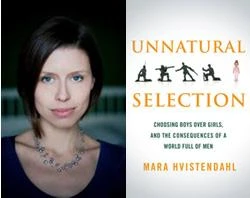
Explosive new book details war on unborn baby girls

Imagine waking up one day to find that every single woman in the U.S. has disappeared. 

Picture this, writes author and scientific journalist Mara Hvistendahl, and you will come close to understanding the magnitude of over 160 million baby girls being selectively aborted in Asia and East Europe over the last few decades.

Already critically acclaimed since its release in June, Hvistendahl's book, “Unnatural Selection: Choosing Boys over Girls and the Consequences of a World Full of Men,” meticulously documents the phenomenon of “missing” girls and its dire implications for the future.

“It's a huge problem,” Hvistendahl told CNA on Aug. 24. “What I want readers to take away is that this is a global issue on the level of something like HIV/AIDS or female genital mutilation.”

Hvistendahl said that aside from the basic issue of baby girls being aborted due to their gender in countries such as China, India, Armenia, Georgia and Azerbaijan, other human rights abuses are beginning to arise from the shortage of women in these regions.

“Women are being bought and sold – trafficked for sex work and for marriage,” she said, noting that the increase in bride-buying and forced prostitution in these countries is staggering.

The author, a Colombia University graduate who has worked as a “Science” magazine correspondent in Beijing, said that her interest in the subject of gender imbalances began to increase after living in China for a few years.

“I didn't understand why sex selection was happening,” she said. “I just felt it wasn't very well explained.”

Hvistendahl set off to find out more, traveling to nine countries and interviewing doctors, mothers, prostitutes, demographers, mail-order brides and men who would be forced into lifelong bachelorhood.

She began to discover a complicated web of explanations but eventually found that some of the ideological roots of the problem could be traced to zealous population control efforts from the 1960s and 70s.

Through funding from western organizations such as the World Bank and the International Planned Parenthood Federation, grants were being funneled into population control initiatives in eastern countries, with sex-selective abortion seen as an effective tool.

The results of these efforts show that in places such as China today, as many as 120 baby boys or more are being born for every 100 baby girls.

In addition to the current problems that women are facing in these countries, “the question in my mind was, How was this going to effect society 30 years from now when this hugely imbalanced generation grows up and there are many more men than women?” Hvistendahl asked.

“There is a danger in jumping too far ahead and making predictions about what will happen,” she added, “but I think this will be a major issue in China and India for social stability.”

“The governments in both countries are very worried,” she said, noting that men statistically commit more violent crimes in societies.

It's a troubling prospect that Hvistendahl is not alone in noticing.

Dr. Nicholas Eberstadt – a political economist, demographer and member of the visiting committee at the Harvard School of Public Health – has often referred to the problem as a 
“war on baby girls.”

He outlined for CNA the three major factors he believes have led to the current crisis of gender imbalance.

The first is what he calls a “ruthless” son preference that is present in numerous cultures and religious systems.

That, coupled with the second problem of smaller families due to population control efforts such as China's “coercive” one-child policy, has made couples' quests for sons even more aggressive, he noted.

“When parents have five, six children, the gender outcome at birth isn't that critical,” Eberstadt said.

“But when parents are only going to have one or two children, the sex of that child seems to become something that parents want to have a say about.”

Eberstadt said that the third factor in the rise of sex-selective abortion in these countries is reliable, accessible and inexpensive prenatal gender determination technology, such as ultrasound machines, in areas with “policy environments of unconditional abortion.”

Despite the glaring human rights abuses caused by the practice, the United Nations Population Fund  (UNFPA) has been largely silent on the issue – a fact that's been noted by Hvistendahl and other experts.

Dr. Susan Fink Yoshihara, director of the International Organizations Research Group and vice president of the Catholic Family and Human Rights Institute, told CNA that the population fund has played “a major role” in the increase of sex-selective abortion.

“They do this by refusing to condemn the practice and mainly by promoting its two main causes: fertility control and increasing (the) availability of abortion.”

If the United Nations fund “says it promotes women’s rights,” Yoshihara said, “why do its leaders refuse to condemn this egregious practice of killing girls?”

Its “leadership has instead issued directives to its employees time and again that show UNFPA is more concerned with promoting abortion than defending women’s right to life.”

Adding to the problem is what many call the ineptitude of U.S. leadership in effectively addressing the issue of forced population control.

Vice President Joe Biden sparked controversy during his recent trip to China where he told leaders that he “fully understood” the country's one-child policy and was not “second guessing” it. 

His comments came during an Aug. 21 appearance at Chengdu's Sichuan University where he was discussing the United States' dilemma of paying for entitlement programs when the number of retirees exceeds the number of workers – a problem he said China shared.

The vice president's remarks in Chengdu drew widespread criticism, particularly from pro-life activists and his political opponents.

“Instead of using the power the American people gave him to speak up for human rights, he ignored his responsibility,” Yoshihara charged.

“His scandalous comments are but one example of how easy it is for us to turn away from our responsibility toward the poorest of the poor, in this case, the unborn child.”

Eberstadt was equally critical of the Biden’s remarks, but observed that the “silver lining” in the recent gaffe could be that more media attention is brought to the issue.

He said that demographers in China estimate that half of the missing 160 million girls could be attributed to the country's one child policy alone.

Eberstadt likened the problem of discrimination against baby girls to the issue of slavery during the 19th century, saying that sex-selective abortion needs to be stigmatized in the same way.

“I think that the only sure way of extricating this – and it's an abomination – is the way we've extricated other abominations in the past,” he said.

“Which is through a struggle of conscience and the advent of a new moral understanding of why something like this should be absolutely anathema to a decent, civilized society.”

But an even deeper problem that needs to be addressed, observed Yoshihara, is the underlying human tendency towards selfishness.

“The fundamental problem is that we do not love one another. We do not see that the inconvenient or unwanted person is just as valuable, just as worthy of love, as you and me.”

“Ideologies like radical feminism that undergird UNFPA’s refusal to speak out, ideologies like communism that justify coercing or even forcing mothers to abort their children, and ideologies of utilitarianism that subtly pervade our own society,” she said, “make it easy for us to say nothing in the face of unspeakable human suffering.”

Ukrainian Catholic Patriarch lauds national independence

I cordially greet you all, those in Ukraine and in the diaspora, on the occasion of the 20th anniversary of Ukraine’s independence and join you in a thanksgiving prayer to the Almighty Lord for the invaluable gift of freedom for the native land and our state,” wrote the head of the Ukrainian Greek Catholic Church (UGCC), Patriarch Sviatoslav (Shevchuk), in his address on the occasion of the 20th anniversary of Ukraine’s independence.

According to the hierarch, the celebration of the national jubilee is not only a reason for joy and gratitude but an excellent opportunity to meditate on what kind of state we want and need.

“We will probably be right to say that we want to live in a state where the social, economic, political and other  dimensions of life of the people are based on integrity, justice and responsibility,” noted the hierarch.

The head of UGCC stressed in his address that integrity and justice are different aspects of the same essence.

“Social justice is based on personal integrity, and honest citizens are a reliable support of the just authorities,” said Patriarch Sviatoslav.

The hierarch noted that our state will be just only when the purpose of its government is the service for the good of all its citizens and each individual person.

“Such a state respects the dignity of the person and ensures necessary conditions for the growth of each member of the society as a free personality created from the image of God. It is about justice which is not repressive or punitive in its essence. It is justice which frees and saves. It requires of us respecting other persons regardless of their origin, political or religious beliefs,” wrote the head of the UGCC.

He noted that such justice calls us to social non-acceptance of extremism, violence and disrespect for social peace.

“This justice sets for the authorities the task of ensuring actual realization of the citizens’ rights and freedoms guaranteed by the Constitution of our state, particularly, the right to education, pension and social maintenance and the right to work and health service. The state should guarantee another important right, the protection of the honor and reputation of each citizen, establishment of fair conditions for the development of private initiative and economic activity on the basis of subsidiarity, fair right of vote and public and political activity.”

The head of Greek Catholics also touched upon the question of religious freedom.

“The state should ensure for its citizens the realization of the undeniable right to religious freedom and equal treatment by the authorities of all the churches and religious organizations whose activity is permitted in our state.”

According to the hierarch, justice “requires the right of free and all-round development of the Ukrainian language and culture in our own state, renewal of the historic memory of the Ukrainian nation and counteracting the modern manifestations of Ukrainophobia.”

In addition, a just state “should protect its citizens wherever they are and care about a live connection with the Ukrainians abroad.”

The head of the UGCC stated that “we should not only dream about such state but also continually create it! Only under this condition will we be able to duly keep and enjoy the gift of independence without a danger of losing it,” the Information Department of UGCC reported.

Pope fires Fr. Lokodo from priesthood

THE Minister for Ethics and Integrity, Rev. Fr. Simon Lokodo, is no longer a priest in the Catholic Church, Pope Benedict XVI, has said.

This was revealed by Paul Tschang In-Nam, the Pope Nuncio for Uganda Archbishop.

He explained that according to the rules of the Catholic Church, Lokodo could not be allowed to continue serving in both capacities as a priest and a politician. He cited the example of Sr. Margaret Magoba, formerly of the Electoral Commission, who gave up her job when the Church advised her to do so.

Lokodo, 49, had been a parish priest for Kaabong, Kotido diocese, before he contested for and won the Dodoth County MP seat after the then MP died in June 2006.

Lokodo was appointed ethics minister on May 27, 2011, replacing Nsaba Buturo. Prior to that, he served as state minister for industry from February 2009 to May 2011.

Born in Kaabong District on October 28, 1957, he holds a bachelor of arts degree in theology from the University of Rome and a master’s in theology from the University of Rome. 

James Downey: Marriages are best made on earth, not in heaven

We are not clear on where the role of the State ends and where the role of the individual or some other institution begins.

EVERYBODY seems to have forgotten the affair of the Lourdes marriages. 

Not surprising, perhaps, because it happened a long time ago, in the 1970s. 

But even people who were adults at the time tell me they have no recollection of it and find it hard to believe the manner in which it was resolved.

It happened like this: a large number of Irish couples, possibly in their hundreds, were married in Catholic ceremonies in Lourdes over a period of several years. 

They did not realise that under French law these ceremonies did not count.

The law required them to take part in a civil ceremony in order to make their marriages valid.

Eventually they began to discover, with a shock, that legally they they were not married at all and that their children were "illegitimate" and had no automatic inheritance rights. Clearly this had to be rectified, and the Oireachtas had to legislate.

But the Oireachtas did not take what the French would have considered the obvious course: to invite the people caught up in the dilemma to legalise their situation in civil ceremonies.

Instead, it passed a law which retrospectively legitimised their situation. 

An Irish solution to an Irish problem, you might say.

It differed from the subsequent "Irish solution" on contraception in a very important way -- it worked. 

Nobody was harmed, everyone was happy. 

And hardly anyone noticed the flaw.

Some years later, I attended a family wedding in a village near Aix-en-Provence. 

The civil ceremony took place in the town hall in the morning, the church ceremony in the afternoon.

The mayor officiated in the town hall. He was a little fat man with a twinkle in his eye -- and a communist, a fact little to the taste of the bride's family, all staunch Catholics and Gaullists. 

A Tricolore was wrapped around the place where his waist should have been and in his hand he held an a official-looking document.

When he began to read from the document, it turned out to be a sort of lecture on the duties and responsibilities of marriage. 

That brought home to me the French attitude to the subject. 

France is a secular state and a secular society. 

In that society, the Catholic Church -- or any church -- is ignored. 

But the state believes that it has a role in marriage. 

And rightly so.

In the traditional phrase, marriage is "the bedrock of society". 

Permanent marriage, preferably; monogamous marriage, absolutely. These propositions are too well known to need any elaboration. They apply everywhere in the democratic world. 

They apply equally to a secular state and to one in which any religion enjoys a dominant position.

Is Ireland a secular state? 

Of course it is. 

It has become so gradually, over a period of decades, with the removal from the Constitution and laws of provisions which reflected the influence of the Catholic Church, and certainly not because of the "aggressive secularism" once condemned by Bertie Ahern as Taoiseach.

There is no aggressive secularism in Ireland. 

The public reaction to the clerical sex abuse scandals demonstrates that.

Atheists, agnostics, lapsed Catholics, people still practising the Catholic religion; all have felt pain and grief as well as anger. 

Very few rejoice at the self-destruction of the Irish Catholic Church. 

Many lament the disappearance of an influence which could have been used for good.

That influence had begun to decline long before the sex abuse scandals. 

Nowhere is this more evident than in the case of marriage. 

One-third of all births in this State occur outside wedlock. 

The reasons are too numerous to list, but it is easy to agree that this does not tend towards the welfare of mothers or children -- or society as a whole.

And we do not encourage marriage in practical ways. 

The proposal to extend the privileges of married couples to "cohabiting partners" strikes me as ridiculous. 

How can we tell if these partners are in stable relationships, much less permanent relationships? 

And how can we reform the tax and social welfare systems in favour of married couples?

We seldom hear questions like these -- to say nothing of answers -- from the conservative side. Instead, we see what is evidently a campaign against the forthcoming referendum on children's rights. 

Mixed in with this are rambling, pseudo-philosophical disquisitions on the nature of society and, even more bizarrely, polemics about "fathers' rights" and the causes of the riots in England.

The first arose from real or perceived injustices in the divorce courts. 

For that, there is no remedy. Judges do their best and sometimes get it wrong.

As for the riots, the causes are complex. 

Of course they include, in many cases, absence of a stable family background. 

But they also include criminality, which David Cameron constantly denounces but, perhaps wisely, does not explain. 

They include relations between the government and the hard-pressed police, and relations between the police and minorities.

Thankfully, we don't have this last problem in Ireland. 

We do have plenty of problems of our own. 

And very often we can find their origins in the former church domination.

I don't mean the suffering caused, for example, by the bans on divorce and contraception. 
That is in the past.

I mean the absence of a secular morality in a society that took its morals from an authoritarian church which exercised thought control.

The Catholic Church is not wholly to blame. 

Another major culprit is our outrageous political system, which encourages localism and individualism at the expense of society as a whole.

From the social welfare abuses to the inflated public service pensions to the near-ruin brought upon us by the banks, we have witnessed the favours lavished on influential interests. 

Thankfully, they have not caused riots. 

But they have caused cynicism and defeatism.

And if all this may seem a long way from the Lourdes marriages and a wedding in Provence, a common thread links everything.

The French take the view that marriage is very much the business of the state. 

They take the same view, most firmly, on education.

We, by contrast, are not clear on where the role of the State ends and where the role of the individual, the family, or some other institution begins. 

So confused are we that some might even challenge the assertion that this must become, or remain, a secular State.

In my opinion, that argument is over and we should make up our minds how to run it.
 

Tuesday, August 30, 2011

Derry priest's jail fear over confessional seal law

A priest in Derry has said he would be prepared to go to jail rather than break the seal of confession. 

Father Paddy O'Kane was responding to the Irish justice minister, Alan Shatter, who said that forthcoming child protection measures, will "apply regardless of any internal rules of any religious grouping". 

A priest could be convicted of a criminal offence if they were told of a sexual abuse case and failed to report it to the civil authorities, under the new legislation.

Mr Shatter said past failures in the Catholic Church had led paedophiles to believe they could act with "impunity".

Father O'Kane, from Holy Family Church in Ballymagroarty, said he will not accept the rules.

He said he did not think the law will go through.

"If it does priests will be prepared to go to jail rather than break the seal," he said. "It's at the very core of what a priest is. If a priest were to break the seal he will be automatically excommunicated. Priests cannot function if they're not allowed to keep the seal of confession."

A number of child protection measures were announced following the Cloyne report which was published last month.

It found the diocese failed to report all complaints of abuse to police.

The inquiry into the Cloyne Diocese was set up by the Irish government in January 2009 following a report published the previous month.

It was conducted by the National Board for Safeguarding Children (NBSC) - a body set up by the Catholic Church to oversee child protection policies.

It found child protection practices in the diocese were "inadequate and in some respects dangerous".

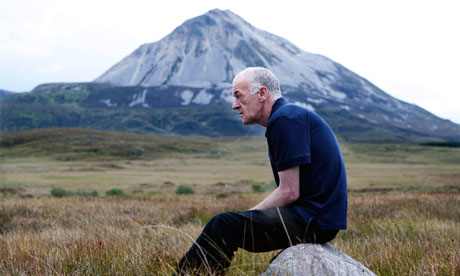
Catholic clergy 'abused children for decades in County Donegal'

County Donegal in Ireland is about to have its bucolic image shattered by a report into how paedophiles, both clergy and laity, abused children for decades.

An investigation into clerical sex abuse in the Catholic diocese of Raphoe in County Donegal is about to report its findings, which are expected to be damning.

Meanwhile, new evidence has emerged from victims of a parallel paedophile ring operating in the same Gaelic-speaking corner of the Irish Republic.

A number of survivors of abuse have told the Guardian that lay members of the church as well as priests sexually exploited them for years in the county.

And as with the expected conclusion of the report into Raphoe, they say the national police service, the Garda, was complicit in a culture of cover-up that allowed the perpetrators to carry on abusing them.

Speaking for the first time about his abuse as a child and the subsequent cover-up, John O'Donnell revealed that he had been abused since he was nine by a lay member of a local church choir.

"He assaulted me from when I was nine until I was 15, until I was old enough to know it was wrong. This man took advantage because I was adopted and regarded as something lower than most kids in the area.

"The abuse took place at his home and in a shop he ran. It went on from 1965 to 1972."

O'Donnell said that in 1973 he went to a local Garda station to report that he had been raped by the man, who has since died. He said the reaction to his claim was violent.

"A local guard was outraged that I was naming such a fine upstanding member of the community as a child rapist. The officer slapped me on the face and told me to get out. He said to me that I was adopted and not worth anything. From that day on I never fully trusted a member of the Garda Síochána."

For years, O'Donnell said, he hid what had happened to him, and got married and raised a family without discussing it with his loved ones. It was only in the late 1990s when revelations of widespread child abuse rocked the Irish Catholic church that he decided to face up to what had happened to him.

"I found out that my abuser was still in the church choir and I was outraged because he was working with children. So I drove up to a parochial house in the area and tried to speak to the parish priest about this man. At the time I had finally got somewhere with the gardaí and they had questioned this man in a Donegal police station. I informed the parish priest about this but he wouldn't even let me across his door. He kept saying: 'No, no, no … I am not speaking to you about this.' He didn't want to know, and bear in mind this was only back in 2005."

O'Donnell has claimed that other victims in this corner of Donegal are coming forward, with a picture emerging of an organised paedophile ring. Police are investigating their claims.

The Guardian has spoken to a number of other men in Donegal who have made similar allegations of an abuse ring and a cover-up spanning decades.

Throughout the decades of denial, the young men who were preyed upon by paedophiles in the county, both inside and outside the church, had one champion – a retired police detective, Martin Ridge.

Ridge moved to the county at the end of his career, and became so disturbed by official indifference that he wrote a book about the children's experiences, Breaking the Silence.

He predicted that the Raphoe report would be "damning" and expose the same culture of "local denial and cover-up" that was found in other Catholic dioceses across Ireland.

Ridge admitted the police force he served in all his working life would not be spared withering criticism in the Raphoe report. 

Two years ago the Murphy report into widespread clerical abuse of children in Dublin, Ireland's largest Catholic diocese, found that senior Garda officers colluded with four archbishops and top clerics in covering up the sex crimes of priests on a massive scale in the city.

"There were 45 victims of three different paedophiles, one of whom was a priest, another a school teacher. None of the victims wanted to be interviewed in local gardaí stations. The question has to be asked as to why they did not trust the local force when this was going on," Ridge said.

The ex-Garda officer too has confirmed that an investigation is now under way into the alleged ring of abuse in north-west Ireland involving both priests and non-members of the clergy.

It is understood to include an investigation into how a convicted child sex offender got a job in a local youth hostel after he was released from prison in 2006.

O'Donnell, meanwhile, opted to remain living in Falcarragh, County Donegal, despite the climate of cover-up and fear he has had to endure.

Surveying the natural beauty of the area, with its stunning mountains and seascapes, the 55-year-old said: "Yes, it's a beautiful area with amazing views and scenery … it would be even more beautiful but for some of the bastards still living here."